Showing posts with label formula. Show all posts

Friday, February 14, 2014

Why I Didn't Breastfeed My First Baby

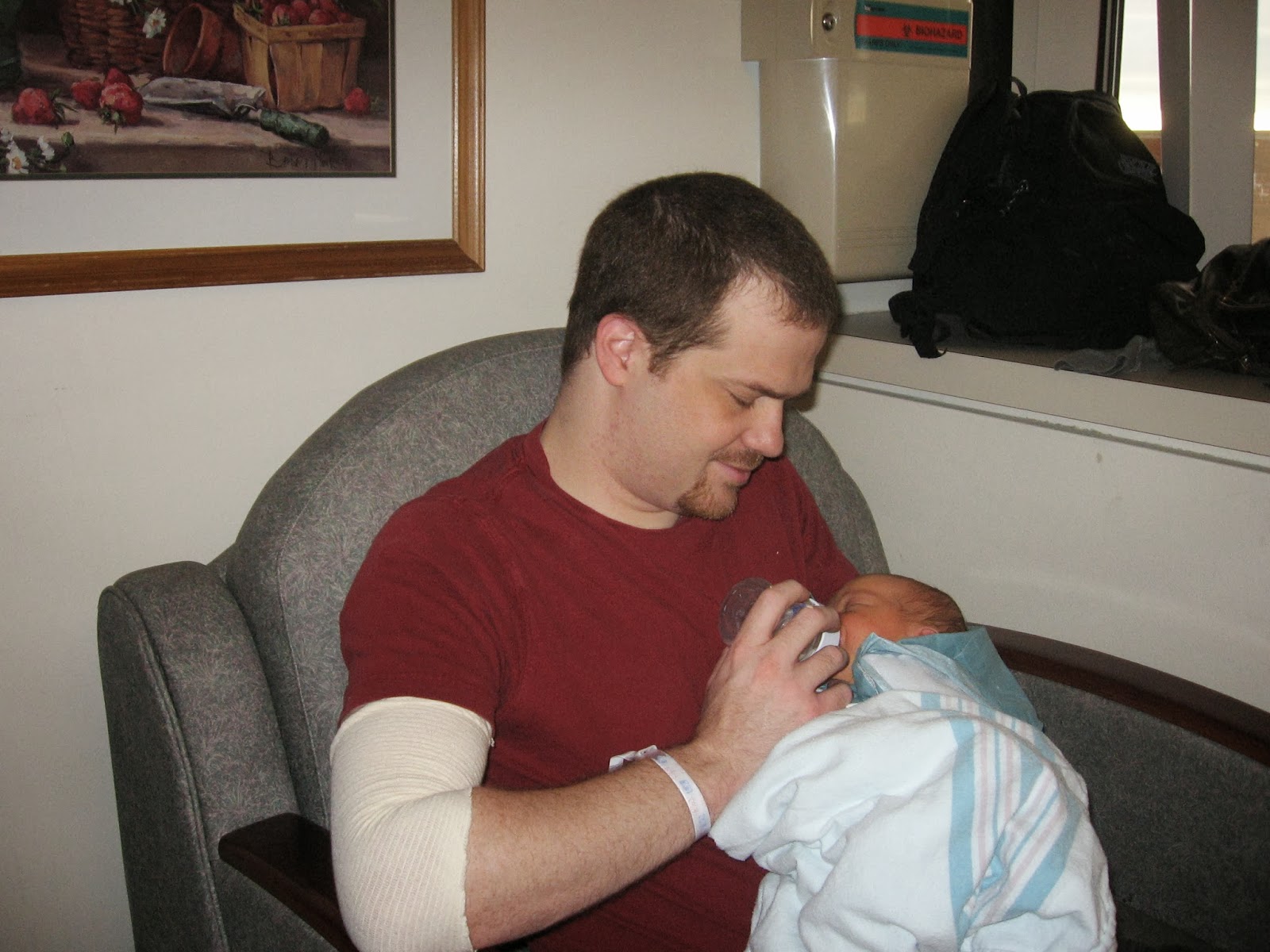
My oldest son is 7. He was mostly formula-fed from birth, and completely formula-fed from about 7 weeks of age.

Given the person I am now, the breastfeeding advocate and educator, who has successfully breastfed three subsequent children, sometimes I look back and can't quite believe he wasn't breastfed. But his birth and my experience with him is what made me so passionate about birth and breastfeeding in the first place.

But why wasn't he breastfed?


Was it awareness, or lack thereof?
I don't think so. I was aware of the benefits of breastfeeding. I intended to breastfeed him. In fact, here's an excerpt from a LiveJournal entry I wrote when I was about eight months pregnant: 
The doctor asked if we'd taken any classes, which we have. She said, "Oh good, so you're prepared." Haha! Yes! I feel so prepared! Ok, I know the basics, and sort of what to expect. But prepared? I don't think you can ever really be prepared for your first childbirth. I mean, ok, the nursery is almost ready, he'll have clothes to wear and a place to sleep and something to eat (boobies!), but seriously. Prepared? I keep trying to remember the signs of labor and thinking how this class we took has a doozy of a final exam!
Then, about a week before the baby was born:
I went ahead and ordered a dual electric breast pump...Still cheaper than formula in the long run, and I hope that I will be able to give him breastmilk for as long as possible. 
So I was definitely "aware" of breastfeeding, of the benefits, that I wanted to breastfeed. I had made that decision and was planning ahead.

Was it education, or lack thereof?
This was part of it. And I think one of the big problems was, I didn't know I needed to be educated. I bought a couple of breastfeeding books, but I didn't read them. I didn't take a class, didn't attend any LLL meetings, didn't talk to other breastfeeding mothers about their experiences. Indeed, as the birth story I wrote just a couple of weeks after he was born shows, I didn't know what I didn't know:
They brought the baby to me and helped me latch him. He knew what to do, but I was still pretty out of it. I also have the timeline here a bit befuddled, because of what ensued. I know they needed to check his blood sugars because of his size, and asked us if it would be ok to give him some formula if he needed it, and if so, what kind. We said it was ok, but we didn't know anything about formulas, so just go ahead and give him whatever they thought was good. They suggested Enfamil with Lipil. Sure, why not.


If I had done any reading or taken a class, I would probably have known that he likely didn't need to be given formula, or we would have at least known to ask more questions. As it turned out, his blood sugars were fine, but I soon went into shock due to blood loss from the delivery. The nurses told me that because I'd lost so much blood, I wouldn't be able to make milk:
I didn't get a chance to try nursing again. I needed to rebuild my blood supply before I could even think about making milk.
I was stuck in bed for all of Sunday and Monday. They came and checked my bleeding periodically, gave me IV pain meds, brought me food. They brought the baby in on Monday for me to try nursing again, but I was pretty weak and sore. They were giving him formula, which was fine. With his size, he needed to eat, and I didn't have food for him. 
What no one told me, apparently, was that in order to make milk, I needed to nurse the baby. Even if my milk supply increase was delayed, I still needed to be nursing him and/or pumping to set up prolactin receptors and to encourage milk production. Even if he had to be supplemented with formula, that didn't mean I shouldn't nurse him. The colostrum would benefit him, too. I do recall that they fed him whatever colostrum I pumped, but it wasn't much.

Was it willpower?
Yes. I'm sure a big part of the problem was willpower. Now, I went through a traumatic birth, and I got off to a bit of a rocky start, but that alone didn't make breastfeeding impossible. The bigger problem in this story is that I didn't know how much hard work it takes in the beginning, especially when there's a rocky start, to breastfeed. I didn't know that if I stuck with it, it would get better and easier and really feel worthwhile, and so I didn't try.

Was it support, or lack thereof?
Yes and no. The support in the hospital was variable, as evidenced by some of the quotes above. Then there was this:
[On Tuesday, the lactation consultant] showed me how to use the pump and said I'd need to pump for 15-20 minutes every 2-3 hours to stimulate milk flow and establish a supply. She also suggested I rent a hospital-grade pump, because the one I'd bought would burn out if I used it that often. I think I pumped twice that day. With all the people in and out and all the activity, and my general weakness, pumping seemed like just that much more hassle, that much more of an energy drain.

Wednesday was better, and I did pretty well with pumping. A different lactation consultant came to see me and helped me breastfeed the baby. I tried the football hold, because of my sore abdomen, and the cross-cradle, which I found more comfortable. They told me I should breastfeed for 10 minutes per side and then pump for 10 more minutes.
This information is only sort of correct, and she didn't say the most basic thing, which is, "You have to nurse the baby to make milk, and here's why." She didn't say, "The best thing you can do to bring in your milk is to nurse the baby." She didn't say, "Spend time skin-to-skin with your baby and nurse on demand." She didn't say, "Watch the baby, not the clock." Etc. And no one, again, told me that it was hard work and perseverance that would matter the most. Everyone said it was fine to supplement with formula, and no one, not even me, fought for me to breastfeed.


On the other hand, my mom wanted me to breastfeed. She wanted me to so badly. But she didn't know how to support me, and I didn't know I needed support or how that support should look. A friend tried to help; she even offered to nurse the baby for me to show me how it works! She offered me the contact information for a local La Leche League leader. She knew I needed support, and she knew how to give it, but I didn't know how to take it, or that I should, and I was convinced that I should do what I was told by the hospital, not knowing, as many women don't, that the nurses at the hospital maybe weren't the be-all and end-all of breastfeeding information.

How did I feel about "failing" to breastfeed?
Well, there's this, from about 3 weeks postpartum:
I know these are questions best put to a lactation consultant, but I really want a more unbiased analysis. I want a totally practically-minded opinion, and I feel like an LC would push me to try breastfeeding, when I find it so discouraging. It's the lactation consultants who first told me to pump 8 times a day, and I didn't manage to do that and it just made me feel bad. I know that's what I'd need to do to boost my supply, but it's really hard. I don't know whom to turn to or whom to ask, and it's very upsetting. Breastfeeding is the one thing only I can do for my son, and I'm not even sure I want to do it. I know I'm not alone. I know there are other mothers out there who tried to breastfeed and just didn't want to. But I never thought I'd be one of them. I never thought I'd find it so difficult or, frankly, unpleasant.

I mean, anyone can mix some formula in a bottle and put it in his mouth. Many people have over the last 3 weeks, although it's his father who does it most often. But only I can produce breastmilk for him.
"I don't know whom to turn to or whom to ask...Breastfeeding is the one thing only I can do for my son..." I was so torn, and confused, and I didn't have the information I needed. I didn't want someone who would "push" me to breastfeed, and I thought all lactation consultants would be like the ones I saw in the hospital, who I didn't find to be helpful and I did find to be pushy. But that was exactly what I needed, someone who would "push" me to breastfeed. I didn't realize, you either breastfeed or you don't, and I certainly could have. (In that same post, I lamented that I "only" pumped 2 to 3 ounces in a sitting, having no idea that's actually quite good!)

And there's this, from one month postpartum:
I've been crying a lot. I think one reason is that I feel bad about having to give up on breastfeeding. I know I had so many extenuating circumstances that it would have taken a rather heroic effort to really get in there and exclusively breastfeed, but knowing the reasons doesn't make me less frustrated that things aren't working out the way I'd hoped they would.
And this:
A couple of women I know have recommended an LC in the neighborhood. Maybe I should talk to her. I don't know. I just want to feel better. I want to feel like I've resolved this for myself, and right now I obviously don't. If I try and fail, will I feel worse, or will I at least be able to say I tried? If I try and succeed, will I find the joy in it that I am hoping to find, or will I just get discouraged again? 
And then at six weeks, I thought I might try to relactate:
[I tried putting him to breast...] And even more exciting, milk came out! I thought my milk was dried up, but he got some out. Not very much, but enough that he was willing to keep sucking. So I let him. (Ow) 10 minutes on each side, he sucked. And milk came out on both sides. I let him keep going until it got too painful and he got too squirmy. I think he got a little frustrated when he wasn't the least bit satisfied after 20 minutes of sucking. I would be too, hehe.

Then we gave him a bottle of formula and he gobbled down 6 ounces, so I know he hardly got anything from me. But I wasn't so much interested in volume as ability. That was pretty exciting. My nipples are still sore this morning from it, but it felt really good emotionally.


I was not successful, but it's clear that I wanted to try, and I gave it a go. I even finally contacted the La Leche League leader that I should have spoken to in that first week! If my birth had gone more smoothly, I probably would have breastfed. I can't change the craziness that was my oldest son's first six weeks of life, but I think the lessons of what I went through can give us all some perspective on what other women might actually need, and how we can provide that.

What can we learn from my experiences?
I think we need to give most women, especially middle class, educated women, enough credit to assume they know about breastfeeding. It's not a lack of awareness that causes women not to meet their breastfeeding goals. After all, something like 90% of women state an intention to breastfeed upon giving birth, yet less than a third of them are still breastfeeding at six months postpartum, and not even half are still exclusively breastfeeding at six weeks. Something goes wrong in those first few days postpartum and in the early weeks.

I think the biggest factor in improving breastfeeding rates and success is education, followed closely by support. Education and support work hand-in-hand. First, we educate women not about why they should breastfeed (or not just about why), but about how breastfeeding works and what they can expect. Second, we educate women about finding and/or building a support network, to have phone numbers on hand they can call, websites to visit, books to read, to let them know that they can and should ask for help, that they don't have to - and shouldn't have to - go it alone, and that there's no shame in having a little trouble at the beginning. Third, we provide that support network, with continuity prenatally, at birth, and in the weeks following the birth. Whether they join a La Leche League meeting, are friends with an experienced breastfeeding mother, or get all their help online from blogs and Facebook, women and their partners need to know (a) they probably will need help; (b) it's okay to ask for help; and (c) where that help can be found.

It's amazing that I documented my experiences with such detail in the moment. It's hard to look back seven years through the lens of who I've become and remember what I was feeling at the time. Because I wrote it all down at the time, it's all out there, raw and visceral, and I can see right there what I knew, what I had, and what was missing. Filling in those missing pieces for other women can make a huge difference in their lives and the lives of their children.

***

To read the full account of my oldest's birth, see the four-part story starting here

For a quick-start guide to breastfeeding that answers many of the most common questions new mothers have, check out my e-book, The Jessica on Babies Breastfeeding FAQ, available for Kindle from Amazon.

Monday, December 2, 2013

Guest Post: Baby N's Birth from His Father's Point of View

Today's special guest post is from my husband! He wants to tell our kids' birth stories from his point of view. Often the man's role in and feelings about birth are underplayed or downplayed, and in a series of articles, my husband will explore his own impressions and experiences during the births of our sons. So, to celebrate 100 likes on the Facebook page, here is his perspective on N's birth! 

(Notice his challenge at the end. To continue the series and hear about S's birth, let's keep pushing forward to 200 likes! Share the blog with your friends, and if you haven't done so, please like the Facebook page!)

***

I've been wanting to tell the birth stories of our 4 kids from my perspective, the husband’s. I've had this idea for a while, but it’s hard to find the time to write it. You read many stories from women about their birth experience, but I can’t say I read many from the father’s point of view. So, I’m not expecting many men to read mine. But who knows? Maybe I am the strange one.

Each one of my kids' births was very different, an amazing experience by itself. Some were more exciting for me, others not as much. This is simply meant to put down in writing what I experienced and how I felt during those times. Take it as you will.

Baby N

First child! I was an exemplary husband, or so I thought. I went to all the birthing classes, went to the tour of the hospital. I don’t think I missed a single OB/GYN appointment. I knew a lot about what was going to happen; well, I thought I knew. I mean, reality… well, I think most of us know how that is.

When the day came and we went to the hospital, we figured we would take along my wife’s mother. It would be a great experience and be helpful. I am very thankful for my mother-in-law for all her help, but this made for some awkward moments and made it difficult to talk to my wife in private. I was very nervous, but I thought I knew it all. We were joking about not taking an epidural, about why you would suffer pain when you do not have to. I was very casual about it; hell, at some point we ordered pizza to the delivery room. She pushed for a long time. It was nice for me at that time, I got really involved. The nurse had me help. I felt it was great. I got to hold a leg up, and look at the entrance to see if someone is coming out. I don’t think I thought too much about her pain and how she was feeling in all of this. At the time I thought I was great; today, I realize I was rather inconsiderate.

When the doctors “finally” offered a c-section, I was happy. Great, they will take him out, he won’t have a squishy head, and my wife parts will remain intact. Yes, men think about that. Well, some of them. Got all scrubbed up, the nurse asked me if I had a camera. I thought that was funny. I went in to the OR to find my wife lying in a crucified position (thankfully, my mother-in-law was not invited to this occasion). It was still all cool. I sat by her head, trying to make my usual silly jokes. I was in a huge adrenaline rush. Everything was happening pretty quickly. Pretty soon I got to hold the baby. I got to hold him first. Well, she couldn’t, being that she was crucified to an operating table and half numb. Looking at him, hearing his cry… the newborn cry is great. It hits me in a soft place every time. But the first one, it was amazing.

Then they took him away to the nursery and took us to another room to recover. Apparently she lost a lot of blood. I did not realize it then, not even when they sent a specialized trauma nurse to see her. I think it is a good thing I was high on adrenaline, or I would have freaked out. That one took a long time to settle.


At the stay at the hospital, for the next five days, I was also being great. I came by, fed the baby, and changed him. I was rather happy she did not breast feed. I got to play with my new baby a lot. This continued after she got home. They sent us home with a bili light machine, to treat his jaundice. Still, I was being cool, letting her sleep and rest while I took care of him. Every day I would change him, feed him, and wash him. All she needed to do was rest. I was supportive of her attempt to breast feed, but when she couldn’t, I was not upset. I get to keep playing with him, feeding, feeling so helpful. What a great husband I was being. This continued for about 3 months, until we moved to California, where I suddenly had to work more, and leave her alone with him.

Only much later, as she was getting ready to have Baby S, did I realize how bad I was at the time. I distanced her from her baby. I felt I was being helpful. She felt I was being helpful. But, that was not the right way to do things. I pushed what I wanted, and at the same time thought to myself, “Why is so distant from him?” There are ways to be helpful, but I do not think this was the right one. Now, I know I was being selfish. I did not see how she was unhappy, how this had made her feel.

It took me a while to change my way of thinking, and see how important it is to her. I can’t say I quite understand it yet. But, with Baby S, things were different.

That’s the first story. I think this post has gone long enough, so I challenge you to help the Facebook page get 200 likes to hear so I can tell you what comes next! 

I will say this to any men out there who are about to have a baby: It is indeed a lot about her, and not because she carries all the burden of the pain, pregnancy, delivery, etc. It is because, in the end, I do think the outcome will affect her a lot more. So, get involved, but also remember that the best help you can give is to push her to achieve what she wants. To quote Coupling, “Ask her three times” if she’s sure. But when you do ask her, make sure you mean it.


Wednesday, September 4, 2013

Formula "Goody" Bags

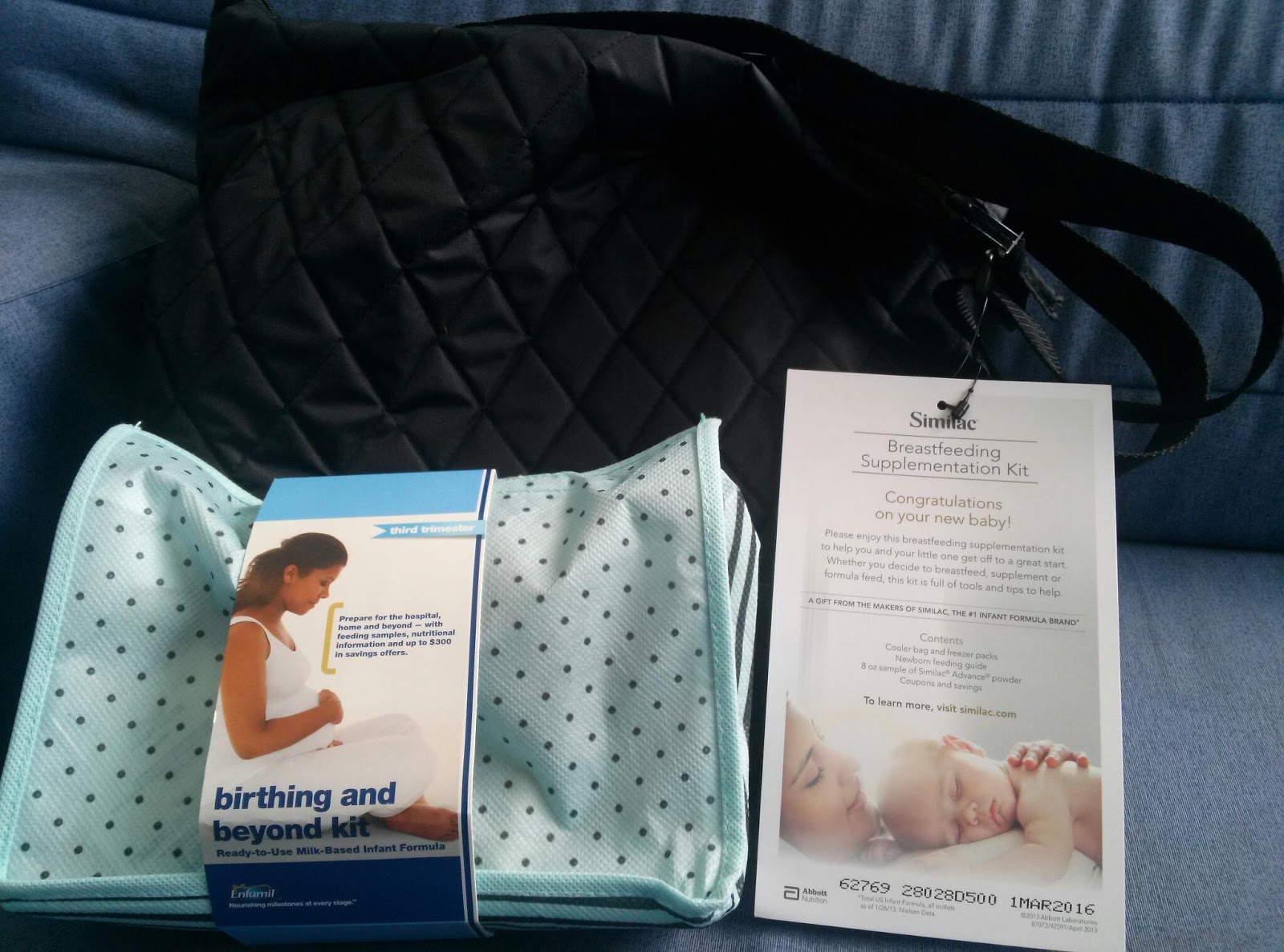
I've written before about doctors and hospitals giving out bags supplied by formula manufacturers, specifically here and here. It is a common marketing technique for formula companies - especially Enfamil, Similac, and Nestle/Gerber - to provide "gift bags," samples, and coupons to OB offices, pediatricians, and hospitals to be given out to expectant and new parents. In exchange for the doctors' and hospitals' assistance with marketing their formula, the company supplies free formula to these providers. Their idea is that if you send a new mom home with some free formula and some nice "gifts," she will be more likely to choose your brand if she decides to use formula, and she will be more likely to try using formula if she has some on hand already.

Samples may be anything from a small can of powdered formula, to a few ready-to-feed bottles, to coupons for free or discounted formula at the store. Often, the company will take things one step further and give out diaper bags, insulated bags, ice packs, and other useful items, along with booklets of information about infant feeding.

Research has shown that new parents who have formula samples at home, especially those that they received from their doctor or hospital, are more likely to supplement unnecessarily and are less likely to be exclusively breastfeeding at six weeks than those who do not have formula readily available. Formula samples directly sabotage breastfeeding. (See the above-linked posts for why and how this happens.)

In all honesty, in all three of my previous pregnancies, I did not receive formula "freebies" from my OB or pediatrician. Since my first baby was receiving formula from day one anyway, I did receive samples from the hospital and pediatrician, and I don't know what I would have gotten had I been breastfeeding. With my second and third, formula samples were not offered, and I was exclusively breastfeeding. I did receive some samples and coupons in the mail from joining mailing lists, but I did not receive any from any of my medical providers.

Today, though, I had my third visit with my new OB. After the appointment, I spoke with the billing office about what our financial obligations would be, based on my insurance coverage. After signing the payment contract, I was handed two gifts, one with Similac branding and one from Enfamil. I was excited, because never having received formula goody bags before, I didn't really know what they might be like. Also, it was entirely possible some of the stuff might be useful (ice packs are ice packs, after all), and I was curious to see what I was given. The Similac bag was a nice shoulder bag, while the Enfamil packaging was not in and of itself useful.


I know I personally won't be swayed by the formula marketing, since I have successfully exclusively breastfed two kids already and am extremely confident about breastfeeding this next little guy. I'm not worried that having some formula samples in my house will cause me any problems. I have a purely academic interest in what these bags contain and how their contents might be perceived by a mother less gung-ho than I am about breastfeeding.

I was not disappointed.


I'll start with the Enfamil package. It was a small, cloth bag fastened with Velcro. The label said it is a "birthing and beyond kit" and informed me that it contained ready-to-use formula. Inside were four "Nursette" bottles - two Newborn and two Gentlease - and one bottle nipple. Also included were a booklet on caring for my newborn, a book of coupons for various Enfamil products, informational cards about each type of included formula, and a postcard telling me that I could download the American Academy of Pediatrics' New Mother's Breastfeeding Essentials ebook from Enfamil's website.


The booklet, called "Your new baby - a detailed guide to your newborn's nutrition and well-being" contains a selection of generic advice regarding newborn care, milestones, and development, including a section on breastfeeding. This section is brief, not detailed, and is not complete enough to truly be helpful. They also find ways to advertise other Enfamil products such as their Vitamin D supplement, with a page on why supplementing with Vitamin D is important. The breastfeeding section is immediately followed by a section entitled "supplementing & formula-feeding," with the headline on the first page, "Going back to work - or just ready for a change." They then briefly discuss reasons why a mother might choose to supplement with formula, none of which are situations in which supplementation with formula is medically necessary: "milk was delayed coming in," "going back to work," "didn't feel like baby was getting enough," "mom or baby got sick," "baby had trouble latching or sucking," "pumping was too uncomfortable or inconvenient." This is followed by tips for bottle-feeding and preparing formula. The booklet also directs you to an 800 number or the Enfamil website for "live help."


I'll discuss all of this after we look at Similac's bag.


First of all, Similac's gifts were much more impressive. It starts with a quilted, messenger-sized shoulder bag which could be used for just about anything. It is simply black, with no Similac branding except for the large, removable label hanging from the strap. The bag is called a "Breastfeeding Supplementation Kit". In the bag were a sample-sized can of Similac powdered formula, a black cooler bag sized just about right for two bottles, with two Similac-branded ice packs inside, a Similac-branded booklet called "The Art of Feeding", a chart for how long breastmilk can be stored and instructions for use of the cooler bag, and a pile of coupons for everything from diapers to Disney movies. Surprisingly, none of the coupons were for Similac itself.


The "Art of Feeding" booklet starts out by recommending that mothers take Similac's prenatal vitamin during their pregnancy to aid their babies' development. It then discusses the nutrients a baby needs in its first few days and weeks of life and gives a quick overview of a sample diet for a breastfeeding mother. Next is a several-page guide to breastfeeding, including rough descriptions of the four most popular breastfeeding positions, tips for latching, an overview of newborn feeding habits, and what to look for when it comes to baby's diapers and weight gain. There is a brief FAQ, and then they recommend contacting their "feeding experts" at a toll-free number if you have further questions. The rest of the booklet contains advice about how to wean to formula, how to choose which type of formula to use (of course, Similac offers a wide range of options), how to choose a bottle and nipple (Similac has those products, too!), how to prepare, store, and use formula, and an overview of all of Similac's products.


The first thing I want to draw your attention to is the absurdity of a formula company - any formula company - offering advice on breastfeeding. Take any of this advice with a grain of salt. While none of what they say in either booklet is precisely "wrong," it's also not the kind of detailed help a struggling new mother might need, and some of it is misleading or incomplete. By including this information, these companies are trying to look like they're being breastfeeding-friendly, while simultaneously giving new parents the "permission" they need to supplement or switch to formula rather than try to solve any breastfeeding problems they encounter. By "allowing" a mother to use formula in addition to (or instead of) breastmilk, they are presenting her with a guilt-free "get out of breastfeeding" card. And they offer no real advice about how to know when you actually need to supplement, how to avoid the need to supplement, or how to realistically combine formula and breastfeeding in a way that will not further harm your breastmilk supply. They also do a fine job of explaining why their products are "almost as good as," or "the next best thing to" mom's own milk, and they show a range of products to meet any baby's needs.

Why does all this matter?

Well, let's look at where I got these bags. Who gave them to me? My doctor. By giving me these bags, my doctor is implicitly endorsing my use of formula. She has not given me any information on breastfeeding, has not discussed my choice of feeding method, and has not asked if I need any help making such a decision. I'm seven weeks from my due date. Maybe I'm still on the fence about how I want to feed my new baby. Maybe I haven't even really given it much thought. Maybe I'm being bombarded from all sides by the internet, my family, and my friends about how I "should" do this or I "can't" do that. Maybe I don't trust my breasts and my body. Maybe I don't really "get" how breastfeeding works. Maybe I think it's "gross." Or maybe I have body issues due to psychological problems or sexual abuse and the thought of anyone touching my breasts, even a baby, is nauseating or panic-inducing. I now have a ready-made solution: my doctor gave me formula samples. If I have any doubts about breastfeeding, I now know that my doctor thinks giving me some formula "in advance," "just in case," is a good idea. And if my doctor thinks it's a good idea, who am I to question?

Now, granted, this is my fourth baby, and I've made it pretty darn clear with my doctor, in the short time we've known each other, that I know exactly what I'm talking about and that I have a very clear idea of what I'm going to be doing. So it may be that she sensed I don't need her advice. I don't know how she might be with a first-time mother, or even a second- or third-time mother who is considering breastfeeding for the first time. I may actually ask her at our next appointment if they do provide any prenatal breastfeeding support or advice. One thing I am comforted by is that I got two different brands' bags, so the office is not endorsing one over the other, and they just sort of threw them at me with a, "Oh, yeah, you can have these if you want" attitude. But I wasn't exactly discouraged from taking them, either. And the way it's presented, "Oh, and we have some goody bags for you, too!" makes it sound so exciting and exclusive! Of course I'd want a goody bag!

I'm very interested to see what, if anything, I get from the hospital, if this is what I got from the OB!

Breastfeeding simply can't compete with the formula marketing scheme. Sure, I could get a bag from Medela or Hygeia or Avent or Lansinoh with various breastfeeding accessories such as breast pads, lanolin, and freezer packs. But these companies simply don't have the market share that the formula companies do, and they don't have as vested an interest in gaining you as a customer. You'll never, ever spend as much money on breastfeeding as you would if you buy formula. You just won't. It's not worth it for their bottom line to give out freebies like it is for the formula companies. That leaves doctors and hospitals and midwives and bloggers and lactation consultants to do the leg work of educating the public about breastfeeding.

What it comes down to for me, with this blog and in my life, is this: I don't have any say in what you choose to do, how you choose to give birth, how you choose to feed your baby, or any other of the myriad choices you'll be making as a parent. But, I do care that you make those decisions based on good, solid, evidenced-based information, which is what I try to provide you with here on my blog and if you ask me advice in person or through my social media outlets. There is no disputing the fact that formula is inferior to breastfeeding. There is a time and a place for the use of formula, and I can even give you advice on how and when to use it in a way that won't sabotage your breastfeeding relationship, if you need such help. I hope - I really, really hope - that you won't turn to Similac or Enfamil or Nestle to tell you how to "successfully" supplement your breastfed baby with formula and think that the information they give you is truly accurate.

I know that these formula samples can be genuinely helpful in certain cases when short-term supplementation is necessary. But I also think there are ways to provide such samples to the mothers that need them, without essentially spamming every pregnant mother with something she probably won't need.

As for me, I'm going to keep my bags to use as an educational tool when I finally start teaching my own breastfeeding classes. Raising awareness of exactly what you're getting when your doctor hands you a "goody bag" is a necessary step toward improving breastfeeding rates and successes.

Did you receive formula goody bags from your OB, hospital, or pediatrician? What types of products did you get? How did you feel about receiving these freebies? Did you use any of the products?

Friday, April 19, 2013

Why Breastfeed?

Consider these two meals:


While the hamburger and french fries look fairly tasty, and I'm sure many of us have been known to indulge occasionally (or often) in high-fat, relatively unhealthy foods, most of us also know that the pretty salad would be a better choice. We know that eating vegetables and fruits that are in a form closest to nature are better for our bodies. We know that deep fried, white carbs are the antithesis of a healthy diet, and we know that red meat, high in saturated fat, clogs our arteries and could shorten our lives. We know that our bodies absorb nutrients from natural sources more readily than from multivitamins or "enriched" foods. We know that fast food is prepared and processed with artificial flavors, excess salt, and with little regard to the health of the person consuming it.

We know these things.

And because we know these things, we try to make good choices as often as we can. We eat fruits and vegetables more often than McDonald's. We offer our kids water instead of Hi-C or sodas. We provide carrot sticks instead of cookies. Cupcakes are an occasional treat, not an everyday snack. At the very least, we allow ourselves to feel a twinge of guilt when we reach for a doughnut instead of a carrot stick.

We want what's best for our kids. We want them to live long, healthy lives. Part of giving them that gift, the gift of health, the gift of a great start, is feeding them well and teaching them good eating habits.

What does this have to do with breastfeeding?

Well, everything.

Consider these two meals:


Both are legitimate ways to feed a baby. Both are common sights. Some babies eat formula. Some babies eat breastmilk. Some eat a combination of both. When we choose how to feed our babies, do we make the same considerations about these early milks as we do about their diets at three, four, 12 years old? We should!

Formula is also known as "artificial baby milk." It is a hodgepodge of cow's or soy milk that's been modified to alter the fat and sugar content to more closely mimic human milk. It has sweeteners, carbohydrates, vitamins, minerals, and fats added to it to try to bring the nutritional balance as close to human milk as scientists can manage. The vitamins in formula are chemically derived from various animal and vegetable sources. Formula is engineered food.

Breastmilk is nature's baby food. It has everything the baby needs, in exactly the proportions he needs it. Its nutrients are readily available to the baby's body, just as the iron in spinach is more available to our bodies than that in an iron supplement. It is natural. It is delivered in the proper portion size directly from the breast.

Just as people can survive on prepared, processed foods and fast food, babies survive on formula. Just as eating Burger King and Hungry Man dinners every day provides calories, fats, carbohydrates, and proteins to adults, artificial baby milk provides calories, fats, carbohydrates, and proteins to babies.

But surviving is not the optimal state. Surviving is just getting by. We don't want our kids to just get by, we want them to thrive, to reach their full potential, to be as healthy as nature intended them to be. For that, they need those healthy foods, the foods nature intended them to eat, and at the very tippy top of the list of those natural foods is breastmilk. If we start them out on breastmilk, we are providing the food they are meant to eat, the nutrition their bodies are designed to understand and use.

A newborn baby will eat at least eight, and sometimes closer to 10 to 12, times in a 24 hour period. Imagine if you ate fast food or frozen dinners for every single meal, three to five times a day, every day, for a year. It sounds harsh, but that's basically what feeding a baby formula is. The human body is incredibly adaptable and will attempt to continue to grow even in difficult circumstances, but we can't develop fully on a diet that is only letting us survive.

It's time to be honest with ourselves about how we're choosing to feed our babies. Do we want them to have everything they need or mostly what they need? Do we want them to simply survive, or do we want them to thrive? The issue is not whether breastfeeding or formula feeding is "easier." The issue is not about guilt or "mom-petition." The issue is creating a healthier society, one baby at a time.

Sunday, January 13, 2013

So You Want to Stop Nursing

There will come a time in your baby's life when you no longer want to breastfeed, or he no longer wants to breastfeed, or you come to some kind of mutual agreement that breastfeeding needs to stop. Or, sometimes, it's out of your hands and a medical condition requires you to stop breastfeeding. What do you do?

Well, some of it depends on the age of your baby. Unless there is a medical condition that requires prompt weaning, I personally would not recommend weaning before at least three months of age. I encourage and champion mothers to continue to nurse exclusively until at least six months, as per the AAP, WHO, and other health organizations' recommendations. I also encourage and champion mothers to continue to nurse in tandem with feeding other foods from six months to one year, and I also encourage and champion mothers to continue nursing beyond a year until they are ready to stop.

Alternatives to Total Weaning:

A few points to consider before you decide to wean completely, whatever your reasons:
  • Sometimes cutting back to just a couple of sessions a day can make nursing more enjoyable. If your baby is over a year and eats well, you can introduce whole milk and try to cut back to only nursing once or twice a day. (This is partial weaning, and some tips for doing this will follow.)
  • Just because a doctor prescribes a medication and says you can't nurse while on it doesn't mean that it's true. Doctors don't always know which medications are truly compatible or safe for breastfeeding, and they tend to err on the side of caution. If you need to take a particular medication, first find out if there is a breastfeeding-friendly alternative, or double-check if that medication is truly dangerous to your child or your milk supply. You can check Dr. Hale's Medications and Mothers' Milk or go to the Infant Risk Center's website and look up the medication, or give the Infant Risk Center a call at  (806)-352-2519.
  • While in the thick of it, nursing for six months or a year may seem insurmountable, but it's really a very short time in the scheme of things. It will get easier as you go along, and while you may never enjoy nursing, it should become less of a chore. Stick with it for just a little longer and see how you feel.
  • It's normal to sometimes feel overwhelmed by nursing, especially if you have a baby who nurses frequently. Set yourself small goals, like one more week or one more month or even just one more feeding. Often after a few days, that feeling will pass and you'll again be content to continue nursing. Sometimes life gets complicated and it seems like weaning would be an answer to the complications, but once things lighten up, nursing won't seem like such a burden.
Okay, but you really do want to cut back or stop. How?

First of all, no matter the age of your baby, I recommend taking it in gradual steps (if possible), rather than stopping cold turkey. If you're going from mostly breastmilk to mostly formula, it's going to be very hard on you and your baby to stop very suddenly. You will become very engorged and risk developing plugged ducts and mastitis. Your baby's system will be shocked by the change and he may become physically uncomfortable as well as emotionally upset. After about three days to a week, both of you will feel better, but I do not recommend cold-turkey weaning if it can be avoided, especially with a young baby.

Immediate Weaning of a Young Baby:

If you do have to stop immediately, here are a few ideas to ease the transition.
  • If the baby won't take a bottle from Mom, try to have other people around who can help feed the baby while you wean: Dad, a baby-sitter, grandparent, etc. Sometimes a baby won't take a bottle when Mom is around because the baby wants to nurse.
  • Make sure you still give baby lots of cuddles, hugs, kisses, and love. Sometimes having to wean suddenly, especially if you didn't want to, can make it hard to find ways to connect to the baby, and you want to make sure you maintain your closeness even when you can't offer the breast. 
  • Remember: Even if you can't nurse, you can still co-sleep, do skin-to-skin, wear your baby, and find other ways to support your baby physically and emotionally. 
  • You don't want to bind your breasts because that could cause plugged ducts and mastitis. 
  • Chances are, you will become engorged as soon as you've missed the first feeding or two. You may express a small amount of milk to relieve any immediate discomfort, but removing milk will encourage your body to make more, so be careful.
  • Other ways to help with the engorgement and dry up your milk:
    • Cold compresses will help slow blood flow (and milk production) and ease some of the pain. You may also take a pain reliever.
    • Cold cabbage leaves in your bra. Buy a head of cabbage and keep it in the fridge. Pull off a leaf and break the veins, then put it on your breast inside your bra. When it warms up, put a new one. Repeat as needed.
    • Avoid warm water directly on your breasts, as this will stimulate blood flow.
    • Try to avoid foods that encourage milk production, such as oatmeal and the spice called fenugreek often found in Indian food.
    • Some women find that herbs such as sage and mint reduce their supply.
    • As a last resort, medications such as pseudoephedrine (Sudafed) may reduce milk supply as well.
  • This may be a difficult time for you emotionally. Be sure to continue to care for your baby in other ways. Ask your family and friends to help you watch out for signs of depression.
Milk Donation:

If you as the mother are the one with the medical condition requiring weaning, there are ways to continue to provide breastmilk to your child if you want. There are several mother-to-mother milk donation sites that match up willing donors with mothers in need. These include Eats on Feets, Milkshare, and Human Milk 4 Human Babies. Typically, the agreement is that one or more women will pump for the baby and supply you with their milk, and you will cover the costs of any shipping (if the donor is not local) and for storage bags. This can be a great alternative to formula, or you can feed your baby a combination of donated milk and formula.

If your baby has a medical condition that requires you to wean from breastmilk but you are not certain you want to dry up your milk, you can continue to pump and save your milk to donate via one of the sites mentioned above, or you may be able to donate to a Human Milk Banking Association of North America milk bank (HMBANA), a nonprofit organization which provides donated breastmilk to preemies and other babies in need. Helping other babies via your breastmilk may help you come to terms with the emotional loss of having to stop nursing your own baby.

Gradual Weaning of a Younger Baby:

If you do not need to wean immediately for a medical reason, weaning can be a much more gradual process.

To gradually wean a very young baby (under three months), you may just have to offer a bottle of formula instead of nursing when your baby shows signs of hunger. Slowly give more bottles and nurse less often until you've found the balance you want. Keep in mind that you may not be able to maintain a partial supply if you wean before three months postpartum. Again, I do not recommend weaning such a young baby from the breast, as those first three months are vitally important to his development, the population of his gut flora, his brain and eye growth, his immune system, and his bond with you. However, if your health or your baby's health depend on your weaning from the breast, then it may not be difficult. Some babies will reject a bottle, and it may be a matter of basically forcing the issue (a baby won't let himself starve) or finding an alternative feeding method until he is ready to take a sippy cup instead. Also, sometimes a baby will prefer one bottle over another, so it may be worth trying a few different brands.

Gradual Weaning of an Infant:

For an infant, the ease of weaning will really depend on whether your baby is willing to take a bottle, and if he tolerates the flavor of formula. As above, it may be as straightforward as replacing a breastmilk feeding with a formula feeding. Remember that until six months of age, the only thing your baby should be eating is breastmilk or formula. If he takes a bottle but doesn't like the flavor of formula, you can try mixing expressed breastmilk with formula and gradually increasing the ratio of formula to breastmilk until he's completely on formula. You may also need to experiment with the temperature of the bottle. Some babies prefer a cold bottle, while others will only take it warm. Some don't have a preference. If he doesn't take a bottle, it may be difficult to introduce one. For a baby over six months, you may try to increase his solids intake or try mixing formula with his cereals or vegetables so he gets the nutrients he needs. You can also try offering formula in a sippy cup or straw cup, as some kids won't mind drinking from a vessel completely different from the breast even if they don't like the bottle. From six months to one year, gradually increasing solids and decreasing feedings from the breast may be all you need to do, and taking several months to completely wean will make it a very gradual and comfortable process.


Remember that until one year of age, breastmilk and/or formula should still make up the majority of your baby's diet, not solid foods. Also, do not introduce whole milk until one year of age.

If your baby relies on nursing to fall asleep or stay asleep, you'll have to take that into account when you decide to wean. You may need to have someone else put the baby to bed for a few nights so that you can break the association of nursing and sleep. I'm not saying it's going to be an easy process, but after three nights to a week, your baby should be used to falling asleep without nursing. It may take a few tries to find what new technique works best, but some ideas to try are rocking, shushing, singing, using a pacifier, putting white noise in the room, swaddling (for younger babies), and patting.

Weaning a Toddler:

For toddlers, weaning may be both more difficult and more simple. Since toddlers can get all the nutrition they need from solid foods and cow's (or other whole) milk, you won't need to worry about introducing a bottle or giving formula. However, toddlers also know how to ask for (demand) what they want, and they've learned to associate nursing with comfort, care, and closeness and may ask for it even when not hungry. However, toddlers also start to understand language, so it can help to talk to them about the weaning process (in an age-appropriate way). You can use phrases like, "No nursing right now. Do you want a snack?" or "You can nurse after ____ (we get home, you eat some peas, we read this book, whatever)," for example.

Many websites will suggest that, to wean, you eliminate one session per day and offer food or water instead. This is not so simple if you're nursing "on demand" still or do not have a predictable nursing schedule. Here are a few other suggestions I can offer for weaning a toddler. I suggest choosing one of the following techniques and sticking with it for a few days, rather than trying several at once or switching from one to another randomly. As with anything else with a toddler, consistency is key.
  1. Have a designated nursing area in your house. Only nurse there. It could be a special chair, the living room couch, your bed, his bed, etc, but be consistent. "You want to nurse? Okay, let's go to the nursing chair (or Mommy's bed, or whatever)." Sometimes a toddler will be too busy to actually want to go somewhere else and nurse. This can also discourage nursing when out and about (if you want to do that) because the "nursing place" won't be available.
  2. Make a rule about when you nurse that your toddler can understand. Only nurse at night or when the sun is up. Only nurse for sleeping. Only nurse after a meal. Only nurse when we get home from X. Whatever works for your routine.
  3. Rather than cutting back on the number of sessions, cut back on the duration. Start counting, or sing the ABC's or other song, or something that your toddler will understand the "end" of. Say that when you get to the end, or when you get to X number, that he has to stop nursing, and then make him stop. You can start out by not beginning the countdown until he's been nursing for a solid amount of time, and then gradually start the countdown earlier in the sessions once he's used to stopping at the end of it. 
  4. As a last resort, you can try purposely drying up your milk. This may not eliminate the comfort-nursing, at least not at first, but if there's no milk, nursing won't be as satisfying. Again, this would be a last resort. There are herbs (such as sage and mint) that can cause your milk supply to drop, as well as medications that may have a similar effect. This information may be more useful to dry up your milk after you've weaned.
Remember that as you wean, you'll need to replace nursing with something else. Nursing isn't just about food, it's also about comfort, closeness, love, reconnecting, and snuggles. You'll need to make sure he's getting his nutrition from other sources, but you'll also need to meet his emotional needs by allowing lots of cuddles, hugs and kisses, telling him that you love him, and reassurance. 

I want to reiterate that I'm not saying weaning will be easy. Indeed, weaning can be very difficult. Yes, some kids wean themselves. Some begin to prefer the bottle over the breast and simply don't want to nurse anymore. Some mothers find that their milk supply dwindles on its own (such as during pregnancy), which discourages their babies from nursing. Some toddlers are just too busy to stop and nurse. 

If your baby isn't one of those, then weaning will be a challenge. If you decide to say no, you have to stick with it. Your toddler may scream and cry. He may throw a tantrum (he's a toddler, after all). He may hit and kick and claw at you. This depends on your kid, of course, and how he handles being told no (and how attached to nursing he is). You may need to physically separate yourself until he calms down. You will need to find ways to handle the tantrums safely. You can treat nursing and weaning just like anything else you want your child to learn: manners, how to treat friends, sharing, picking up toys, not throwing food on the floor, cooperating during diaper changes. Be consistent and firm.

You may also find that once you have gained some control of the situation, nursing will become more tolerable or even enjoyable. When you're nursing on your terms instead of your toddler's, and you don't feel that your toddler is taking advantage of you, you may find that you don't need or want to wean completely. In this case, you may also want to try the "don't offer/don't refuse" method, whereby you don't ask your toddler if he wants to nurse, but if he asks, you consent. Over time, the child may simply ask less often as he becomes busier and more interested in the world. This is called "child-led weaning," as opposed to "mother-led weaning," and it is a method that works well for some women who are not in a hurry to wean but don't mind cutting back. It also depends on how attached your toddler is to nursing.

If you have weaned or partially weaned your baby or toddler and would like to share how it went for you, please comment with your story. If you have questions for those who have been through the weaning process, please post them in the comments as well. Weaning can be a touchy subject, but at some point, all kids stop nursing, so weaning is relevant and important to discuss.

Read my story about nursing and eventually weaning my middle son, S, here. I haven't started weaning G yet, but I have been known to tell him no or put him off for a bit, either by distracting him or by offering food. He's also used to mostly only nursing in bed, so that has helped keep him from asking to nurse 20 times a day.

Thursday, January 3, 2013

So, Which is Easier, Breast-Feeding or Formula-Feeding?

All right! Now that vacations out of the way and I can get back to a more regular blogging schedule, let's talk about that breastfeeding survey! I asked you to fill out a short, 10-question survey about your own exposure to infant feeding and your feelings about which is easier. I was actually fairly surprised by the results, and I think you might be as well.

I received 26 responses, not including my own. If you'd like to respond and haven't yet, I'll leave the survey up for a little while longer. I can revisit it in a few months and see if a greater number of responses alters or reinforces my conclusions.

The first two questions asked whether, in your experience or observation, breastfeeding and formula feeding are "very difficult, difficult, manageable, or easy." The majority of you answered, for both questions, "manageable," which was surprising to me. The second most popular answer for both questions was "easy." Overall, it seems infant feeding in general, be it by breast or bottle, is not considered a great challenge. Many responders felt the need to clarify or justify their responses by adding comments that different variables may affect their feelings, such as whether they work outside the home (making breastfeeding more difficult), or by stating that even if they thought breastfeeding was difficult, it's still worth doing. Two responders who felt formula feeding was difficult commented that it was because of all the bottle-washing.

And what do I think? I think formula feeding is very easy, if you have a baby who tolerates regular formula. I also think breastfeeding is easy, but there is a greater learning curve. I also think breastfeeding is not easy for everyone, for various reasons ranging from a physical problem with creating enough milk, to emotional difficulties, to a baby with physical or medical problems. All-in-all, having done both, I am going to come out and admit that formula feeding is easier in many ways but that I prefer breastfeeding on the whole.

The third question asked if you know how to properly prepare formula. I asked this because I think most people think they know how, but they may not be aware of the official guidelines to prevent bacterial contamination. The majority of you say that you do know how to prepare a bottle of formula properly. Certainly, preparing a bottle is not rocket science, but I was curious to see how confident we all were about our bottle-preparing skills. For the record, I knew the basics (how to measure, how to sterilize/sanitize bottles and nipples, how to warm the bottle). Some health authorities recommend boiling the water prior to use and not allowing it to cool below 70 degrees Celsius before mixing it with the formula powder. It is important to note that powdered formula is not sterile and is not safe for use with very young babies or babies with immune system compromise. Ready-to-use formula is sterile (but also considerably more expensive).

To contrast this, I then asked whether you know what a proper latch should look like when breastfeeding. Most of you say you do know, which is encouraging. The important thing to remember about your baby's latch is that it should feel right. However, if you're looking from the outside, your baby's lips should be flared outwards. The nipple should fall far back in the baby's mouth, so that a good section of the areola is in the baby's mouth as well. Many lactation consultants will advise you to try for an "asymmetrical" latch, meaning that the baby's lower jaw is closer to your chest than his upper jaw. The baby's chin should not be tucked into his chest, and his ear, shoulder, and hips should be in a straight line - his body should not be twisted, and he should not have to turn his head or strain to reach the nipple.

It really got interesting after this. The next four questions asked you specifically about your exposure to formula and breastfeeding aside from your own baby (if you have one). While most of you had often seen babies being fed from bottles, only about a quarter of you had seen babies breastfeeding on a regular basis. Several of you had seen bottles being prepared, and a third of you had prepared bottles for other people's babies. I was not surprised to find that there was far more exposure to bottle feeding than breastfeeding. Certainly the bottle is a pervasive symbol of babies and baby care in the Western world, especially the United States.

Finally, I asked you to decide which is easier, breastfeeding or formula feeding. The majority of you said breastfeeding is easier. Many who said that formula feeding is easier felt the need, again, to modify their responses by adding a comment that they still believe breastfeeding is better, even if formula feeding is easier.

What's interesting to me is that there was a definite reluctance to classify breastfeeding as difficult. I assume most of the respondents are breastfeeding advocates, experienced breastfeeding mothers (or their partners), or favor breastfeeding over formula feeding with their own children. If we say that breastfeeding is not easy, we may increase reluctance in giving it a try, especially among those who are specifically wondering which is really easier. Those who said formula feeding is difficult generally mentioned bottle-washing as a major turn-off. Those who wanted to comment as to what they found difficult about breastfeeding tended to allude to the difficulties associated with pumping and being "tied" to your baby.

I think this reveals a few basic issues in the "breastfeeding versus formula feeding wars." (By the way, the majority of you were not aware of this issue before becoming pregnant with your own baby.) The first is that there is still not enough general exposure to breastfeeding in everyday life. We need to see more breastfeeding in public, on TV, within our own families. Because of the strong formula/bottle-feeding culture in the United States and other Western countries, many children grow up never seeing a baby breastfeeding. Reinforcing this is baby dolls with bottles, the bottle as a symbol of "baby" in baby shower decorations, congratulatory greeting cards, baby birth announcements, and so on.

The second is that there is a perception that in deciding which feeding method to use, it matters which is "easier." I've written a couple of posts on this topic (for example, here and here). Many aspects of child-rearing are neither easy nor fun, while others are incredibly rewarding. What's important is not whether one is "easier" than the other, but which one is more beneficial to mother and child.

So is breastfeeding easier than formula feeding? In all honesty, no. It isn't. But both have their challenges, and the question is whether breastfeeding is overall more beneficial to mother and baby than formula feeding. And to that, I can say unequivocally, YES, it is.

Friday, November 30, 2012

It's Your Turn, Take 2! Your Breastfeeding and Formula-Feeding Experiences

Let's make this easier. I haven't had a very enthusiastic response to my little survey, posted Wednesday. I've made a web-based survey for you to fill in instead, rather than having to answer in a comment or email. Responses will be anonymous, and you can feel free to comment on any question to clarify or enhance your response. Enjoy!

Click here to take the survey!

Wednesday, November 28, 2012

It's Your Turn! Which Is Easier, Breastfeeding or Formula-Feeding?

I want to try something different with this post. I get a lot of hits on my blog for people looking for "is breastfeeding easier than formula?" and related searches. They mostly land on this post. I've also written a few others, like this one, and this one, that touch on that topic. Because this seems to be a popular question, I want to put it to my readers to help me answer it. In the comments, or in an email to jessicaonbabies (at) gmail (dot) com, or as a comment on this post on the Facebook page, answer the following questions as honestly as you can, either from your own experience or the experiences of friends and relatives. You can keep it anonymous if you want to, and feel free to expand on your answers if you want to be more specific. I'm interested to see what the general trends are. I'll follow up on this post in a week or two with a compilation of your responses and my reaction, as well as my own answers!

1. In your experience, or the experiences of people around you, do you see breastfeeding as:
a. Very difficult
b. Difficult
c. Manageable
d. Easy

2. In your experience, or the experiences of people around you, do you see formula feeding as:
a. Very difficult
b. Difficult
c. Manageable
d. Easy

3. Do you know how to properly prepare a bottle of formula?
a. Definitely
b. I think so
c. Not sure
d. No

4. Do you know what a proper latch looks like when breastfeeding?
a. Definitely
b. I think so
c. Not sure
d. No

5. Before you had a baby of your own, did you ever see someone breastfeeding a baby? (Including on TV)
a. Never
b. Once or twice
c. Occasionally
d. Often

6. Before you had a baby of your own, did you ever see someone giving a baby a bottle (regardless of what was in it)? (Including on TV)
a. Never
b. Once or twice
c. Occasionally
d. Often

7. Before you had a baby of your own, did you ever see someone prepare a bottle of formula? (Including on TV)
a. Never
b. Once or twice
c. Occasionally
d. Often

8. Before you had a baby of your own, did you personally ever prepare a bottle of formula for a baby?
a. Yes
b. No

9. Before you were pregnant, were you aware of the breastfeeding versus formula "wars"?
a. Yes
b. No

10. In your opinion, which is "easier," overall?
a. Breastfeeding
b. Formula-feeding

Thursday, November 1, 2012

How Dad Can Bond with Baby

"I plan to pump and make bottles once in a while so his dad can feed him and bond with him, too."
"We do formula at night so Daddy can take the night feedings. He needs that bonding time."
"If I breastfeed exclusively, then how will his dad bond with him?"
"I want to make sure my husband has a chance to bond with my baby, too, so I think he should handle some of the feedings."

I hear or read comments like these often, usually couched as arguments against exclusive breastfeeding, and what it comes down to is the concern that if Dad doesn't feed the baby sometimes, if Mom is "hogging" the baby by breastfeeding all the time, then Dad won't get to bond with his baby.

Why is feeding so closely associated with bonding? Why is there this notion that the only way to bond with a baby is by feeding?

Part of the issue is that we breastfeeding advocates often tout the "bonding" aspect of breastfeeding as one of the major benefits. Nursing a baby activates love and attachment hormones in the mother (oxytocin and prolactin) that encourage the mother to protect and care for her child. Coupled with this are the warm feelings that the cuddling and eye contact associated with feeding provoke.

But there must be ways to bond with a baby aside from nursing! After all, parents who bottle-feed become attached to and bonded with their babies without nursing them. Parents who take in older children who no longer need bottles or breastfeeding bond with and love their adoptive children. What about stepparents who come into children's lives after infancy and become very well bonded with them?

While nursing, and feeding in general, definitely promotes that bond, not nursing or feeding doesn't prevent bonding.

While the mother may be the only one who can nurse a new baby, dads can certainly bond with their babies in other ways.

If we want to keep talking about feeding = bonding, then, once breastfeeding and supply are well established (at around four to six weeks), mom can start pumping so that Dad can give the baby a bottle. Indeed, if Mom is returning to work, she'll need to pump and have someone feed the baby from a bottle anyway, and it's a good idea to get baby used to taking a bottle of pumped milk before he has to be separated from Mom for any length of time. However, I do not recommend having Dad give a bottle at night in the early weeks, especially if there is any concern about milk supply, because late-night and early-morning feedings are essential for establishing supply and stimulating milk production. If he does give a bottle at night, then Mom should wake up and pump at around the same time that Dad is giving a bottle, at least for the first several weeks.


Continuing on the feeding = bonding track, once baby starts taking solid foods (around six months of age), Dad can feed baby! That first introduction to solid foods is usually fun and hilarious, watching baby's expression as he experiences a new texture and flavor, trying out the spoon for the first time. Of course, this has to wait until the baby is old enough for solids, but it can certainly be an enjoyable bonding=feeding time for Dad.

Moving on from feeding, how about bathing baby? My husband was the expert baby-bath giver for our oldest. Baths are fun and relaxing for baby and parents alike, and the skin-to-skin contact of Dad's hand as he washes the baby is healthy and also stimulates bonding and love. Dad can also massage baby before bed (Google "infant massage" for techniques).

Dad can diaper and dress baby. Before our oldest was born, we scoffed at the idea that diapering the baby would be a time of bonding. Who wants to change a poopy diaper? It's just a chore that has to be done. But we both soon found out that, while not exactly "fun" in the "enjoyment" sense of the word, changing a diaper can be much more than just changing a diaper, especially when it comes with tickles of the armpits, raspberries on the tummy, and stroking those adorable baby feet. Anything to entice a smile!

Dad can soothe the baby. Especially in those early days and weeks, when the baby may be fussy in the evenings and need help calming down, Dad can absolutely hold and cuddle the unhappy baby. He can hold the baby skin-to-skin against his chest, which will help the baby regulate his breathing and heart rate and keep him warm. He can swaddle, bounce, shush, or sing to the baby. Often, I've seen the magic of Dad's big, warm hands comfort a baby with gas or other tummy troubles, and Dad's deeper voice is calming and relaxing for the baby.

Dad can wear the baby. When baby needs to be carried, Dad can strap him on just as easily as Mom. Wearing a baby in a wrap or front-carrier is beneficial for both baby and parent!

Dad can sleep with the baby. While I know that not all married couples share a bed, it is pretty common. If Mom is co-sleeping, then so is Dad! Dad can cuddle his sleeping baby, gaze at the sweet sleeping face, and help quiet him during night wakings. And even if they don't co-sleep, what cuter picture is there than of baby asleep against Daddy's chest for a cozy nap?


The essential piece to bonding with your baby is not the feeding, it's taking care of your baby in general. Any way that you care for a baby will encourage a bond. The only way to ensure that Dad does not bond with his baby is for him not to participate in the day-to-day needs of his baby. The above ideas are just a few of the myriad ways fathers contribute to the well-being and care of their babies.

Monday, October 22, 2012

Happy Birthday, NJ!

It is my oldest son's sixth birthday today. The past week or so, I've been reflecting on the last six years and how dramatically my life has changed. On this blog, I talk a lot about the impact of a child's birth, about choosing whether to breastfeed, about sleep training and car seats and other aspects of infant care, and sometimes I think it's not obvious that NJ is a big boy now. He's six. He doesn't need breastmilk or formula. I haven't just given birth to him. He's been out of diapers for years. He is still in a booster seat. And, now that my child is turning six, why do I still dwell on these six-year-old details?

After all, he doesn't remember how he was fed as an infant. He doesn't know how he was born. He doesn't know how I cried over not breastfeeding him, how I wrestled with the decision to attempt a VBAC with his brother, how my experiences with him have shaped my life. Six years have put me in a completely different place, a different mindset, and a different role than I ever imagined for myself.

At six, NJ eats regular solid foods, sleeps through the night in his own bed, showers and dresses himself, brushes his own teeth, is reasonably healthy, goes to school every morning, and talks a mile a minute. You can't tell, looking at my six-year-old, that he was formula fed. You can't tell that he was born by c-section. You won't see that I spent months of his infancy struggling with PPD because of the mode of his birth and my perceived "failure" at breastfeeding.

I remember baby NJ, and I remember giving him bottles, the pain of the c-section. But, as for him, you don't see a formula-fed baby when you look at him today. You don't see the perfectly round head of a baby delivered by c-section. You don't see the bottles or the cans of formula. That's not what makes a person. That's a year or two lived in the blink of an eye. That's not what you see when you look at my six-year-old.

What I hope you will see is a boy who knows he is loved, a boy who loves his parents and his brothers, a boy who is concerned for his family's well-being. What I hope you will see is a tall, handsome, red-headed boy full of curiosity and ideas about the world, optimistic and enthusiastic. What I hope you will see is an affectionate and talkative boy, a bright boy, an outgoing and uninhibited boy.

And he is a boy now.

He is no longer a floppy, perfect newborn.


He is no longer the charming infant.


Or the inquisitive toddler.


Or the bright preschooler.


Now he is a big boy. A first-grader. A grade-schooler, through and through. 


A few weeks ago, I watched him walking out of class with a friend, chatting about who-knows-what, backpack on his back, with no teacher ushering him from one place to another, unconcerned with looking for me at the gate, and I realized, he really is growing up. He's a boy, with his own ideas and interests, his own view of the world. He can come up with his own conversation topics and share his interests with friends. He is in charge of his own head, and while he still needs me to teach him right from wrong and how to behave, his opinions are his own (the occasional "right, Mommy?" tacked on to the end of a sentence notwithstanding). 

One day, I will watch this incredible child don the cap and gown and march proudly down the aisle to receive his high school diploma. One day, I will (G-d willing) see him wed under the chuppah. One day (G-d willing), I will weep tears of joy at holding his own little red-headed baby, who will look just like that tiny baby he once was. 

And, judging from how fast these first six years have gone, I have the feeling that it really won't be long at all.

Will I, 20 years from now, still ruminate about his birth? Probably. Though long ago in the great scheme of things, the facts will never change. I will always wonder what impact the circumstances of his birth and infancy had on his health, his personality, and my bond with him. I will always wonder what might have been different. I will always feel a twinge of guilt that his brothers have gotten something that I couldn't give him. Does it mean I love him less? No. Does it mean he's not as smart as he could be? I don't see how. Does it mean he's not as healthy as he could have been? Maybe. But we can't forget to keep looking forward. Thinking about the past is only helpful if it influences how we handle future decisions. I hope that I make good choices for NJ as he grows, and I know that I will be able to provide him with the support he needs when, one day, G-d willing, he is ready to enter this scary and unimaginably rewarding adventure of parenthood.

Happy birthday, my first born. Happy birthday, my dear, dear boy. May you always look forward and take the lessons you've learned and put them to good use. May I merit to see you called to the Torah as a bar mitzvah, wed under the chuppah, and grow into a mensch.