Showing posts with label breastmilk versus formula. Show all posts

Friday, April 19, 2013

Why Breastfeed?

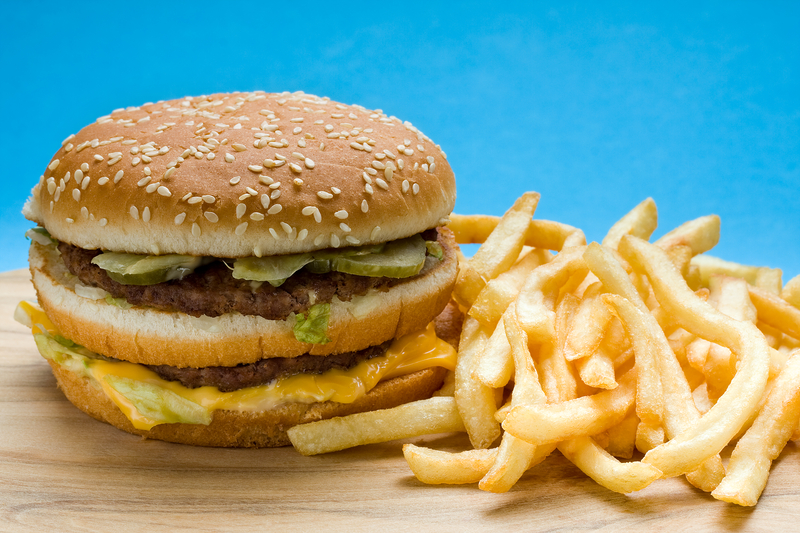
Consider these two meals:


While the hamburger and french fries look fairly tasty, and I'm sure many of us have been known to indulge occasionally (or often) in high-fat, relatively unhealthy foods, most of us also know that the pretty salad would be a better choice. We know that eating vegetables and fruits that are in a form closest to nature are better for our bodies. We know that deep fried, white carbs are the antithesis of a healthy diet, and we know that red meat, high in saturated fat, clogs our arteries and could shorten our lives. We know that our bodies absorb nutrients from natural sources more readily than from multivitamins or "enriched" foods. We know that fast food is prepared and processed with artificial flavors, excess salt, and with little regard to the health of the person consuming it.

We know these things.

And because we know these things, we try to make good choices as often as we can. We eat fruits and vegetables more often than McDonald's. We offer our kids water instead of Hi-C or sodas. We provide carrot sticks instead of cookies. Cupcakes are an occasional treat, not an everyday snack. At the very least, we allow ourselves to feel a twinge of guilt when we reach for a doughnut instead of a carrot stick.

We want what's best for our kids. We want them to live long, healthy lives. Part of giving them that gift, the gift of health, the gift of a great start, is feeding them well and teaching them good eating habits.

What does this have to do with breastfeeding?

Well, everything.

Consider these two meals:


Both are legitimate ways to feed a baby. Both are common sights. Some babies eat formula. Some babies eat breastmilk. Some eat a combination of both. When we choose how to feed our babies, do we make the same considerations about these early milks as we do about their diets at three, four, 12 years old? We should!

Formula is also known as "artificial baby milk." It is a hodgepodge of cow's or soy milk that's been modified to alter the fat and sugar content to more closely mimic human milk. It has sweeteners, carbohydrates, vitamins, minerals, and fats added to it to try to bring the nutritional balance as close to human milk as scientists can manage. The vitamins in formula are chemically derived from various animal and vegetable sources. Formula is engineered food.

Breastmilk is nature's baby food. It has everything the baby needs, in exactly the proportions he needs it. Its nutrients are readily available to the baby's body, just as the iron in spinach is more available to our bodies than that in an iron supplement. It is natural. It is delivered in the proper portion size directly from the breast.

Just as people can survive on prepared, processed foods and fast food, babies survive on formula. Just as eating Burger King and Hungry Man dinners every day provides calories, fats, carbohydrates, and proteins to adults, artificial baby milk provides calories, fats, carbohydrates, and proteins to babies.

But surviving is not the optimal state. Surviving is just getting by. We don't want our kids to just get by, we want them to thrive, to reach their full potential, to be as healthy as nature intended them to be. For that, they need those healthy foods, the foods nature intended them to eat, and at the very tippy top of the list of those natural foods is breastmilk. If we start them out on breastmilk, we are providing the food they are meant to eat, the nutrition their bodies are designed to understand and use.

A newborn baby will eat at least eight, and sometimes closer to 10 to 12, times in a 24 hour period. Imagine if you ate fast food or frozen dinners for every single meal, three to five times a day, every day, for a year. It sounds harsh, but that's basically what feeding a baby formula is. The human body is incredibly adaptable and will attempt to continue to grow even in difficult circumstances, but we can't develop fully on a diet that is only letting us survive.

It's time to be honest with ourselves about how we're choosing to feed our babies. Do we want them to have everything they need or mostly what they need? Do we want them to simply survive, or do we want them to thrive? The issue is not whether breastfeeding or formula feeding is "easier." The issue is not about guilt or "mom-petition." The issue is creating a healthier society, one baby at a time.

Thursday, January 3, 2013

So, Which is Easier, Breast-Feeding or Formula-Feeding?

All right! Now that vacations out of the way and I can get back to a more regular blogging schedule, let's talk about that breastfeeding survey! I asked you to fill out a short, 10-question survey about your own exposure to infant feeding and your feelings about which is easier. I was actually fairly surprised by the results, and I think you might be as well.

I received 26 responses, not including my own. If you'd like to respond and haven't yet, I'll leave the survey up for a little while longer. I can revisit it in a few months and see if a greater number of responses alters or reinforces my conclusions.

The first two questions asked whether, in your experience or observation, breastfeeding and formula feeding are "very difficult, difficult, manageable, or easy." The majority of you answered, for both questions, "manageable," which was surprising to me. The second most popular answer for both questions was "easy." Overall, it seems infant feeding in general, be it by breast or bottle, is not considered a great challenge. Many responders felt the need to clarify or justify their responses by adding comments that different variables may affect their feelings, such as whether they work outside the home (making breastfeeding more difficult), or by stating that even if they thought breastfeeding was difficult, it's still worth doing. Two responders who felt formula feeding was difficult commented that it was because of all the bottle-washing.

And what do I think? I think formula feeding is very easy, if you have a baby who tolerates regular formula. I also think breastfeeding is easy, but there is a greater learning curve. I also think breastfeeding is not easy for everyone, for various reasons ranging from a physical problem with creating enough milk, to emotional difficulties, to a baby with physical or medical problems. All-in-all, having done both, I am going to come out and admit that formula feeding is easier in many ways but that I prefer breastfeeding on the whole.

The third question asked if you know how to properly prepare formula. I asked this because I think most people think they know how, but they may not be aware of the official guidelines to prevent bacterial contamination. The majority of you say that you do know how to prepare a bottle of formula properly. Certainly, preparing a bottle is not rocket science, but I was curious to see how confident we all were about our bottle-preparing skills. For the record, I knew the basics (how to measure, how to sterilize/sanitize bottles and nipples, how to warm the bottle). Some health authorities recommend boiling the water prior to use and not allowing it to cool below 70 degrees Celsius before mixing it with the formula powder. It is important to note that powdered formula is not sterile and is not safe for use with very young babies or babies with immune system compromise. Ready-to-use formula is sterile (but also considerably more expensive).

To contrast this, I then asked whether you know what a proper latch should look like when breastfeeding. Most of you say you do know, which is encouraging. The important thing to remember about your baby's latch is that it should feel right. However, if you're looking from the outside, your baby's lips should be flared outwards. The nipple should fall far back in the baby's mouth, so that a good section of the areola is in the baby's mouth as well. Many lactation consultants will advise you to try for an "asymmetrical" latch, meaning that the baby's lower jaw is closer to your chest than his upper jaw. The baby's chin should not be tucked into his chest, and his ear, shoulder, and hips should be in a straight line - his body should not be twisted, and he should not have to turn his head or strain to reach the nipple.

It really got interesting after this. The next four questions asked you specifically about your exposure to formula and breastfeeding aside from your own baby (if you have one). While most of you had often seen babies being fed from bottles, only about a quarter of you had seen babies breastfeeding on a regular basis. Several of you had seen bottles being prepared, and a third of you had prepared bottles for other people's babies. I was not surprised to find that there was far more exposure to bottle feeding than breastfeeding. Certainly the bottle is a pervasive symbol of babies and baby care in the Western world, especially the United States.

Finally, I asked you to decide which is easier, breastfeeding or formula feeding. The majority of you said breastfeeding is easier. Many who said that formula feeding is easier felt the need, again, to modify their responses by adding a comment that they still believe breastfeeding is better, even if formula feeding is easier.

What's interesting to me is that there was a definite reluctance to classify breastfeeding as difficult. I assume most of the respondents are breastfeeding advocates, experienced breastfeeding mothers (or their partners), or favor breastfeeding over formula feeding with their own children. If we say that breastfeeding is not easy, we may increase reluctance in giving it a try, especially among those who are specifically wondering which is really easier. Those who said formula feeding is difficult generally mentioned bottle-washing as a major turn-off. Those who wanted to comment as to what they found difficult about breastfeeding tended to allude to the difficulties associated with pumping and being "tied" to your baby.

I think this reveals a few basic issues in the "breastfeeding versus formula feeding wars." (By the way, the majority of you were not aware of this issue before becoming pregnant with your own baby.) The first is that there is still not enough general exposure to breastfeeding in everyday life. We need to see more breastfeeding in public, on TV, within our own families. Because of the strong formula/bottle-feeding culture in the United States and other Western countries, many children grow up never seeing a baby breastfeeding. Reinforcing this is baby dolls with bottles, the bottle as a symbol of "baby" in baby shower decorations, congratulatory greeting cards, baby birth announcements, and so on.

The second is that there is a perception that in deciding which feeding method to use, it matters which is "easier." I've written a couple of posts on this topic (for example, here and here). Many aspects of child-rearing are neither easy nor fun, while others are incredibly rewarding. What's important is not whether one is "easier" than the other, but which one is more beneficial to mother and child.

So is breastfeeding easier than formula feeding? In all honesty, no. It isn't. But both have their challenges, and the question is whether breastfeeding is overall more beneficial to mother and baby than formula feeding. And to that, I can say unequivocally, YES, it is.

Friday, November 30, 2012

It's Your Turn, Take 2! Your Breastfeeding and Formula-Feeding Experiences

Let's make this easier. I haven't had a very enthusiastic response to my little survey, posted Wednesday. I've made a web-based survey for you to fill in instead, rather than having to answer in a comment or email. Responses will be anonymous, and you can feel free to comment on any question to clarify or enhance your response. Enjoy!

Click here to take the survey!

Wednesday, November 28, 2012

It's Your Turn! Which Is Easier, Breastfeeding or Formula-Feeding?

I want to try something different with this post. I get a lot of hits on my blog for people looking for "is breastfeeding easier than formula?" and related searches. They mostly land on this post. I've also written a few others, like this one, and this one, that touch on that topic. Because this seems to be a popular question, I want to put it to my readers to help me answer it. In the comments, or in an email to jessicaonbabies (at) gmail (dot) com, or as a comment on this post on the Facebook page, answer the following questions as honestly as you can, either from your own experience or the experiences of friends and relatives. You can keep it anonymous if you want to, and feel free to expand on your answers if you want to be more specific. I'm interested to see what the general trends are. I'll follow up on this post in a week or two with a compilation of your responses and my reaction, as well as my own answers!

1. In your experience, or the experiences of people around you, do you see breastfeeding as:
a. Very difficult
b. Difficult
c. Manageable
d. Easy

2. In your experience, or the experiences of people around you, do you see formula feeding as:
a. Very difficult
b. Difficult
c. Manageable
d. Easy

3. Do you know how to properly prepare a bottle of formula?
a. Definitely
b. I think so
c. Not sure
d. No

4. Do you know what a proper latch looks like when breastfeeding?
a. Definitely
b. I think so
c. Not sure
d. No

5. Before you had a baby of your own, did you ever see someone breastfeeding a baby? (Including on TV)
a. Never
b. Once or twice
c. Occasionally
d. Often

6. Before you had a baby of your own, did you ever see someone giving a baby a bottle (regardless of what was in it)? (Including on TV)
a. Never
b. Once or twice
c. Occasionally
d. Often

7. Before you had a baby of your own, did you ever see someone prepare a bottle of formula? (Including on TV)
a. Never
b. Once or twice
c. Occasionally
d. Often

8. Before you had a baby of your own, did you personally ever prepare a bottle of formula for a baby?
a. Yes
b. No

9. Before you were pregnant, were you aware of the breastfeeding versus formula "wars"?
a. Yes
b. No

10. In your opinion, which is "easier," overall?
a. Breastfeeding
b. Formula-feeding

Thursday, August 16, 2012

Breastfeed Just Once, and Then Decide

I stumbled across a rather polarizing article on why a particular author decided even before giving birth that she wasn't going to breastfeed. I'm not going to link to it, because I found it offensive and simply argumentative, but it can be found on the Mommyish site, if you care to go hunt it down. The problem I had with her article was that all of her reasons for not wanting to breastfeed were uninformed nonsense. She clearly wrote the article just to antagonize and not to convince or even to simply state her position.

Look, I said this in my very first paragraph of my very first post here: "I don't so much care what you choose to do. I just care that you make an informed choice." And I hope that you feel my posts since then have held to that basic philosophy. So if you give birth having already decided that you just don't want to breastfeed, then you don't have to defend yourself. Simply saying, "I just don't want to" is perfectly fine.

But it got me thinking. How can you decide even before giving birth that you just don't want to? I understand if there are underlying issues, such as previous sexual abuse, body image issues, or emotional or health issues that make breastfeeding difficult or insurmountable. Those are reasons far beyond, "I just don't want to." I'm talking about perfectly healthy women who have had healthy pregnancies and healthy birth scenarios who immediately request formula to feed their babies. How do you know you just don't want to? What turns you off so much about it?

For those women, I have a proposal. Breastfeed once. Just once. As soon as the baby's born, the best place for her to be is on your chest, skin-to-skin. Why not give the baby that one dose of colostrum? Nurse for 20 minutes, an hour, just once, while they clean you and the baby up and get you ready to go to the maternity ward. After that, do what you want, but why not give it a try at least? It certainly wouldn't do any harm, and you might be surprised by how it feels. Maybe try it once more when the baby wakes up. And then switch to bottles. After all, those first few breastfeeds help you out almost as much as the baby, by helping your uterus contract, which will help prevent hemorrhage and help you regain your shape.

I'm not going to try to convince you to continue nursing. I'm not even trying to convince you to nurse that one time. I'm just asking, why not? The thing about breastfeeding is, it's almost impossible to change your mind later if you choose not to breastfeed. But you can always change your mind and stop breastfeeding once you've started. Every drop of colostrum and every drop of breastmilk your baby gets makes a difference in her health and in yours. More is better than some, but some is better than none, after all.

Feel free to ignore me. I'm not pushing anything on anyone. I'm just making a suggestion. You might ask my opinion on a car seat or where the baby should sleep or how he should be dressed for this weather. You might ask me whether I swaddled or if I used a pacifier or which pediatrician I like. You might ask me which hospital I delivered at and why. You might ask what stroller I use, whether I let my cats near the baby, and if I took any medications during pregnancy. And, you might ask my opinion on whether you should breastfeed or not. If you're dead-set against breastfeeding, then don't breastfeed. There are plenty of other decisions you have to make about your child, stretching into the long years ahead. If the idea of breastfeeding is just too overwhelming, or you don't want your breasts to belong to someone else for the next year or two, or you just generally find breastfeeding "icky," or you're afraid you'll get sexually aroused by nursing, or you're uncomfortable bearing your breasts, or you have sensitive nipples and you're afraid it'll hurt, or you think breastfeeding will make your boobs saggy, or you want to be able to hand off baby to someone else to feed, or you just don't want to, then don't breastfeed. I'm no one special, that you should listen to me more than anyone else, more than yourself. In the end, you're the mommy, and it's your baby, and you get to choose.

But, just a friendly suggestion, breastfeed once. All of your worries or fears or just not wanting to aside, one feed, one time, the first time will not change anything. If it hurts, then stop. If you get aroused (highly unlikely right after giving birth, I'd think!) and you don't like it, then stop. If you want someone else to feed the baby, then stop (or, you can pump and let someone else give the expressed milk - just a suggestion!). One breastfeed isn't going to make your boobs any saggier than pregnancy already has (although it's a myth that nursing makes your breasts saggy - it's pregnancy, gravity, and age that do that). And having just given birth, your breasts and all the rest of you are going to be bared anyway, so what difference does it make?

Breastfeed just that one time, and then decide. You can always choose not to breastfeed, any time from day one until day 730, but once you've passed the first few days without breastfeeding, it's going to be mighty difficult to choose to breastfeed.

The most important thing, though, is that you love your child, that you make the decisions that you think are best, and that those decisions are informed decisions.

Happy Breastfeeding Awareness Month!

Tuesday, July 31, 2012

About Those Formula Freebies and Mayor Bloomberg...

By now, just about every breastfeeding blog I read has made some kind of commentary or another on New York City Mayor Bloomberg's new program for breastfeeding promotion in NYC hospitals. Part of the Latch-On NYC initiative, this voluntary program requires that participating hospitals lock up formula, not routinely give out formula samples and formula-branded paraphernalia to new parents, prohibit the display of formula promotional materials in the hospital, and conform to the New York State hospital regulation that exclusively breastfed babies not be given formula supplementation unless medically indicated. The program is expected to raise breastfeeding rates in participating hospitals because research shows that women who are given formula samples by their doctors or in the hospital are 3.5 times more likely to be supplementing with formula by two weeks of age. If formula is kept under wraps, and new mothers receive education about breastfeeding before their babies are given any formula, the thinking goes, breastfeeding rates will rise and the overall health of the population will improve. Hand-in-hand with this is news of an AAP resolution that pediatricians should not routinely hand out free formula samples to patients, for the same reasons.

I have been reading every blog post I've been linked to, taking in almost every comment on all the major breastfeeding and parenting blogs I frequent, and I still don't quite know how I feel about this initiative. It sounds like they're basically trying to get NYC hospitals to conform to the Baby Friendly Hospital Initiative standards without going through the BFHI certification process. I gave birth to GI in a Baby-Friendly hospital, and I felt that the breastfeeding support there was excellent. Of course, I went in intending to breastfeed. If I had gone in less certain, uneducated, or sure I wanted to use formula, I'm not sure how I would have felt. I didn't need or want to ask for formula, so I don't know what kind of "lecture" or "education" I would have gotten had I made the request. I didn't have any problem nursing or producing milk, so I don't know how I would have been treated had I genuinely felt my baby was starving and needed formula supplementation. Because I've been lucky enough to be able to nurse with relatively few problems, and because I'm extremely pro-breastfeeding, well educated about breastfeeding (I literally wrote a book on it), and because I wasn't going to let anything or anyone stand in my way of breastfeeding, I didn't need to think about "the other side."

I often wonder whether I would have been able to breastfeed NJ had I given birth to him in a hospital like the one where I had SB and GI. Rather than jumping straight to formula when there was the slightest hint of a problem, if they had been more supportive of breastfeeding and, more importantly, had been more supportive specifically of me in my situation, would I have left the hospital breastfeeding instead of with an extra case of formula? It's very hard to say. My husband and I were discussing this last night (in the context of the above-mentioned controversy). His perspective and memories of those early days are different from mine, but we both remember that the lactation consultants who visited me were quite unhelpful. While it may have been true that many women who experience postpartum hemorrhage have difficulty with their milk supply, and while it may have been true that pumping often would help bring in my milk, what I really needed was to spend lots of time skin-to-skin with NJ, nurse him on demand, and be forced to care for him. Yes, I was weak. Yes, I had lost a lot of blood. Yes, I was in pain. But NJ was healthy and strong, had a great latch, and, with a little help, I probably could have initiated breastfeeding while in the hospital and breastfed him several times a day during that four-day stay rather than allowing the nursery nurses, my husband, my mom, and my visitors to feed him for me. It's probable that he would have needed a few bottles (or to be fed via syringe, perhaps?) on the first day when I was fairly down-and-out from blood loss, but on the second day? The third? Through the night? I do remember some good practices, such as telling me to save whatever I did pump and that they could give him that in a bottle instead of formula. They did provide me with a pump and show me how to use it. They did have lactation consultants come every day. But I constantly feel, looking back, that the advice the LCs gave me was, while not necessarily wrong, unhelpful or misleading. If you straight out tell a woman she won't have enough milk, why should she even bother to try? And if you don't tell her or her husband that formula is not, in fact, equal to breastmilk, then why shouldn't she just go straight to formula to begin with?

What's missing in all of this, to me, is that education prenatally is vitally important. The decision to breastfeed can't necessarily be made in the postpartum haze. The desire to stick with it is lowest when in the throes of newborn nursing, and the temptation to use that free formula is highest at the most critical period in the breastfeeding relationship. I know this. I've lived it. You need to walk into that hospital determined to breastfeed. You need a supportive hospital staff, from the OB or midwife to the delivery nurse to the postpartum nurses. You need lactation consultants on hand 24/7 (not just during business hours!). You need good, solid breastfeeding information. And you need to know that you are going to be respected for whatever choices you make.

The loudest complaints against this program seem to be from two basic viewpoints. One is the women who never wanted to breastfeed and don't liked feeling "shamed" or "guilted" by the hospital for their choice. The other is the women who desperately wanted to breastfeed but, for whatever reason, needed to supplement with formula in the early days and struggled long and hard with the decision. Both feel that formula samples are helpful, especially those that only needed a can or two of supplements before being able to go on to exclusively breastfeed. Both feel that being lectured or educated by hospital staff before someone will go get them a bottle for their starving babies is shaming and unfair.

The thing is, I agree with them, too. If my baby is starving because I can't produce enough colostrum or milk to satisfy him (please note that this is rare), then I need to be able to give him something else. If the hospital staff balk at giving me a bottle of formula to feed him, and I have to sign a form or justify my request every time my baby gets hungry, it's going to make me feel even worse and more inadequate. Support doesn't mean just patting a woman on the back and telling her she's doing a good job breastfeeding. Support means sitting down with a woman and figuring out what she wants, what her goals are, and then helping her get there. A good IBCLC knows this, and a good IBCLC will know when formula supplementation is necessary and how best to introduce, use, and wean off of those supplements, if possible. Having a nurse who's had a little bit of lactation training come in and tell you once again that formula isn't as good as breastmilk, and maybe you should have another go at feeding from the breast before you give a bottle, is only going to make a frustrated mother more flustered and upset. We need a balance.

I'm in favor of locking up the formula, but I'm also in favor of giving it to any mother who asks for it. I'm in favor of banning the gift bags and the formula-branded handouts, but I'm also in favor of giving unbranded formula to mothers who need it (in the hospital). I'm in favor of good breastfeeding support and information, but I'm also in favor of education in the proper preparation and use of formula, if a mother chooses to use it. I'm in favor of pediatricians having formula samples on hand to help out mothers who need it, but I'm also in favor of pediatric offices having lactation consultants on staff to help mothers who are struggling. Balance.

We need a more comprehensive solution. While restricting access to free formula will increase breastfeeding rates among those who are on the fence (that's been proven), it will not help those women who truly need it or who adamantly refuse to breastfeed. We need information and education throughout women's lives, and especially during pregnancy, to help them learn about breastfeeding before there's a squalling baby in their arms. We need postpartum support, especially for those women who are going back to work. We need support for pumping in the workplace. We need better, longer maternity leave. We need a cultural shift.

If there is one thing I know, unquestionably, it's that the more babies who are breastfed, the better. Banning formula freebies in hospitals and pediatric offices is a step in the right direction, but it's not the only step.

Wednesday, July 11, 2012

Breastfeeding Is Not Always Easy, But Neither Is Raising A Child

Breastfeeding is not always easy.

There, I said it.

Breastfeeding is not always easy.

But it's also not always hard.

And bottle-feeding isn't always easy, either.

See, that's the thing. Caring for a baby is not easy. It's not always hard, but it's not easy, either.

In the beginning, breastfeeding takes effort. For some women, it takes a lot of effort. For others, it comes with only a shallow learning curve.

I don't think most people need to be convinced, nowadays, of breastfeeding's health benefits to both baby and mother, that breastfeeding is more natural, that breast milk contains all sorts of incredible ingredients unmatched by any commercial formula. We know this. And yet, because we have a choice, we still feel there's a choice to be made.

That's fair. We make a lot of choices when it comes to baby care. Start solids at 4 months or 6 months or when the baby shows interest? Commercial baby purees or homemade baby purees or table foods? Cloth diapers or disposable diapers or elimination communication? To swaddle or not to swaddle? Which car seat to buy? Which stroller? Should we baby-wear? What carrier or carriers should we use? To vaccinate on the CDC schedule or delay vaccinations or not to vaccinate at all? To send to daycare or stay home with a parent or hire a nanny or a part-time baby-sitter?

When we have choices, we feel we need to make choices. And the existence of formula means we do have a choice when it comes to how we feed our babies. Thank G-d for that. Thank G-d that babies whose mothers are unable to feed them due to a medical condition, absence, or tragedy have an alternative. Thank G-d that mothers who are suffering from a medical or emotional condition that is incompatible with breastfeeding can still feed their own babies. Thank G-d that working mothers who are unable to pump enough to meet their babies' needs have a backup.

But why is it that so many women want to make the choice about infant feeding based on which one is easier? Because, let's face it, the easiest thing would be to let someone else care for the baby entirely! Come and visit when she's happy and content, and as soon as she starts crying or needs something, hand her off. Wouldn't that be great?!

No.

Of course not.

When we have a baby, we take on the responsibility of caring for her. We expect to have difficult times, but we also expect to cherish the good times. We are filled with love. Every smile melts our hearts. Every cry hurts. Becoming a parent means taking the hard times with the easy, making difficult decisions, caring. And it's not like they're babies forever, when feeding and diapering are our biggest concerns. What about when your 12-year-old tells you that his friend is thinking about suicide, or your eight-year-old expresses concern about her weight? What about when your 16-year-old comes home drunk from a party or your six-year-old asks where babies come from? Things really don't get easier. I heard it put very succinctly, once: "Bigger kids, bigger problems."

We may as well get used to the idea right away that raising kids is not easy. Being a parent is not easy. We will always have difficult decisions to make. Sometimes, we will be confronted with two options, neither of which is easy, and sometimes we will get to choose between two easy actions. Sometimes the right choice is obvious and easy. Sometimes it's obvious and difficult. Sometimes it's neither obvious nor easy. Sometimes there is no "right" choice. Sometimes there is no "easy" choice. And, yes, sometimes there is no choice.


So when it comes to breast milk versus formula, breastfeeding versus bottlefeeding, does it matter which is easier? Is that the only determining factor? It's easier, so that makes it the right choice?

I don't know. Maybe for some parents, that is the major deciding factor. But I hope that when it comes to raising a child, we don't always go with whether something's easier, but rather what's the best thing we can do given our situation.

Thursday, May 10, 2012

Ear Infections, Asthma, and More: Breastfeeding and Baby's Health

When NJ was a baby, he had quite a few ear infections - six, I believe, in the first 15 months of his life. It wasn't enough for the pediatrician to recommend ear tubes, but not far from it. At four months, he contracted RSV, which caused his airways to become inflamed, necessitating treatment with albuterol using a nebulizer. It also appears to have conditioned him to respond to future colds with what was called Reactive Airway Disease (RAD), basically asthma symptoms that are triggered by a cold. Almost every time he'd get a cold, he'd end up with a wheezy cough that lingered for a couple of weeks. Treatment with albuterol and sometimes oral prednisolone usually had him breathing easily again within a few days. Eventually, thankfully, he grew out of his RAD and he hasn't had a problem with it in several years now.

His ear infections and asthma were yet more fuel for my guilt over not having breastfed him. Maybe if he'd been breastfed, he wouldn't have had so many ear infections. Maybe if he'd been breastfed, he wouldn't have gotten RSV. Maybe if he'd been breastfed, he wouldn't have gotten so many colds. Maybe if he'd been breastfed, he wouldn't have had the RAD.

Indeed, SB's relative excellent health as an infant made me a believer. There's plenty of research out there to show that not breastfeeding increases a child's risk of ear infections, upper respiratory infections, asthma, diabetes, certain types of cancers, obesity, and so on, although the mechanism of protection is not always clear.

I remember reading, when NJ was a baby, that the average infant got 12 colds a year. That's one a month! NJ was certainly at the doctor almost once a month throughout his first year of life, not even counting his well baby checkups. He was rarely "well" even at those. That's not to say he was sickly, just that he often had a cold or drippy nose or cough or ear infection. It seemed like he was either just coming down with something or just getting over something or right in the middle of something, with the rare week of respite. Having a sick baby is frustrating and wearing, even if it's not a serious illness (thank G-d) or chronic condition. (I can't even imagine what it must be like if your child really is always sick. G-d bless all you parents dealing with that kind of stress.) What I began to wonder was, if formula feeding (or not breastfeeding) increases the risk of colds, ear infections, asthma, etc., then maybe it isn't "normal" for babies to be sick every month. Maybe breastfed babies aren't sick nearly so often, and that it's actually not normal (as in, natural) for infants to go around with drippy noses and achy ears almost constantly. Certainly, the fact that SB was rarely at the doctor except for well baby checkups throughout his first year bore out my expectation.

When GI was born, I placed a great deal of faith in the power of my breastmilk to protect him from his two older brothers' constant germy contact. NJ is kind enough to bring home and share every cold that comes his way at school. I will say that he appears to have quite the robust little immune system now, having been exposed to so many viruses when he was smaller. SB, however, being exposed only through NJ to all these viruses, still has not built up the wall of antibodies that appears to be working so well for NJ. At three, SB seems to come down with every cold he's exposed to, but he bears it well, mostly just getting snotty and sleepy for a few days. Both NJ and SB have the terrible habit of having fingers (and toys) in their mouths almost constantly. They like to amuse GI by blowing in his face, giving him raspberries (as in, spitting all over him), touching his hands, letting him put his hands in their mouths, touching his face, eyes, nose, and so on. Still, I had high hopes that breastfeeding would preserve him from the fate of constant colds.

Unfortunately, it seems like GI is sick more often than not, lately. After his bout of bronchiolitis not too long ago, he was healthy and happy for a few weeks. Then, suddenly, he was sick again, with the same cold both of his brothers had. NJ recovered quickly. SB is still a bit snotty but otherwise himself. But GI was up all night a couple nights back, coughing and wheezing. I took him to the doctor yesterday, where the wheeze was confirmed, and I was sent home with a nebulizer machine and a vial of albuterol, as well as oral prednisolone, and instructed to give him a nebulizer treatment up to four times a day and the prednisolone twice a day for five days to relieve the inflammation in his lungs. This was eerily familiar, as the nebulizer and the albuterol and the prednisolone were all standard features around our house when NJ was a baby, too. It's helping, though. He's breathing much more easily, coughing far less, and seems to be himself again. The only problem is that the steroids make it hard for him to sleep. But that will be over with soon enough, thank goodness.

What strikes me with all of this is that despite being 100% breastfed for the first six months and still mostly (like, 95%!) breastfed still at eight months, GI is sick almost as often as NJ was as a baby. The only difference is that GI's only had one ear infection. The doctor gave me the nebulizer machine because he sees this happening again, so we'll be prepared next time. It looks like GI is in the RAD camp alongside his big brother.

I still firmly believe that not breastfeeding increases the risk of a host of problems. I still agree that breastfeeding is normal and offers babies protection from all sorts of germs. I find myself saying, "But I did everything right! He's breastfed! We delayed cord cutting! I'm taking a Vitamin D supplement, and he gets sun almost every day. California sun!" And yet he comes down with so many colds, has this asthma problem now, and has had an ear infection. Let's face it, when the numbers aren't 100%, some people are on the "wrong" side.

So, you have your parents who say, "My kid was formula-fed, and he's healthy as a horse!" And you have your parents who say, "My kid was exclusively breastfed, and he had six ear infections and three asthma attacks by the time he was one." And both can be true, absolutely. But the issue isn't whether your kid fell into the expected category; it's whether most kids fall into the expected category.

I still remind myself that, if GI gets sick this often while breastfed, how much worse would it be if he weren't?  Perhaps the asthma symptoms would have manifested sooner. Perhaps he'd have had more ear infections. Perhaps, G-d forbid, he would have been hospitalized when he had bronchiolitis instead of recovering on his own. Who knows?

Anyway, the one benefit of breastfeeding that absolutely cannot be overlooked when your baby is sick is it's ability to comfort. Being close to Mommy, feeling her skin, hearing her heartbeat, suckling, the warmth of the milk on a raw, inflamed throat, and the calm of being where he feels safest is certainly the best medicine when your baby doesn't feel well. And lying down with him as your baby drifts off into a healing sleep makes it easier for you to handle the stress of his being sick.

GI is sleeping peacefully now, where I just returned to writing after nursing him back down. When all else seems to fail, at least I know I have that to offer.

Saturday, March 24, 2012

Breastfeeding: All or Nothing?

I read an interesting point in a blog post recently, and I only wish I could remember which blog, because I read so many and rarely keep track of who said what (bad blog reading, I know). In any case, the point was that while you can choose not to breastfeed, you can't then later choose to switch to breastfeeding. However, you can choose not to formula-feed and then later choose to switch to formula if your situation calls for it. Basically, you've got to start out breastfeeding, and then make the choice either to continue or let your milk dry up and switch to formula.

This isn't exactly true, of course. It is both possible to relactate - that is, ask your breasts to start making milk again after having let your milk dry up - or to induce lactation - that is, ask your breasts to start making milk even if you never even had a baby. Some adoptive mothers do the latter, inducing lactation by tricking the body into thinking it's pregnant and then tricking the body into thinking it's delivered a baby through the use of hormone therapy and 'round-the-clock pumping. It's not easy, and it doesn't work for everybody, but it can be a very rewarding effort if you wanted to go that route. As for relactation, it's nearly as difficult. It's possible to bring your milk back in within the first few months after giving birth if you pump about every two to three hours around the clock for several weeks, as well as putting baby to breast as often as possible (if possible), but it takes serious dedication. After my first son was born and had been on exclusively formula for about four weeks, I thought about relactating. I spoke with a La Leche League leader about it, and she said I'd basically need to treat my breastpump like a newborn, pumping at least eight times in a 24-hour period (including in the middle of the night). She also said that since I had never established a full supply to begin with, it might never be possible to do so. I gave it a half-hearted effort, but never really was able to extract more than a few drops of milk, and I gave up after a couple of weeks of seeing no change.

So if you think you probably do want to breastfeed but you're not sure, you should start out doing so. Bring in your milk, breastfeed your new baby, and if for whatever reason you decide you don't want to do it, or there is a medical or psychiatric reason that you shouldn't or can't do it, you can always stop, wean to formula or bottles of donated breastmilk, and let your milk dry up. But, if you don't bring in your milk and start breastfeeding, it's pretty darn difficult, if not impossible, to change your mind six weeks in.

So in the beginning, yes, breastfeeding is "all or nothing." That is, either you do it or you don't. But, once you've established your supply and the baby has learned to feed effectively, and you give it a few weeks, or months, or years, things become a bit more flexible. For example, let's say that after six weeks, your maternity leave ends and you have to go back to work full time. You intend to pump and have your baby drink your milk from a bottle while you're separated from her. This would be ideal if you can't be with your baby all day, which many, many women can't. But, what if you just can't pump enough milk? Some women's bodies just don't respond well to the breast pump, and they can't produce enough, or they can't produce anything at all, or they can't keep up with their baby's needs by pumping. Other women's jobs are not ideal for pumping milk. Even though new federal law requires most workplaces to provide adequate break times and space for pumping milk, it still may not be entirely possible. Does this mean you have to stop breastfeeding and give your baby formula?

No!

Certainly, and I stress this because I believe it, it is most desireable to feed exclusively breastmilk for at least the first six months of your baby's life. That is the general recommendation from the AAP, the WHO, and other health services. Breastmilk is the best food for your young baby, and if you can provide it, and you will provide it, then you should provide it. The enormous benefits to your baby's (and your!) health, from nutrition to immune system to brain development to priming the digestive system, make exclusive breastfeeding the natural choice for every baby.

However, some breastmilk is better than no breastmilk. If you simply cannot provide exclusively breastmilk to your under-six-month-old baby, then continuing to nurse as much as you can is still good! Even if that means you only nurse at night, or in the morning and evening before and after work, or three times a day, or just for bedtime, some breastmilk is better than no breastmilk.

After six months or so, once you've introduced solid foods, you are no longer exclusively breastfeeding anyway. The benefits of breastmilk never go away, of course, so if you can continue to breastfeed as your baby's major source of nutrition, you should go on doing so. But, if you've given it six months and you're going a little nuts, backing off at this point is not as harmful, since your baby is eating other foods anyway. Remember that solid foods cannot and should not replace breastmilk and/or formula as your baby's major source of nutrition until after 12 months of age. Especially early on, six or seven months of age, solid foods shouldn't be more than 5 to 10% of your baby's daily intake. By one year, solid foods may be up to closer to 50% of your baby's intake. After one year, solid foods can be the majority of your baby's caloric and nutritional intake. Between six and 12 months, if you do decide to breastfeed less, you should replace most of the feedings with donated breastmilk or formula, not solid foods. One to three small meals of solids should be fine, but babies still need breastmilk or formula to thrive at that young age.

The AAP recommends breastfeeding for at minimum of one year. The WHO says two years. By one year of age, many babies are eating a fair amount of solid foods. At this point, you can choose to wean without taking away a significant portion of your baby's diet. However, if you want to continue to nurse, you certainly can. There is no psychological or physical harm to continuing to nurse to two years or beyond. The value of breastmilk and breastfeeding is not diminished just because the Earth has circled the sun one time since your baby was born. But, toddlers can survive on solid foods, assuming you are providing a variety of foods to create a balanced diet for your child. Children under two still need milk fats for brain development, either from your own milk, cow's milk, other dairy products, or another source. I am not a nutritionist or pediatrician, so I can't make a recommendation about what sort of milk to feed your toddler to replace breastmilk, but most pediatricians will tell you to give whole cow's milk to replace breastmilk or formula after one year of age.

If you do decide you want to wean at one year, you may need to start cutting back slowly. What you may find is that once you're down to two or three feedings a day, instead of six or seven, for example, or once you find that you no longer need to pump at work, breastfeeding may become an enjoyable break, rather than a burden or responsibility. Cuddling up with your toddler to nurse at bedtime or for an afternoon snack may be a time of closeness you and your toddler need during your otherwise hectic days. At this point, breastfeeding really isn't all or nothing. Weaning doesn't have to mean stopping completely, and weaning can be a slow, gentle process. I know of women who continue to nurse just once a day for months before they or their child finally drop that last feeding. I also know of women who continue to nurse six times a day, or more, throughout the second year. I found that SB gradually cut back over the course of his second year, until he was really only comfort-nursing at night. By the time I cut him off at 25 months, I didn't even get engorged, he was nursing so rarely and so little. A slow weaning process is more comfortable for both mother and child.

I don't really feel comfortable encouraging anyone to cut back on breastfeeding until her baby is at least one year of age. I wouldn't be writing this blog if I didn't feel that women should be supported and encouraged to choose exclusive breastfeeding. However, I also don't think it's fair to insist on breastfeeding as the only right choice, as if you either breastfeed or you don't. I think that places a lot of burden and blame on women who, for whatever reason, choose to use some formula. I also think it's important to let women know that breastfeeding some of the time is better than not breastfeeding at all. Just like some exercise is better than no exercise, and eating some vegetables is better than eating no vegetables, and getting some sleep is better than getting no sleep, breastfeeding some of the time is better than breastfeeding none of the time. To keep some supply, you have to breastfeed regularly, but if, for whatever reason, you don't breastfeed all of the time, that doesn't mean you have to stop completely.

I've been thinking about NJ's early weeks on this Earth, where he was getting perhaps 3 ounces of breastmilk per day when I pumped for him. I asked my LiveJournal audience if that measly 3 ounces a day mattered. I wish someone had said, "YES! Any breastmilk is better than no breastmilk!" I wish someone had said to me, "Try just nursing once a day. Maybe you'll find you want to try for a second feeding, and then a third." I wish I had known I could combination feed, or bring up my supply over time, as I healed, rather than just stopping. I wish I had known how important it could be in the future. I wish I had known how badly I would feel about stopping.

It is those regrets that drove me to two successful VBACs and two successful subsequent nursing relationships. (I've officially made it to six months of breastfeeding with GI, and we started solids a couple of weeks ago but are still mostly nursing. I'll be blogging about that soon.) It is also those regrets, and my subsequent successes, that drive me to write this blog. So I say, Yes! Do breastfeed! Give it a shot. Give it six weeks.  Breastfeeding some is better than not breastfeeding at all. Some breastmilk is better than no breastmilk. And it is not all or nothing.

Most importantly, find help and support so that you can meet whatever goals you have set for yourself. Knowing that you've reached or surpassed those goals will allow you to look back with pride rather than with regret or guilt.

Monday, March 5, 2012

Is It Really About What's "Easier?"

First of all, happy birthday to Jessica on Babies! This blog is officially a year old as of Saturday. I thank my loyal readers for keeping me writing, and my kids for giving me ever more to write about! I expressed interest in conducting a giveaway of my Kindle book in celebration of this milestone, but I need to know if people will participate in the sweepstakes if I run one. If you think you'd want to enter for a chance to win a free copy of my book for yourself or someone you know, please comment below or on my previous post and say so! Thanks! If I don't get any comments, I'll scrap the idea.
***

The great debate in infant feeding rages on, especially now that the AAP has updated and clarified its guidelines on infant feeding:
"Breastfeeding and human milk are the normative standards for infant feeding and nutrition. Given the documented short- and long-term medical and neurodevelopmental advantages of breastfeeding, infant nutrition should be considered a public health issue and not only a lifestyle choice. The American Academy of Pediatrics reaffirms its recommendation of exclusive breastfeeding for about 6 months, followed by continued breastfeeding as complementary foods are introduced, with continuation of breastfeeding for 1 year or longer as mutually desired by mother and infant."
The strong statement about breastfeeding as a public health issue, and not just a "choice," is a huge step forward in breastfeeding language and thought within the medical community, and I think the AAP should be commended for taking such a stand.

I often read and hear people debating about which is "easier," formula-feeding or breast-feeding, with fair points on both sides. There are ways in which feeding formula from a bottle is "easier," and there are ways in which feeding human milk directly from the breast is "easier." I'll even outline a few of each for you here, from my own experience.

Some ways in which formula-feeding is "easier" than breast-feeding:

  1. Other people can feed the baby without mom having to pump.
  2. There is a very short learning curve.
  3. You can see how much the baby is eating.
  4. Mom doesn't have to worry about what she eats and drinks.
  5. Mom can be away from the baby for an extended period of time.
Some ways in which breast-feeding is "easier" than formula-feeding:
  1. No bottles to wash or prepare.
  2. You don't have to wake up all the way for the middle-of-the-night feedings.
  3. Never have to worry about running out of food for the baby.
  4. Food is always the right temperature, quantity, and composition.
  5. It's cheaper.
When you look at it, it's kind of a silly list. It's all about the bottles and the preparation and who feeds the baby. Is that really what's most important? Is that really what the "choice" is about? What's easier? It's also "easier" to plop our kids in front of the TV all day instead of engaging with them. It's easier to take them to McDonald's every day instead of cooking healthy meals for them. It's easier to let them roll around in the back seat than install car seats and buckle them in every time. It's easier to let them do whatever they want than to try to discipline them. Heck, it's easier to keep them in diapers than to potty train them (believe me). But we wouldn't dream of making any of those choices just because they're "easier," would we? (Gosh, I hope not!)

How and what we feed our children, not just as infants but throughout their childhood, is a small percentage of the enormous body of choices we make for them as they grow. All of these decisions matter, some maybe more than others, but every choice we make for our children affects their health, well-being, happiness, and future. We have absolutely no way of knowing whether a particular choice we make is going to have a long-term consequence or benefit for our particular child, but we can look at statistics and research to make as informed a decision as possible based on overall trends. For example, it is quite clear that, when looking at a total population, people who were fed formula as babies are more prone to a host of diseases and problems, from food allergies to ear infections to diabetes and cancer, than people who were breastfed as babies. Evidence mounts. The risk for your specific child may be somewhat small, and perhaps it is a risk you are willing to - or must - take, given a medical, emotional, or family situation that makes breastfeeding an insurmountable challenge or undesirable option. However, it is important to admit that every choice you make has the potential to deeply affect your child's life.


I don't mean to cause you any terrible anxiety about what you feed your kid for breakfast tomorrow or whether you send them to preschool or what brand of jeans you purchase for them. I firmly believe that, for the most part, as long as we follow our instincts as parents, stick to our own moral codes, and, most of all, show our children that we love them, most of our other choices probably will not have lasting impact. However, the choices that are more likely to have long-term consequences for your child's health and well-being should be considered more deeply. So, while having French fries for all three meals one day is not likely to be a big problem, you probably don't want to get your child in the habit of eating that way on a regular basis. (Hey, I have a three-year-old. I sympathize!)

Since studies and statistics and research have shown that there is clearly a difference between breastmilk and formula in the long-term, this is a parenting decision that we need to think longer and harder about and educate ourselves about more, rather than choosing based on what's "easier."

Thursday, February 9, 2012

Feeding Other People's Babies

The other evening, we made a trip to the emergency room because my husband was sick. Fortunately, it wasn't serious, and he's fine, but it was an interesting experience. We left the three kids home with a sitter, hoping it wouldn't be more than a few hours that we would be there. Thank goodness I still had some pumped milk in my freezer from a couple of months ago. I left that and a bottle for the baby, left instructions and dinner for the older kids, and we were off.

While there, aside from worrying about my husband, my mind of course kept dwelling on whether GI was taking the bottle, hoping he wasn't screaming in hunger, hoping the other two kids went to bed nicely, hoping everyone was fine. I didn't get overly engorged - we were there about four hours, so the baby would only have eaten once, maybe twice, in that time anyway - but I did have two let-downs while we were sitting there.

As an aside, I will say straight out that the biggest inconvenience in breastfeeding is that you are tied to your baby. GI would not, in no uncertain terms, take the bottle from the sitter, and so was ravenously hungry when we got back from the ER. If he were regularly bottle-fed, there would have been no problem. However, the incredible benefits to breastfeeding far outweigh, to me, the occasional problem of not being able to be away from him for more than a couple of hours. And, certainly, if I were regularly away from him and regularly pumping, and he was regularly eating from bottles, it wouldn't really have been a problem either. Since I'm with him all the time, I don't have the patience or desire to pump and store milk and have someone else feed him when it really is easier just to nurse him. Other women do prefer to pump milk and have someone else (say, Dad) feed the baby once or twice a day (or night), and that's perfectly reasonable as well, as long as your supply is fine and the baby doesn't have a problem switching between breast and bottle.

But back to the story at hand. The way the emergency room was set up, we could pretty much hear what was going on with most of the other patients behind the other curtains. At the far end of the room, there was a woman with her husband, mother, and newborn baby. The woman had had a c-section, and I assume she was in the ER for some reason related to that. I couldn't hear everything they said, but I felt bad for her. I've been in that same situation. I heard the baby making rooting noises and fussing, and then I heard the nurse tell the mother that she couldn't breastfeed for 24 hours. I almost wanted to offer to nurse the baby for her. I had all this milk collecting in my breasts, and she had a hungry newborn who she couldn't nurse. I decided it would have been too weird to approach a random stranger in the ER and offer to feed her baby, and then the ER nurse brought over a bottle of formula for the baby, but the whole thing made me sad. First of all, even though they tell you not to breastfeed for 24 hours after they give you certain medications, it is often not true that those meds are incompatible with breastfeeding. It's important to check. Find out what they gave you and then do your own research as to whether it's okay to breastfeed. Secondly, since they knew she was breastfeeding, it would have been nice if they gave her meds that they know to be compatible with breastfeeding so there wouldn't be a problem. And, finally, that early in the breastfeeding relationship, giving bottles of formula for a day can be a great stress on the success of future breastfeeding. I'm not saying that being in the ER ruined this woman's ability to continue breastfeeding her daughter, but it certainly made it harder.

As far as offering to feed her baby, well, I've never actually nursed someone else's baby before. I know there are some women who set up baby-sitting shares, where they'll watch each other's babies and even nurse them. But, more often, if you are helping to feed someone else's baby, it's by pumping and donating milk to her, rather than directly nursing her child. I have donated milk in the past, with my abundance after SB was born, and I had every intention of doing the same with my similarly abundant supply with GI. This time, I find it difficult to pump even once a day, with three kids home all the time, so I didn't keep up with the pumping and now just have a small freezer stash. There were two women I thought I would be donating milk to, and I think that if I knew there was someone depending on me to pump for her, I would have, but neither one wanted my milk in the end, so I haven't been doing it.

Aside from donating to personal friends or acquaintances, you can also donate your milk to a mother in need who you don't necessarily know in person. There are a few informal milk-sharing groups out there, where a woman with milk to donate can be connected directly with a woman in need of milk and they can make arrangements for the direct donation of milk between mothers. It's pretty neat. These include Human Milk 4 Human Babies, Milkshare, and Eats on Feets.

You can also donate excess pumped milk to a milk bank affiliated with HMBANA. They have a screening process to make sure your milk is healthy for the preemie babies it is usually fed to. This usually just involves a blood test and a questionnaire to make sure you are healthy and not using any medications that might be harmful to a baby.

So, why donate milk, anyway? Isn't that kind of... gross?

First of all, milk is milk. Human milk is meant to feed human babies. And while the best milk for a given baby is his own mother's milk, any breastmilk (provided it isn't carrying a life-threatening disease or harmful chemicals or drugs, of course) is better for any baby than artificial milk, excepting very specific and special circumstances. The hierarchy of the best food for a young baby is: 1) His own mother's milk directly from the breast; 2) His own mother's expressed milk; 3) Expressed milk from another woman; 4) Formula/artificial baby milk.

Thus, if a woman is unable to produce enough milk herself to feed her child, the most desirable alternative for feeding that baby is donated human milk from another lactating mother. There are many women out there with excess milk in their freezers, or women who desire to do something useful with their life-giving milk, but they don't know what to do with it or who to give it to. I hope naming those resources above will be helpful.

Why donated milk instead of formula? Isn't formula good enough?


Well, yes and no. Formula is adequate to give your baby the nutrition he needs to grow. However, there is so much more to breastmilk than just nutrients, and more and more studies about breastmilk show that breastmilk is about far more than just feeding. To put it very succinctly, babies are born without gut bacteria. We need to populate the gut with the "good" bacteria, that help digest food and protect against infection. Human milk works in various ways to promote the growth of good bacteria, prevent inflammation and tissue damage to tender newborn guts, and to directly protect against invading infectious agents. Formula does not do any of these things. Young babies who receive even one bottle of formula in the early days and weeks of life will have a different gut flora (population and type of bacteria) than exclusively breastfed babies. This can cause inflammation and other undesirable effects on the "virgin" gut of a young baby. (Please note, the "virgin gut" can be reclaimed by exclusively breastfeeding, but it takes time, something like 6 weeks.) Once you introduce solid foods, the gut is no longer "virgin," anyway, but in those first six months, and especially in the first 10 days before the baby's immune system starts up, breastmilk is very important. Formula is adequate, but breastmilk is normal. Please see this excellent explanation from the Lakeshore Medical Breastfeeding Medicine Clinic and Dr. Jenny Thomas, MD, IBCLC, FAAP, FABM (how's that for a bank of initials after her name!).

It wasn't so long ago that it was reasonably common to for one woman to nurse another's baby. In other cultures, it still happens. Human milk is human milk, after all, and doesn't it make more sense to feed a baby milk from another woman of his own species than the milk from a totally different animal?

I've thought about it a lot over the course of nursing two babies, and I think that, if I were asked, I would happily feed another woman's baby. That's assuming, of course, that the baby would be willing to have me nurse him! I certainly would have no problem pumping a bottle for another baby if I were asked to help out.

By the way, it is possible to ship frozen breastmilk, although the less time the milk is out of a freezer, the better. I once shipped milk overnight from California to Florida in the middle of summer and it was still usable when it arrived, but we cut it kind of close. Donating/receiving milk locally, where it would only be out of the freezer for a short while, is preferable. The Milkshare website has a good couple of pages on storing, freezing, and shipping breastmilk intended for donation.

And remember that supply is governed by demand, so if you do decide you want to start pumping and storing for donation, you should be able to increase your supply over time in order to continue to provide milk for your own baby as well as putting some aside for another baby in need.

Thursday, October 13, 2011

Just One Bottle?

The latest hullabaloo in breastfeeding blog-land is the controversy over hospitals' supplying formula freebies to new moms, specifically in the context of the take-home bags. There are two issues under discussion here.

The first is that by handing out free formula, hospitals (and doctors) are advertising a product, which many feel they should not be doing. The reason hospitals give out free formula is that they have agreements with the formula companies that if they give (read: endorse) free formula to outgoing new moms, then the formula company will in turn provide free formula to the hospital to use in the nursery. The idea is that once a family starts using a particular brand of formula, they'll stick with that brand for fear of adverse reactions from switching (despite all formulas being essentially the same, and generics costing approximately half of what the identical brand-name product goes for). So, by giving a mom $30 worth of formula as she walks out the door, Enfamil or Similac or Nestle has just gained a new customer for at least the next 12 months, or so the formula companies' thinking goes.

The second issue is that studies show that mothers who have formula readily available at home are more likely to stop breastfeeding sooner or to supplement when it isn't necessary. Thus, mothers who are sent home with formula samples endorsed by the hospital are less likely to breastfeed exclusively for six months and are less likely to continue to breastfeed to a year and beyond, just because the hospital or pediatrician gave them a can of formula.

The first point is more of an ethical argument: Should hospitals be endorsing or advertising one brand over another (essentially identical) one? The second is a health issue: If the goal is for women to breastfeed their babies, then hospitals are undermining their own efforts at promoting breastfeeding by handing out formula as patients walk out the door. An associated problem is that if the hospital gives you formula, then the hospital is tacitly stating that you "can" or "should" use it, even if said hospital is otherwise trying to promote exclusive breastfeeding. It sends mixed signals.

There is one more, less controversial, issue as well. If you go home intending to breastfeed but decide to use formula for whatever reason, simply being handed a can of powdered formula with the hospital's blessing isn't enough. You need to know how to properly prepare and use formula, and if you don't do it correctly, it can be unsafe for a young baby. So if a hospital or doctor is going to give formula freebies, they should also give instructions on formula's proper use.

Okay, leaving that third bit aside, I want to talk about the other two problems from my own experience.

I've mentioned a few times now, if you're a long-time reader, that I had gone into the birth of my first son with the intention to exclusively breastfeed him. However, a difficult birth and lack of preparation on my part led to his being formula-fed. They asked us which kind of formula they should give the baby, and we, not having looked into formula at all, shrugged and asked what they suggested. They told us many moms liked the Enfamil Lipil, so we said sure, why not. When we left the hospital, they were "kind" enough to give us as much free formula as they could (a case of ready-to-feed bottles). When we ran out of those, we hesitantly bought a can of powdered stuff from the store and read the instructions carefully on how to prepare it. Naturally, we bought the Enfamil Lipil, because that's what they gave us in the hospital. He wasn't super-happy on it, so we eventually tried Enfamil Gentlease, which he did very well on. It wasn't until the baby was about 4 months old and I saw that Walmart carried a generic version of the Gentlease for about half the price that we got savvy and started using the generic, especially when we saw that the baby didn't care what brand was in his bottle! It didn't ever occur to me to buy Similac or Nestle, because, by golly, they'd given us Enfamil in the hospital, and that's what we were using! In fact, we were even convinced by Enfamil's excellent marketing that our son needed the additional nutrients found in their toddler formula, and continued using formula until our son started refusing it at about 16 months, at which point he was weaned to exclusively solid foods and cow's milk.

My second son was born at a hospital that gave out custom bags with no formula branding or free formula. I did get some free samples in the mail from Similac, and Enfamil and Gerber generously sent coupons regularly. I kept the Similac samples around but never touched them and eventually gave them to a friend who was formula-feeding. I was so gung-ho and had so few problems with my second son's breastfeeding that, even when I was frustrated, the thought of using formula never even crossed my mind. So having it in the house was not a temptation for me, but only because I was so committed (and obsessed? Maybe). If I had been slightly less so, the difficult times might have been just difficult enough to make "just one bottle" seem very attractive.

My third son was born at the same hospital as my second, and, as mentioned in his birth story last month, the breastfeeding support there was stellar. I again received a very nice, custom bag with no formula branding or freebies. I had intentionally signed up with some baby products mailing lists so I'd get free stuff, but the only free stuff I've gotten is formula. (I was hoping for a diaper bag or something!) There was a can of Similac sitting on top of my fridge for a while, until I moved it to the garage. I have to figure out who to give it to. So far, I don't have any formula-feeding friends this time around! (Not that I'm complaining.)

We brought our third son home on a Tuesday afternoon in September, on the first day of an awful, four-day heat wave. It was 92 degrees and humid. (This is quite unusual here in southern California, especially in September!) We don't have A/C, and the house was sweltering. The baby wouldn't stop nursing, probably because he was uncomfortably hot. His latch was not very good, and my nipples hurt so badly every time he latched on. (If that hadn't improved promptly, I would have gone to a lactation consultant for help!) And he latched on a lot! If I put him down, he'd scream. This went on into Wednesday, also 92 degrees and humid. I asked a friend to come over to meet the baby and keep me company, because I was all alone. She was a Godsend. She played with my other two boys, got us lunch - in the midst of my postpartum hormone surges, figuring out how to handle lunch actually had me in tears - held the baby, and was generally awesome. (You know who you are. THANK YOU for saving my sanity that day!) And the baby just kept on screaming whenever he wasn't nursing. We decided he was just so thirsty because it was so hot, and I had nothing but colostrum.

It was in that moment, the 674th time he latched on that day (okay, I may be exaggerating), that I understood the temptation of "just one bottle." I hadn't understood it with my second son, probably because it was December, I had fewer problems with his latch, and I was so worried that something would go wrong that I was afraid even to think about formula. This time, though I knew I wouldn't actually give him a bottle of formula, I understood why someone might. I needed relief. The poor baby wanted something to drink. If he had something other than my colostrum, maybe he would be happier, and my nipples could recover for an hour or two. Just one bottle... just one bottle...

Another friend of mine, who has a four-month-old, came over briefly to drop off some food for me and held the baby for a minute. He started rooting and screaming (of course). She jokingly said that she did have what he was looking for, but she wasn't sure how his mommy would feel about that. Truth be told, I actually almost asked her to nurse him for me!

Thank G-d, my milk came in Wednesday afternoon, and the baby got a good, long, satisfying feed, and he was suddenly the most content and happy baby you could ask for. It was a miracle. I had started to think that he would be a screamy, hungry monster for six months, and there was no way I could handle that, not with two other kids. I was in tears just thinking about it.

But once he had something to drink, he was fine, and he's actually been incredibly easy-going as a newborn nursling, giving me as much as two to three hours between feedings sometimes, which feels like a great luxury. My second son nursed, almost literally, every hour, so two hours feels like an eternity sometimes! It's nice.

But those first two days, with that can of Similac sitting up there on top of the fridge... Yes. I understand. Just one bottle. Just one. Just two hours of relief. Give me time to shower, apply some Lansinoh, close my eyes. Just one bottle. Just one. You know what the problem would have been if I had decided to give him that one bottle? I didn't have any bottles! (Ironic, eh? I had the formula but not the bottles.)

So, about those free formula samples interfering with breastfeeding in the early days? Yes. They can. Because another mom who had two days like I did, whose baby wouldn't stop screaming when he wasn't nursing, whose nipples were on fire, who had two other boys at home, who was all by herself on her newborn's third day of life, another mom who wanted to breastfeed but maybe didn't know quite as much as I do about how bottles can be a problem early in the breastfeeding relationship, that mom might give in and use "just one bottle."

Now, obviously, anyone can run to the store and buy some formula in such a situation, but it's less convenient, and she might be scared off by the price of a can. Or, in my case, she actually might not be able to run to the store, because she's all alone! But a free sample already in the house, given with the implied endorsement of the hospital, is very easy to tear open and use.

I'm not trying to paint formula or formula companies as evil. It's just business. And if a mom decides she does want to use formula, or wants to try to combination feed, or must supplement because of supply problems or weight-gain issues, then those free samples can be really helpful to have around! But if we're talking about supporting exclusive breastfeeding, which I am, then free formula samples really do get in the way.

Wednesday, August 10, 2011

Enthusiasm Does Not Equal Judgment

I sometimes feel that I'm treading a fine line between expressing enthusiasm about my chosen interests and the risk of offending friends who may feel I'm not being sensitive enough to their choices. Let me say this straight out, right now: I do not think you are less of a mother if you do not breastfeed. I do not think you are a bad mother if you use formula. I do not think you are abusing or poisoning your child with formula. And, finally, I would never judge you for making a parenting decision different from mine (unless there was clear child abuse involved, of course).

I consider breastfeeding another parenting choice we all have to make, just like we have to decide where the baby is going to sleep, live, go to school. Just like we have to choose a car seat and meals and whether we'll ever set foot in McDonald's with our kids. Just like we have to choose whether to cosleep until four years old or nightwean and cry-it-out at six months of age. Just like we choose whether to mostly use a baby carrier or a stroller, or to go 50/50 with it. Just like we choose whether our kids watch TV, and how much, and what. Just like we have to decide how to discipline our kids.

I happen to be very enthusiastic about breastfeeding and car seats. You may have noticed. I've also recently gotten very interested in birth practices (c-section versus vaginal, use of medications, etc.). Everyone has their "things." These are mine.

What it boils down to is, I just want to help. I'll never impose. I'll never jump into a Facebook discussion and tell you that I think you're doing something wrong. (I might jump in to defend you if I think you're doing something right, though!) But I do want you to know that I'm here with a sympathetic ear and a reasonable amount of information if you do want my help, and I'm very happy to help if asked.

I admit, it makes me sad when I see a kid buckled incorrectly in a car seat, or in a car seat that is too mature for his size or age. I'm sad because I know that child's life is at risk, when making him safer would be so simple, if only the parents would ask someone who knows how to do it properly. I'm not judging the parents' choice not to do it "right." I'm not labeling them bad parents. I'm not calling the police. It's their decision whether to properly educate themselves in car seat usage, and it's their prerogative as the parent to balance the risks and benefits to their child in using their car seat how they see fit, either for convenience or safety or somewhere in between. I know how I use my car seats, but I also know that I do things that other parents probably think are terribly unsafe, even if I think the risk is negligible. A lot of risk perception also depends on your own experiences.

It also makes me sad when I see a mother preparing a bottle of formula for her baby, but not for the same reasons as above. It makes me sad for the mother, because if she's using formula, it's likely because of a medical, psychological, or physical condition in her that makes her unable or unwilling to breastfeed, a medical or physical condition in the baby that makes breastfeeding difficult or impossible, or a case of the mother not having the support or information that she needed to initiate or continue to breastfeed. (In my case, it was that last reason.) Granted, there are women who decide, even when given all the information, that they simply do not want to breastfeed and start formula immediately after birth. That, too, is entirely their choice to make.

All I can do is provide information and support, give more "hands-on" help when asked, and offer advice when solicited. I certainly would not walk up to someone feeding her baby formula and confront her about it. But if I were sitting somewhere nursing my baby and someone asked me about breastfeeding, I would certainly be thrilled to offer any information she wanted, or even demonstrate if she were curious.

That's not to say I don't observe and wonder. If I see a baby being bottle-fed in a picture on Facebook, I may think to myself, "I wonder what the story is there." I don't ask. If she wants to tell me, she will. She knows I'm here to help if she wants help. If she's interested.

In the end, I just want my friends to take as much joy and love out of motherhood as possible, however that can be accomplished.

So, to make a long story short, I'm here with advice and assistance if you want it. That's all.

-----

Also, don't forget about my book! This book is targeted toward pregnant women and mothers with babies under three months old who have decided to breastfeed and want quick answers and support. It makes a great new-mom gift, and it's an excellent addition to your parenting library!

Thursday, April 7, 2011

Is Breastfeeding Really "Easier" Than Formula-Feeding?

Now that I've spent all this time expounding upon the wonders of breastfeeding and breastmilk, I want to look at it from a different perspective. This actually came up in a conversation I had recently with a friend, who is nursing her second baby and who, like me, had mostly formula-fed her first son. We, therefore, each have a firm basis of comparison, having done both.

As a side note, I'm speaking specifically of the choice between breastfeeding (from the breast) and feeding formula from a bottle. There is a third alternative, which is feeding expressed breastmilk from a bottle, but that is a completely different experience from either of the two more common options, and, I would venture to say, harder than either breastfeeding or formula-feeding. So that's not a part of this particular discussion, although I'm sure I will touch upon it in other posts down the line.

A lot of arguments when discussing breastfeeding versus formula-feeding is that breastfeeding is "easier." The breastfeeding advocate then goes on, informercial style, about how much trouble it is to bottle-feed. One can almost see the video, a poor bottle-feeding mother, filmed in black-and-white, spending all her time over a sink arduously washing bottle after bottle, steam sterilizing every bottle, shaking the bottle to mix the formula only to have it spurt out the top of the bottle all over her, spilling formula powder all over her kitchen counter, spending hours in the drug store perusing the formula selection hoping to find the one that is right for her child, spending hundreds and hundreds of dollars every month, etc., etc. Juxtaposed to that is the bright, colorful image of the happily breastfeeding mother, settling down into a comfortable chair, smiling with love and affection at her charming and healthy baby, rocking contentedly and singing while her baby nurses. What a picture! Why would anyone not breastfeed, if that is the reality?

But wait. Where's the breastfeeding mother with the three-week-old baby in the throes of his first growth spurt, attached to mom's breast for hours upon hours, mom still in her pajamas at 3:00 P.M., hair and face greasy because she hasn't found time for a shower in three days, dark circles under her eyes from the nonstop cluster-feeds, nipples sore and cracked, dirty dishes piled in the sink, laundry overflowing the hamper, mail left unopened, bills left unpaid, refrigerator empty because she hasn't made it to the grocery store because every time she tries to go, the baby gets hungry and she has had to stop and nurse him so many times that she can't bear the thought of having to find a place in the store to nurse umpteen times while scanning the frozen food section for whichever TV dinners are on sale so she doesn't have to cook, because who has time to cook? Juxtapose that with the new daddy fondly smiling down at his new baby while giving him a bottle, mom sleeping peacefully in the next room grabbing a much-needed three-hour nap, then waking happily to head down to the kitchen to wash dishes and cook dinner.

So which is easier?

All of the above scenarios are true, in their way. Bottle-feeding can be a hassle. Sometimes you have to try three or four or seven different formulas before you find the one that your baby actually manages to keep down. You (or someone) do have to wash five to eight bottles per day. Breastfeeding, especially in the early weeks, can be very stressful, time-consuming, and even painful.

I would argue that at different times, different feeding methods seem "easier." Certainly, when a new mom is at the end of her rope, trying to handle everything, and having to stop every 45 minutes to nurse again, she might stand helplessly in the formula aisle of the supermarket (if she makes it there) trying to fight the urge to just buy one can, just give one bottle, just to have a few hours' respite. On the other hand, the new mom who has ended up spending much longer at the car repair place than she expected and didn't bring enough bottles and formula to cover the amount of time she was there might find herself envying the other woman in the waiting area who is sitting and peacefully nursing her no-longer-fussy baby while she waits for her car to be ready.

And, of course, if you've already been at the supermarket for an hour, and you just want to go home, and you're in the checkout line, and your baby starts fussing because he's hungry, the last thing you want to do is get out of line to go find a relatively private place to get relatively comfortable and nurse. At that moment, the thought of just putting a bottle into the baby's mouth while you continue to stand in line and take care of your purchase is very attractive.

I'm not being sarcastic. I've been there, on both sides of the argument. I've been in the situation where the baby is hungry and I had nothing to give him because all the bottles were dirty and I'd run out of formula. I've been in the situation where I just wanted to finish my shopping, but I had to stop and nurse for 30 minutes on a bench in front of the pharmacy before I could continue on my way. Both are stressful. Both make you wish there was another way.

But, having bottle-fed for 16 months and breastfed for 2 years, I'm here to tell you that, over time, the very real benefits of breastfeeding far outweigh the conveniences of formula feeding. I promise. Let me tell you what I think those benefits are.

All of us, at some point, feel like we are in some way "neglecting" our baby in order to take care of other things, or just take a break for ourselves. Instead of actively engaging our baby every minute of the day, we dare to *gasp* spend 15 minutes on Facebook, or read a novel (well, maybe one chapter), or (G-d forbid!) eat dinner while the baby fusses in the swing. Maybe we plop the baby on a playmat to stare at the very interesting musical star so that we can answer emails and make phone calls. Maybe we are crass enough to pay a nanny or daycare center to watch our baby for a few hours a day so that we can work, inside or outside the home, or sleep, or pay bills, or have lunch with a friend sans children.

And then, suddenly, baby is hungry, and we stop what we're doing, pick him up, hold him close, and put him to the breast. Suddenly, we are forced to spend time holding the baby, looking into his eyes, talking to him, singing to him, cuddling with him. At worst, we continue to browse Facebook one-handed, or attempt not to drop spaghetti on the baby's head, or try to answer that work email by hunt-and-pecking with one finger on whichever hand is free. But the baby is there, in arms, skin-to-skin, receiving the ultimate in comfort, nutrition, and love. Mommy-guilt momentarily alleviated!

Continuing to nurse past newborn-hood gives the added benefit of having available, at all times, the perfect pacifier. If your baby is hurt, or sick, or unhappy, or having trouble sleeping, or agitated, generally all you have to do is put him to the breast, and he'll calm right down. Nursing will make him feel better - it actually has analgesic properties to help soothe a booboo or to calm him after or during immunization shots or blood draws. Breastmilk has all those amazing antibodies and healing properties that can help a baby recover faster from illness, and help prevent that simple cold from turning into an ear infection or lingering cough. Nursing is relaxing, and can help him fall into a deeper sleep, soothe him after a startled wakeup, relieve the tension of being in a new situation.

Nursing can calm a tantrum, provide a distraction, and (forgive me) shut the baby up so you can finish watching "American Idol."

Hey, let's be realistic, here!

I would even venture to say that nursing can calm Mom, too. I'll give you an example. When my second son was about 6 weeks old, nursing almost round-the-clock, I took an hour to go for a regular dental checkup and have a couple of minor fillings done, leaving the baby with my mother-in-law and a few bottles of expressed breastmilk. While at the dentist, I got a call from the daycare that my older son (a little over 2 years old at the time) had fallen and busted his lip and that at least one of his teeth was knocked loose. Now, in most cases, this news would have made me very anxious.  I would have been in a frenzy of "What do we do?" and "I'm in the middle of having a cavity filled! I can't come get him!" and "Oh my G-d, take him to the emergency room!" Instead, I discussed with my husband, over the phone, what we should do, and asked the dentist (since teeth were involved) what she thought. My husband said he'd pick up our son, and the dentist said we could just bring him straight to her (she also did pediatric dentistry) and she could examine him right away. (He's fine, by the way.) What struck me about myself in this whole situation was how calm I was. I'm not, as a general rule, a super-calm person. I'm easily agitated, especially in a new situation, and I'm can be fairly irritable. But not this time. Honestly, I credit all the oxytocin in my system from the constant nursing for helping me to stay focused and calm.

At other times, too, if I was especially worked up, holding my baby close and nursing him helped me to calm down along with him. It made me focus on one thing, evoked pleasant feelings of love and warmth, and allowed that wonderful hormone, oxytocin, to flood through me.

So, yes, I will freely admit that formula feeding isn't of the devil, and there are times that it can be very attractive. But I will also say with absolute conviction that no matter how difficult, no matter how stressful, no matter how much work it is in the beginning, (1) It will get better, and (2) It's totally worth it.

Tuesday, April 5, 2011

Let's Talk About Breastfeeding - Part II

I got a little clinical in the last post, and one of my goals for this blog is to keep it on a personal level. I do intend to bring in educational information when I find some that I think is interesting or important, and I will certainly include sources and quotes and useful knowledge when it directly relates to something I'm writing about, as with the Pitocin information a few posts back. However, I felt it was important to do a general post about breastfeeding before bringing it back over to my own experience.

Why did I want to breastfeed?

When I was pregnant with my first, I wanted to breastfeed, but I only had a vague notion of why. "It's better for the baby." (Better than what?) "Breast is best." (Breast, as opposed to what?) My mom and aunt breastfed, so of course I should too. It's just what you're supposed to do. Breastfeeding itself was a very abstract activity to me. I think maybe twice or three times in my whole life had I actually seen someone breastfeed, always when I was a small child, and the process and act had never really been directly explained to me. I didn't have a concept of how it worked, or what it should look like, or what the reality of it was. I had only heard how "I loved nursing," and "I nursed for 9 months," and "It's a really wonderful experience," without the accompanying truths, that it takes work in the beginning, that nursing a newborn is not like nursing a nine-month-old, that some people nurse into toddlerhood and beyond. I just didn't really know anything about it.

So when my first son was born and I expressed my desire to breastfeed, somehow I had this idea that I'd bring him to my chest, he'd start sucking, and we'd do that every few hours. I didn't know that milk supply is governed by baby's demand. I didn't know about proper "latch," and that what you eat can get into the breastmilk, and that there are specific ways to hold the baby. I didn't know about not giving pacifiers in the early days so as not to mess with the latch and sucking reflexes, or not to give bottles for similar reasons. I didn't, to be honest, really have a concept of what one might put into a bottle!

And yet, I wanted to breastfeed. Even after trying it, and not liking it, and not understanding it, and feeding formula for weeks, I still wanted to breastfeed. I still regretted "screwing it up" (as I thought of it). I regretted not having the information I needed in advance. I regretted not asking the right people for help. I wanted to breastfeed.

But WHY?

Honestly, I'm not even sure, now. I think part of it was that I felt like I had failed at something that should have been simple, and I'm not the sort of person who fails. I think part of it was that I felt like something was wrong with me, and I wanted to "fix" it. I also think that once I started learning about all the benefits of breastfeeding and breastmilk, once I talked to people in person and online about what breastfeeding is really all about, I really felt that I had missed out on something. Something big. Something important. And maybe, subconsciously, I realized that I had missed out on an important opportunity to bond with my son by not having to care for him in those vital early weeks.

By the time my son was several months old, I had tried and failed to relactate, although I did manage to give him a few weeks more of suckling (nursing is, after all, more than just for food), a few more drops of breastmilk. We moved across country and changed jobs, and I became a work-from-home mother, which meant I was with him a lot more often. I thought maybe at that point I could have been comfortable nursing him, except the one attempt I made to get him to latch, he looked at my breast like it was a UFO and had no idea what I wanted him to do. And that was that.

But, by then, too, we had learned that we had been blessed with a very picky bottle-feeding baby, who would only drink a full meal if it started out piping hot. He hadn't always been that way, but by the time he was about four months old, he literally would refuse a bottle unless it was hot. By then, we had learned the trick of warming the water before mixing the formula, which saved several minutes in the bottle-making process, but that wasn't always possible when we were out and about. We got pretty adept about asking for hot water in restaurants, but we were at a total loss if we were, say, at the zoo, or a gas station, or Walmart when he needed a feeding. Once I was near a Starbucks, so I went in and got a cup of hot water from them. For some reason, I remember that time very fondly. Anyway, my point is that my baby made formula feeding difficult. It also took us until he was 11 months old to figure out that we could carry hot water with us in a Thermos (duh). How nice it would have been to work that one out sooner.  (I realize that not all babies are so picky about bottle temperature, and many people can simply carry pre-measured bottles of water and a can of formula and quickly mix the formula and water and feed it. It wasn't this way for us, and he never grew out of it. He just eventually stopped needing a bottle, and our lives got so much easier.) Oh, also, he didn't digest the regular formula well, and it took us several weeks of trying in the beginning to find a formula that didn't make him terribly unhappy and gassy. It turned out that the kind of formula where the proteins are broken down more worked very well for him, and we were quite pleased to find a generic version of that particular formula, which saved us probably hundreds of dollars. But it was still about $14 per can, and by the age of four or five months, he was going through about two cans a week.

All of this added up to a lot of money and aggravation for feeding this baby. I now look back on that as somewhat of a blessing, because it made me very determined to breastfeed our next child. I had watched several mothers feed hungry babies by just opening up their bra and hooking them up, and I so wished it were that easy for me. Not to mention the number of times we got caught out longer than expected and didn't have a bottle or formula on hand. I once actually went to Walmart and bought a bottle and a can of formula so I could feed him while I was out. Very frustrating, and another problem I would not have had if I had been breastfeeding.

Combine this difficult bottle-feeding experience with everything I was learning about breastfeeding and breastmilk. I found myself spouting off all kinds of random information as I came across it, as if I were some kind of breastfeeding expert. I became a breastfeeding advocate even before I became a "breastfeeder."

It was no mystery, then, why I was so determined to breastfeed our second baby. I was obsessed with the idea. By the time he was born, I had read "The Womanly Art of Breastfeeding" cover to cover, had devoured articles about breastfeeding and breastmilk, had watched videos about how to obtain a proper latch, had learned all about milk supply and demand, how to know if your baby was reacting to something you were eating, growth spurts, night nursing, and why you shouldn't give a pacifier or bottle in the first four to six weeks. I had learned about how supplementing with formula often resulted in eventually terminating the breastfeeding relationship entirely, how feeding a bottle of formula before bed did not, in fact, make the baby sleep better, how formula actually messed with all the benefits breastfeeding had on the baby's gut, and even about things like oversupply and overactive letdown, which I may or may not have needed to know. In other words, I had all the book learning in the world, but I still hadn't actually nursed a baby for any appreciable length of time.

Well, book learning is great, but it's not the same as the hands-on (breasts-on?) experience, let me tell you right now. Having the knowledge is important - if you don't know the rules to basketball, you can't play it, but knowing the rules doesn't mean you can go out on the court and shoot a three-pointer. That takes practice.

So does breastfeeding. As much as I knew intellectually, when they first handed me my second son and put him to my chest, I had no clue how to actually do that breastfeeding thing. I was so determined to make it work, though, that I just nursed him. And nursed him. And nursed him. For the first six months of his life, that baby nursed every hour. (You measure the time between feedings from the start of one feeding to the start of the next, regardless of how long they are at the breast in between.) If I started nursing him at 9:15, he would need to nurse again at 10:15. In the early days, he was sometimes at the breast for 45 minutes. This meant I had 15 minutes between feedings to, say, pee, or eat, or type two-handed. This meant I couldn't so much as run an errand without having to plan to stop and nurse him while I was out. I learned to nurse in public very quickly, because I had no choice. I was going to nurse that baby. At about six or seven months of age, he finally stretched out to going two hours between feedings, and it only took about five to 10 minutes for him to complete a feeding, so things got considerably easier. But to this day, even though I'm not nursing at all, I am envious of those women whose babies start out going two or three hours between feedings.

I think if I had been less determined, the idea of letting someone give him some formula once in a while would have been very seductive. I can see how, despite having no big problems, like mastitis or thrush, bleeding and torn up nipples, low supply, or severe food intolerances, my son's nursing habits might have driven me, or someone like me, to give up. I did go a little crazy after a while, but I couldn't fathom any other option. And because I was with him almost all the time, he didn't even get very many bottles of expressed breastmilk (which I was more than willing for someone to give him if I couldn't be with him when he was hungry.) After a point, he wouldn't even take a bottle.

During the first several months, though, I did spend time every day expressing milk. Usually I did it once a day, obtaining between 2 and 4 ounces of milk between hourly feedings. I quickly learned to hand-express, mainly because setting up the pump, using it, and then breaking it down and washing it was really too much trouble when I didn't really have to do it. I also found hand expression to be more productive for me. I had a terrible, though not completely irrational, fear in those early weeks that something would happen to me like it had the first time around, and I would have to spend several days unable to nurse him. If that were to happen, I wanted to make sure I had a supply of breastmilk stored up in my freezer so that he would have something to eat.

As it turned out, not only was I healthy (thank G-d), but he rarely needed a bottle anyway, since, as I mentioned, I was almost always with him. I managed to store up a few hundred ounces of milk over time, much of which ended up getting thrown away. I gave a few ounces here and there to my older son when he was sick, figuring it certainly couldn't hurt, but he didn't really seem to like it. I did give 50 ounces or so per month to my housekeeper, who had had a baby a few months before me and couldn't pump enough for him when she was off cleaning houses or when her son was with his father. So her son got some of my milk, which makes me a little proud. I also shipped 75 ounces of milk from California to Florida to help out a woman whose baby, at four months of age, simply decided he didn't want to latch on the breast anymore. She was determined that he would not get formula if she could help it, but she was only able to pump about half of what he required and solicited milk donations to help make up the difference. I added my small contribution to her effort as well.

I can't say that I always "loved" nursing. I loved that I nursed, certainly. I love that I was able to provide that extraordinary benefit to my child.

So, why do I want to breastfeed my next baby?

I don't have to answer that one, do I?