Showing posts with label asking for help. Show all posts

Friday, February 14, 2014

Why I Didn't Breastfeed My First Baby

My oldest son is 7. He was mostly formula-fed from birth, and completely formula-fed from about 7 weeks of age.

Given the person I am now, the breastfeeding advocate and educator, who has successfully breastfed three subsequent children, sometimes I look back and can't quite believe he wasn't breastfed. But his birth and my experience with him is what made me so passionate about birth and breastfeeding in the first place.

But why wasn't he breastfed?
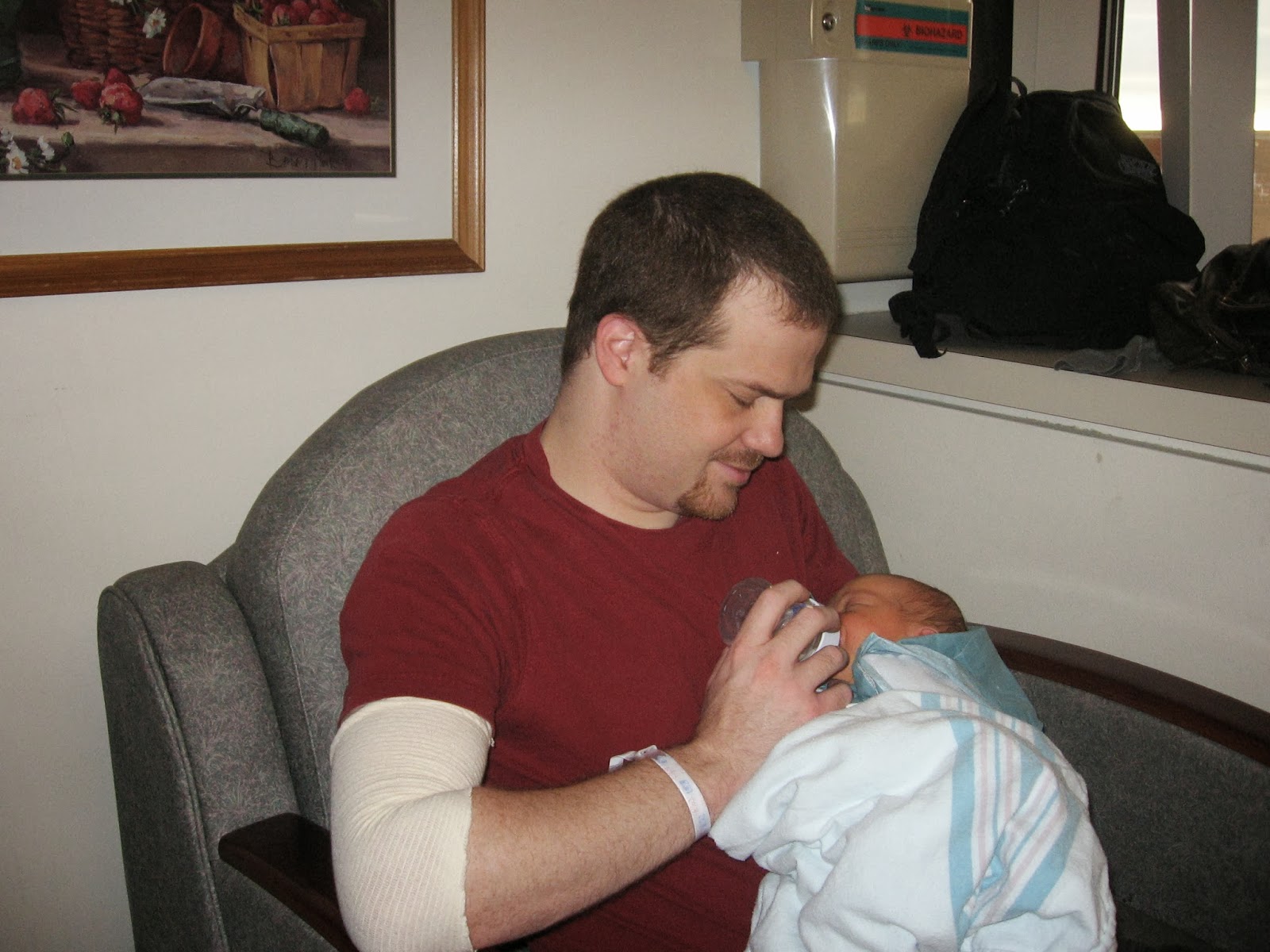


Was it awareness, or lack thereof?
I don't think so. I was aware of the benefits of breastfeeding. I intended to breastfeed him. In fact, here's an excerpt from a LiveJournal entry I wrote when I was about eight months pregnant: 
The doctor asked if we'd taken any classes, which we have. She said, "Oh good, so you're prepared." Haha! Yes! I feel so prepared! Ok, I know the basics, and sort of what to expect. But prepared? I don't think you can ever really be prepared for your first childbirth. I mean, ok, the nursery is almost ready, he'll have clothes to wear and a place to sleep and something to eat (boobies!), but seriously. Prepared? I keep trying to remember the signs of labor and thinking how this class we took has a doozy of a final exam!
Then, about a week before the baby was born:
I went ahead and ordered a dual electric breast pump...Still cheaper than formula in the long run, and I hope that I will be able to give him breastmilk for as long as possible. 
So I was definitely "aware" of breastfeeding, of the benefits, that I wanted to breastfeed. I had made that decision and was planning ahead.

Was it education, or lack thereof?
This was part of it. And I think one of the big problems was, I didn't know I needed to be educated. I bought a couple of breastfeeding books, but I didn't read them. I didn't take a class, didn't attend any LLL meetings, didn't talk to other breastfeeding mothers about their experiences. Indeed, as the birth story I wrote just a couple of weeks after he was born shows, I didn't know what I didn't know:
They brought the baby to me and helped me latch him. He knew what to do, but I was still pretty out of it. I also have the timeline here a bit befuddled, because of what ensued. I know they needed to check his blood sugars because of his size, and asked us if it would be ok to give him some formula if he needed it, and if so, what kind. We said it was ok, but we didn't know anything about formulas, so just go ahead and give him whatever they thought was good. They suggested Enfamil with Lipil. Sure, why not.


If I had done any reading or taken a class, I would probably have known that he likely didn't need to be given formula, or we would have at least known to ask more questions. As it turned out, his blood sugars were fine, but I soon went into shock due to blood loss from the delivery. The nurses told me that because I'd lost so much blood, I wouldn't be able to make milk:
I didn't get a chance to try nursing again. I needed to rebuild my blood supply before I could even think about making milk.
I was stuck in bed for all of Sunday and Monday. They came and checked my bleeding periodically, gave me IV pain meds, brought me food. They brought the baby in on Monday for me to try nursing again, but I was pretty weak and sore. They were giving him formula, which was fine. With his size, he needed to eat, and I didn't have food for him. 
What no one told me, apparently, was that in order to make milk, I needed to nurse the baby. Even if my milk supply increase was delayed, I still needed to be nursing him and/or pumping to set up prolactin receptors and to encourage milk production. Even if he had to be supplemented with formula, that didn't mean I shouldn't nurse him. The colostrum would benefit him, too. I do recall that they fed him whatever colostrum I pumped, but it wasn't much.

Was it willpower?
Yes. I'm sure a big part of the problem was willpower. Now, I went through a traumatic birth, and I got off to a bit of a rocky start, but that alone didn't make breastfeeding impossible. The bigger problem in this story is that I didn't know how much hard work it takes in the beginning, especially when there's a rocky start, to breastfeed. I didn't know that if I stuck with it, it would get better and easier and really feel worthwhile, and so I didn't try.

Was it support, or lack thereof?
Yes and no. The support in the hospital was variable, as evidenced by some of the quotes above. Then there was this:
[On Tuesday, the lactation consultant] showed me how to use the pump and said I'd need to pump for 15-20 minutes every 2-3 hours to stimulate milk flow and establish a supply. She also suggested I rent a hospital-grade pump, because the one I'd bought would burn out if I used it that often. I think I pumped twice that day. With all the people in and out and all the activity, and my general weakness, pumping seemed like just that much more hassle, that much more of an energy drain.

Wednesday was better, and I did pretty well with pumping. A different lactation consultant came to see me and helped me breastfeed the baby. I tried the football hold, because of my sore abdomen, and the cross-cradle, which I found more comfortable. They told me I should breastfeed for 10 minutes per side and then pump for 10 more minutes.
This information is only sort of correct, and she didn't say the most basic thing, which is, "You have to nurse the baby to make milk, and here's why." She didn't say, "The best thing you can do to bring in your milk is to nurse the baby." She didn't say, "Spend time skin-to-skin with your baby and nurse on demand." She didn't say, "Watch the baby, not the clock." Etc. And no one, again, told me that it was hard work and perseverance that would matter the most. Everyone said it was fine to supplement with formula, and no one, not even me, fought for me to breastfeed.


On the other hand, my mom wanted me to breastfeed. She wanted me to so badly. But she didn't know how to support me, and I didn't know I needed support or how that support should look. A friend tried to help; she even offered to nurse the baby for me to show me how it works! She offered me the contact information for a local La Leche League leader. She knew I needed support, and she knew how to give it, but I didn't know how to take it, or that I should, and I was convinced that I should do what I was told by the hospital, not knowing, as many women don't, that the nurses at the hospital maybe weren't the be-all and end-all of breastfeeding information.

How did I feel about "failing" to breastfeed?
Well, there's this, from about 3 weeks postpartum:
I know these are questions best put to a lactation consultant, but I really want a more unbiased analysis. I want a totally practically-minded opinion, and I feel like an LC would push me to try breastfeeding, when I find it so discouraging. It's the lactation consultants who first told me to pump 8 times a day, and I didn't manage to do that and it just made me feel bad. I know that's what I'd need to do to boost my supply, but it's really hard. I don't know whom to turn to or whom to ask, and it's very upsetting. Breastfeeding is the one thing only I can do for my son, and I'm not even sure I want to do it. I know I'm not alone. I know there are other mothers out there who tried to breastfeed and just didn't want to. But I never thought I'd be one of them. I never thought I'd find it so difficult or, frankly, unpleasant.

I mean, anyone can mix some formula in a bottle and put it in his mouth. Many people have over the last 3 weeks, although it's his father who does it most often. But only I can produce breastmilk for him.
"I don't know whom to turn to or whom to ask...Breastfeeding is the one thing only I can do for my son..." I was so torn, and confused, and I didn't have the information I needed. I didn't want someone who would "push" me to breastfeed, and I thought all lactation consultants would be like the ones I saw in the hospital, who I didn't find to be helpful and I did find to be pushy. But that was exactly what I needed, someone who would "push" me to breastfeed. I didn't realize, you either breastfeed or you don't, and I certainly could have. (In that same post, I lamented that I "only" pumped 2 to 3 ounces in a sitting, having no idea that's actually quite good!)

And there's this, from one month postpartum:
I've been crying a lot. I think one reason is that I feel bad about having to give up on breastfeeding. I know I had so many extenuating circumstances that it would have taken a rather heroic effort to really get in there and exclusively breastfeed, but knowing the reasons doesn't make me less frustrated that things aren't working out the way I'd hoped they would.
And this:
A couple of women I know have recommended an LC in the neighborhood. Maybe I should talk to her. I don't know. I just want to feel better. I want to feel like I've resolved this for myself, and right now I obviously don't. If I try and fail, will I feel worse, or will I at least be able to say I tried? If I try and succeed, will I find the joy in it that I am hoping to find, or will I just get discouraged again? 
And then at six weeks, I thought I might try to relactate:
[I tried putting him to breast...] And even more exciting, milk came out! I thought my milk was dried up, but he got some out. Not very much, but enough that he was willing to keep sucking. So I let him. (Ow) 10 minutes on each side, he sucked. And milk came out on both sides. I let him keep going until it got too painful and he got too squirmy. I think he got a little frustrated when he wasn't the least bit satisfied after 20 minutes of sucking. I would be too, hehe.

Then we gave him a bottle of formula and he gobbled down 6 ounces, so I know he hardly got anything from me. But I wasn't so much interested in volume as ability. That was pretty exciting. My nipples are still sore this morning from it, but it felt really good emotionally.


I was not successful, but it's clear that I wanted to try, and I gave it a go. I even finally contacted the La Leche League leader that I should have spoken to in that first week! If my birth had gone more smoothly, I probably would have breastfed. I can't change the craziness that was my oldest son's first six weeks of life, but I think the lessons of what I went through can give us all some perspective on what other women might actually need, and how we can provide that.

What can we learn from my experiences?
I think we need to give most women, especially middle class, educated women, enough credit to assume they know about breastfeeding. It's not a lack of awareness that causes women not to meet their breastfeeding goals. After all, something like 90% of women state an intention to breastfeed upon giving birth, yet less than a third of them are still breastfeeding at six months postpartum, and not even half are still exclusively breastfeeding at six weeks. Something goes wrong in those first few days postpartum and in the early weeks.

I think the biggest factor in improving breastfeeding rates and success is education, followed closely by support. Education and support work hand-in-hand. First, we educate women not about why they should breastfeed (or not just about why), but about how breastfeeding works and what they can expect. Second, we educate women about finding and/or building a support network, to have phone numbers on hand they can call, websites to visit, books to read, to let them know that they can and should ask for help, that they don't have to - and shouldn't have to - go it alone, and that there's no shame in having a little trouble at the beginning. Third, we provide that support network, with continuity prenatally, at birth, and in the weeks following the birth. Whether they join a La Leche League meeting, are friends with an experienced breastfeeding mother, or get all their help online from blogs and Facebook, women and their partners need to know (a) they probably will need help; (b) it's okay to ask for help; and (c) where that help can be found.

It's amazing that I documented my experiences with such detail in the moment. It's hard to look back seven years through the lens of who I've become and remember what I was feeling at the time. Because I wrote it all down at the time, it's all out there, raw and visceral, and I can see right there what I knew, what I had, and what was missing. Filling in those missing pieces for other women can make a huge difference in their lives and the lives of their children.

***

To read the full account of my oldest's birth, see the four-part story starting here

For a quick-start guide to breastfeeding that answers many of the most common questions new mothers have, check out my e-book, The Jessica on Babies Breastfeeding FAQ, available for Kindle from Amazon.

Wednesday, December 18, 2013

Please Don't Tell Me I'm a Supermom

When I tell people I've gone to the store, or out to eat, or made dinner, or gotten a few hours of work done, or some other apparently monumental task while being responsible for all four of my kids, I get exclamations of amazement. "You're a supermom!", they'll say. Or, "I only have two, and I can barely manage most nights!" Or, "I don't know how you do it!" I know these are meant as compliments and are honest reactions to something outside their own frame of reference. And I appreciate them as such.


But it makes me uncomfortable just the same. Because secretly, deep down, it releases all kinds of insecurities. All I can think of is all the things I've done wrong, the mistakes I've made, the things I wish I had managed to do. I berate myself for not paying enough attention to the kids, for letting them fend for themselves while I work in another room, or, conversely, for spending a few hours with them instead of working a few more hours to pad my paycheck. Or, for neglecting both work and kids to sit on the toilet and play Candy Crush in private. I should hold my baby more, hug my five-year-old more, draw with my toddler more, and read with my seven-year-old more. I should put the phone down during dinner and make them tell me about their day. I should try harder to get the toddler to take a regular nap. I should get the middle two dressed before noon. I should take them to the park more so they can run around on sunny days. I should replace their bike helmets and let them out front to ride. I should fold their laundry. I should wipe down the kitchen counters, sweep the floor of the toddler's food-leavings, and change the baby's diaper and give him a bath.

I see other people accomplishing things I haven't been able to, and I think I have no right to those compliments. I'm not "doing it all." I'm not a supermom. And when you tell me I am, you're belittling yourself. You're negating all of the amazing things you've managed to do, like have a dance party in the living room and do an art project with your preschooler, like cook healthy meals all week long, get your car washed, and clean your toilets. Like sign your second-grader up for soccer, acquire all the gear he needs, and attend all his games. Like save up for two years to take the family to Disneyland. Like start your own business and run it successfully, work full time outside the house and still get the laundry folded and the lawn mowed, and remember to pick up a birthday present for the party this weekend.


I'm just a mom. Some things, I know I do well. Some things, I know I could improve. And, looking at you, looking at how well dressed you are, how neat and clean your house is, how you make healthy meals all the time and get your housework done regularly and limit screen time to just the weekends, and have money left in the bank at the end of the month, some things make me feel very, very inadequate. Not because I think you're judging me, but because I'm judging myself.

Please don't tell me I'm a supermom. I don't feel all that super, and I don't have a cape. Sure, I made it to the grocery store, but I nearly lost the stroller, forgot to buy half the things we needed, and left the reusable bags at home. Yeah, I got the oldest to school on time, but the other three are still in pajamas and the toddler's diaper needs changing. Absolutely, I made dinner and put the dishes in the dishwasher, but I didn't make them clean up their toys, there are shoes everywhere, and the baby is crying in his swing while I rinse the last of the dishes.


No one's life is perfect. I think as moms we only see our own shortcomings while we admire the accomplishments of all moms around us. I'm wondering how she can remember to put jackets on both of her kids and manage to keep them from running around screaming in the store, while she's wondering how I can load four kids into the car in half the time it takes her to put her two in. I'm wondering how she finds the time to make dinners from scratch every night and keep the living room free of clutter, while she's wondering how I can work part time from home with three kids in the house.

I'll tell you what, if you buy the capes, I'll wash them. But don't blame me if I forget to put them in the dryer.

Friday, May 3, 2013

Four Kinds of Breastfeeding Support: Emotional, Practical, Improper, and Unhelpful

I can't emphasize enough that when you have a new baby, you need support. Going it alone is unnatural and stressful. They say it takes a village, and while you may not have an entire village to help you, I hope you at least have your partner and a few trusted friends and relatives who are there for you.

When it comes to breastfeeding support, you need to make sure that (a) you have some, and (b) you have the right kind.

I've identified four types of support for new mothers. Each description below contains suggestions for the new mom herself and for the support people around her.

1.  Emotional Support

For Mom: Emotional support is crucial. You might also call this moral support. This kind of support could come from your partner, your mother, your sister, aunt, cousin, best friend, a random person you meet in the park, or even someone on the internet. When someone is offering emotional support, it's those encouraging words when you're at the end of your rope; it's the, "You're doing great!" when you feel like you're doing everything wrong. Emotional support helps you keep going, push through the rough spots, and lets you know that others have been where you are, and it does get better.

To Support Mom: Even if you don't have personal breastfeeding experience, you can be there for her. Let her vent, listen to her concerns, and offer an encouraging word, whatever comes naturally to you. Some of us are more comfortable with being cheerleaders, while others are better at simply listening and being a sympathetic ear. Avoid trying to give advice she isn't asking for, but offer to help in any way you can. For example, "Can I do something around the house for you so you can rest? I'm a great laundry folder! Do you need anything from the store? Diapers? Snacks? Juice? Can I get you a glass of water?" Make specific offers, not a general, "Is there anything I can do to help?" because she may not be able to think of something in particular, or she may feel uncomfortable making a request.

2.  Practical Support

For Mom: Practical support is also crucial. As much as you think you might know going in (and I say this as someone who's nursed a few babies!), it never hurts to have someone you can call upon when you have a practical question about your baby's latch, strange nursing behaviors, or other concerns. Every baby is different, and every nursing relationship is unique, and you'll want to know someone you can contact who has seen lots of  mom-baby pairs and helped solve many types of problems. It's important that whoever you lean on for practical support actually knows what to say or do to help. This may be a La Leche League leader, a breastfeeding peer counselor or other trained breastfeeding support person, an International Board Certified Lactation Consultant, or even just your mom who's nursed four kids. You need to know that the advice you're going to receive is correct advice. If you get advice you're not sure of, feel free to double check it on a reputable site like Kellymom.com, or contact a lactation consultant.

To Support Mom: Unless you're sure you know what you're talking about - i.e., you're a lactation consultant, peer counselor, CLC, La Leche League leader, or you've at least done your breastfeeding research, it's best to leave the advice to someone who is one of those people. If you do know how to help, make the offer. "Hey, I'm a lactation educator. If you want, I can come sit with you and check out your baby's latch." If I'm not absolutely certain what to say or do to help a new mother with her question, I will always recommend that she meet with a local lactation consultant. If you don't know of one, you could help her find one. If you do, give her the number!

3.  Improper Support

For Mom: Many friends and relatives will mean well, and they probably really do want to help you. However, sometimes you get tips and advice from people that is not what would be recommended by a lactation expert. For example, just because your best friend introduced a bottle of formula every night but continued to nurse for a year doesn't mean it's a good idea or that it will work for you. People improvise, get lucky, or make decisions based on unique situations that may or may not apply to you. Make sure you've done your own research and have consulted with someone trained in lactation before you supplement unnecessarily or make a decision that could harm your breastfeeding relationship.

To Support Mom: It's important not to give advice willy-nilly. Every mom will have different circumstances, and unless you are a trained lactation support person or have an educational background to go with your personal experience, you can end up doing more harm than good, even if you're trying to help. Simple suggestions like, "Maybe you want to get his latch checked," or, "My son had a tongue tie and I had the exact problems you're having" can be very helpful and give her a starting point for finding assistance. Thoughts based on your own experience that may make her life easier such as, "My daughter was really fussy, too, and babywearing really helped us on the bad evenings." It's best not to begin supplementation or take drastic measures without being seen by a lactation expert, however.

4.  Unhelpful Support

For Mom: The least helpful kind of support is from people who think they're being supportive but are actually making you feel worse. A great example of this would be, "I'm can see that you're trying really hard to nurse your baby, but if it's this stressful, I would totally understand if you wanted to switch to bottles. A happy mom makes for a happy baby!" This kind of advice, while usually well-meaning, does not help the mother who sincerely wants to exclusively breastfeed but is in the throes of the two-week growth spurt or is battling thrush or mastitis. It's hard, but as a new parent it's important to not allow unhelpful comments like these to affect your mindset.

To Support Mom: Rather than trying to deter her from a path you think may be causing her stress, it is more helpful and more supportive to try to understand what her own goals are. A better comment in the above situation might be, "I can tell you really want to make nursing work, and you're doing an amazing job. I heard of a great lactation consultant in the area. Do you want her number?" If the mom really wants to breastfeed, suggesting that she stop will not make her feel supported. Helping her attain her goals will improve her mood and situation.

Preparation and Education

As new parents, we need to be prepared to avoid the improper and unhelpful advice and to call upon our emotional and practical support people whenever we need to. Gather your support system around you before you give birth, and be ready to discard information and advice that isn't what you want to hear.

As supportive friends and family members of new parents, it's our job to say the right words and be prepared with the right information. It doesn't hurt for others besides the new mom to learn a little about breastfeeding so that we can help in a way that the new parents will appreciate. It's important to know what the parents want and how to help them achieve that. Parents are bombarded by advice, some of which is contradictory, and knowing they have people to lean on who will simply be there to say, "I know it's hard now, but you're doing great, and it gets easier" will be invaluable.

How have you supported friends or relatives as they begin their parenting journeys? How have you been best supported when you've had a new baby? When we came home from the hospital with my third son, it was an incredibly hot and humid day, he screamed whenever he wasn't on the breast, and I was completely emotionally drained. A friend texted me just to say I was doing great, and it felt so good to hear that, even though it was my third baby. What is your favorite thing to tell a new parent, and how do they usually respond?

Wednesday, February 20, 2013

Safety Advice Is Not Parenting Judgment

When I see a child incorrectly buckled or in an inappropriate car seat, either in a picture online or in person, I often have an instinctive reaction to mentally note the problems and an internal debate as to whether to say something to the parent. I rarely say anything, as I don't want to start an argument or offend anyone or seem judgmental.

There was a viral video going around a couple of weeks ago showing a baby sound asleep in her car seat until "Gangnam Style" came on, then waking up suddenly and dancing. It was a very cute video, but many of us on Facebook who are interested in car seat safety were very quick to point out the many problems with the car seat use depicted in the video. The Car Seat Lady (Dr. Alisa Baer, a pediatrician and certified car seat technician), in particular, took a frame from the video and made a graphic showing all of the problems with how the baby and her sister were secured in the car and posted it to her Facebook page. (I can't locate the picture now. Either she took it down, or Facebook doesn't want to show it to me for some reason.) The picture received well over 1,000 comments, and while many comments to the post were along the lines of "Yes, I noticed the same thing!", or "That really bothered me, too!", many others expressed disgust that the Car Seat Lady would publicly criticize the family in this way. Others then commented that once the parents posted the video to YouTube and it went viral, they lost control over the images, and Dr. Baer had every right to use the picture as a teaching tool. There was some debate over whether her producing this graphic was simple commentary or actively judgmental and overly critical.

This got me thinking hard about how I react when I see improper car seat use. Often, my first thought is, "Oy, another kid buckled wrong. Don't they know that X should be Y?" (where X is whatever was done incorrectly and Y is the correct usage). I'm trying to retrain my internal reaction to, "I wonder if they know that their child isn't as safe as she could be. Maybe I should let her know that Y instead of X." I usually don't say anything unless I'm asked, mostly because I like to avoid confrontation.

From there, I tried to think of a neutral, unrelated safety issue that I might want to point out to someone, to decide if commenting on said problem could really be construed as judgmental or critical of their parenting skills. One safety tip I remember from a baby-sitting course I took as a teenager still sticks with me. When cooking on the stove top, turn the pot handles in so that they're not hanging out over the edge of the stove. This way, a toddler can't reach up and grab the handle, potentially dumping whatever's in the pot on themselves and getting severely burned. To this day, whenever I cook on the stove top, I always, always make sure the pot handles are turned in, because my toddler does reach up and try to play with the stove knobs, and if he were just a little taller, he might try to grab the pot handle. It's a real concern!

So, if I saw a picture on a friend's Facebook page, say, of their toddler in the kitchen doing something adorable, like pretending to cook, and in the background of the picture I could see a pot on the stove with the handle pointing out over the edge, would I comment to the parent something like, "Soooo cute! But, hey, that pot handle sticking out like that could be dangerous. My son likes to grab anything he can reach, and I wouldn't want him to dump a pot of hot spaghetti sauce on his head. I've heard you should turn the pot handles inward so the little ones can't reach them"? (Note: I have never actually seen such a picture. This is a hypothetical scenario.)

If I did make such a comment, would that be construed as critical, judgmental, or rude? I don't think so. I think it would come off as genuine concern over the safety of my friend's child. So why, when a car seat technician points out a safety issue with a car seat, is that labeled as uncalled-for or obnoxious?

When G was a very tiny newborn, my mother-in-law and I went shopping. It was a warm, sunny day, and we were loading up the car with our purchases and the baby when a man came up to us in the parking lot. He said something like, "You know, you should get your baby out of the sun. They can get sunburned so fast, and you might not even know they're burned." I was only half-listening, and my inclination was to brush him off and be annoyed that he would have the gall to approach me and judge my parenting skills. G was only in the sun for a few minutes while we put our purchases in the trunk, and I was sure he would be fine.

Thinking about it later, though, I realized that the man was just showing concern for a little baby. Perhaps it happened to his baby, that she got terribly sunburned and was in pain because he didn't know better, and he just wanted to make sure other parents protected their children from the same possible injury. He wasn't saying I was a bad parent or that I was stupid or anything of the sort. He just didn't want to see another little baby suffer like his had.

I think the issue requires a little sensitivity from both sides. If I see a problem with car seat use, my job is to express concern without allowing that concern to grow into judgment of the person's overall parenting skills. On the other hand, if someone points out a problem about car seat use, it's up to the recipient of such a comment not to become defensive but rather to take the kindly given bit of advice under consideration and thank the person for the information.

Thoughts?

Friday, December 7, 2012

So You've Just Had a Baby. Now What?

The initial postpartum period, the first six to 12 weeks after giving birth, is challenging. Whether it's your first baby or your fourth, you are adjusting to having a new member of your family, of meeting the demands of a helpless, dependent being, and of getting to know and love this new little person. Let's talk a little about what you can do to make this time of transition as healthy as possible for you and your newborn as well as the rest of your family.


Enlist someone to organize offers of help

You know you're going to need some kind of help after the baby is born. This can differ from person to person, but most new parents appreciate having others help them in some way, from caring for older siblings, to sending meals, to washing dishes, to folding laundry, to running errands. Figure out what you think you'll need the most help with before you give birth, and then ask someone to be in charge of organizing all the offers you'll (hopefully) receive. This can be a religious community leader, a good friend, a relative, a neighbor, or anyone else you trust and who you know can handle the responsibility. Often someone steps up to be the point person. Tell this person what you think you'll want the most help with and direct all offers of, "What can I do to help you?" or "Do you need meals?" to this person. There are also websites that can help everyone keep track of what needs doing and when.

A few things I can recommend, from experience, to put on the list:
  • Help with your other kids: Entertain older siblings, assist with school pick-ups and drop-offs, take your toddler for a few hours (playdates, baby-sitting by grandparents/aunts/cousins)
  • Food: Ask people to make meals that can be eaten cold or room temperature or that are easy to rewarm. Specify dietary restrictions, allergies, preferences to the point person.
  • Laundry: Newborns generate a lot of laundry, and the rest of the family still needs clean clothes and sheets and towels. If someone can throw in a load of laundry or fold and put away clean stuff, this can be very helpful.
  • Kitchen: You can use paper goods for a while, or you can take the offer from someone to wash dishes, load/unload the dishwasher, and put clean dishes away.
  • Errands: If someone offers, send them to the store with a specific list of random things you haven't been able to get out of the house to pick up. Maybe you're low on certain staple foods, diapers, or receiving blankets and burp cloths. Be sure to establish how and when you'll be paying them back, or give them cash to take with them to the store.
  • Company: Being home with a new baby can be lonely. Sometimes it's nice just to have someone come over with a cup of coffee and hang out. Keep the visits short and to close friends and family, and don't feel obligated to play hostess.
  • Baby-Holding: The thing you'll probably both most and least want is for others to hold your baby. Make it clear that what you need help with is everything else, not holding the baby. However, sometimes you just want to take a long, hot shower in peace, and then it's nice to have someone around you can trust to hold the baby for 20 minutes while you take some time for yourself. Alternatively, if you know the baby is content and fed and should be fine for an hour, ask someone to keep an eye on him for you while you take a nap.
Keep track of feeds, diapers, and sleep

It's very hard to rely on your short-term memory when you've just had a baby. This means that even if you're used to being able to remember things like the last time you ate, I guarantee, your brain will be too hazy and foggy to remember how many diapers you've changed, which side you last nursed on, and the last time the baby took a nap, all at once. Unfortunately, doctors and nurses LOVE to have this kind of information when assessing your baby's health, and it's important for you to have an idea of how often and for how long the baby is eating and sleeping and how many wet and dirty diapers he is producing in a given day. 

Some parents keep a detailed spreadsheet of every diaper, feeding, and nap. Others jot down the information in a notebook that they carry with them all the time. I tried to just rely on my memory with my three, but I can tell you, I usually had absolutely no idea how often my babies were eating. I usually only knew which side I had last nursed on because that side of my nursing bra was unhooked! Thankfully, in this era of smartphones and iPads, we can make technology do the work for us. There are a number of apps out there for both iOS and Android that can help keep track of all this information for you.

One app I can specifically recommend is smallnest. It's for iPhone, iPod, and iPad, and it has some really interesting features that make baby care a little bit easier to track. First of all, it has a very simple, clean interface that takes no time to learn to use. When you sit down to nurse, tap the "Food" button, select Left Breast or Right Breast, and it will instantly record that feeding. When you're done, stop the feeding. (You can also track bottle feeds and meals of solids.) It will then update the display to show how long since baby's last feeding and will add that information to a running list of the day's activities. You can also track pee and poo diapers and sleep. Secondly, the most exciting feature of this app is its ability to connect all of your baby's caregivers. By linking the app with your Facebook account, you can invite other caregivers, like Daddy or a nanny, to download the app to their device as well, and then they also can track feedings, diapers, and naps. This information is then shared to all devices that are connected to that particular baby, so everyone knows everything at the touch of a button. Plus, you can leave your phone downstairs and put the information into your iPad that you left by the bed, instead of worrying that you've left your device somewhere when it's time for a feeding. (Thanks to smallnest for signing up to be Jessica on Babies' first sponsor!* Click through and check out the app!)

Take care of YOURSELF

It's tempting to try to jump back in to all of your pre-pregnancy or pre-baby activities the minute you get home with your new baby. Often, we're still high on the hormone rush of birth and are raring to go. Take it from me: RELAX. The first six weeks postpartum are one of the only times we have in life to take license to simply rest. Your body needs rest. Your baby needs you to be rested. You have a lot of healing and recovering to do, whether you had a picture perfect, easy birth or a difficult c-section or something in between. The worst thing you can do is try to be up and training for a marathon two weeks after giving birth. Don't worry about weight loss. Don't worry about work. Don't worry about keeping up with your toddler. Take a few weeks to just RELAX.

One thing I won't say is to "sleep when baby sleeps." That was the one piece of advice I hated, because I know how impractical it can be. However, try to nap with baby at least once a day, or at least veg in front of the TV while he naps in your arms. You don't have to be running around all the time.


Surround yourself with SUPPORT

Help with meals and laundry is not enough. You also need to have a support system in place. Having people around who share your parenting philosophy and can offer support in the difficult early days is invaluable. They say it takes a village, and it really does. You need someone to commiserate with over the three-week growth spurt, the every-two-hours waking at night, the poo-splosions, and the boredom. You need someone who can answer your questions about feedings and give good advice (whether this is your mom, a trusted friend, or a professional IBCLC). You need people who will say the words you need to hear when you're feeling your most exhausted and worn out. You need people who will watch you for signs of postpartum depression, anxiety, or psychosis and ensure that you get the help you need. And you need people around who won't be driven away by your crazy hormone surges and moodiness.

Do you have other tips for new mothers that you'd like to share? We'd love to hear your comments!

-------------------
* If you are interested in discussing a possible partnership or sponsorship with Jessica on Babies, please email jessicaonbabies (at) gmail (dot) com. I would be very happy to talk about what options there are to increase your visibility among new parents.

Tuesday, August 28, 2012

Stealth-Adjusting a Car Seat: Right or Wrong?

I have a rule for myself, when it comes to the things I feel I know something about. That rule is: I don't give advice unless I'm asked. If someone asks me for help with breastfeeding, I'll jump in with both feet and tell them everything I know. If they don't ask for help or advice, I keep my mouth shut. If someone asks for help with their car seats, I'll throw at them everything I know. If they don't ask, I won't say anything, even if I can see how poorly their kids are buckled. I tend to assume my friends are intelligent, know when to ask for help, and want what's best for their kids. I also tend to assume that most people don't want me butting in and telling them they're doing something wrong unless they ask my opinion. Sometimes I can't hold myself back even with this internal rule, but most of the time I refrain from saying anything in the interests of maintaining cordial relations.

A few weeks ago, I started to watch a friend buckle his young baby into her car seat. I turned away quickly, having a hunch that he would not buckle her well. I said to my husband, "I think I'd better not watch, because it will just make me angry." I couldn't help sneaking a peak after he finished, and, well, I was right. There were just so many things done improperly that I couldn't bear to look. There was something like a Snuzzler behind her. While I hear good things about Snuzzlers from parents who have used them, I was fairly certain that a car seat tech would tell you not to use one. A quick Google search later on confirmed for me that Child Safety Passenger Technicians say that no aftermarket products should be used with your car seat, including Snuzzlers, Bundle-mes, etc., that go between the baby and the seat, because they may interfere with the harness or the padding of the seat itself. Reserving my judgment about that, the baby was also wrapped in a receiving blanket, which he did not remove before buckling her. This meant that the crotch strap was not snugly between her legs because the blanket interfered with the straps. Finally, and most troubling, the straps were quite loose and the chest clip was in the middle of her belly. For a moment when no one was tending her - she was asleep in the seat - I stealthily approached the seat, fixed the chest clip, and tightened the straps as much as I dared. I didn't want to wake her or draw attention to myself.

I mentioned to my husband and a friend that I had done this. There were a few arguments made for and against what I'd done. (No one argued that she shouldn't be buckled properly or that she had been buckled just fine before I changed it.) One point made was that if I didn't say something to the parents about it, then they wouldn't know for the future. On the other hand, they may not, in their sleep deprived, agitated state, want someone to criticize them (as they would see it), so saying something to them might mean straining our friendship, which I value. I said that at least for this one trip, she would be buckled correctly. And maybe since I'd tightened the straps, they wouldn't loosen them again, and they'd be properly tight the next time they put her in the seat (unlikely, but you never know). Finally, my friend suggested that we could bring up the issue of how to buckle a car seat in a general way around them in the future so that they could hear the instructions without feeling like they were targeted, which would be the best way. I muttered, have jokingly, "Doesn't she [the mother] read my blog?", which I don't think she does. (If she did, would I be wrong to post this story here? Would she know it was about her? Probably. That's a whole other topic!) I do feel that many people think they are doing it right until they are shown how it should look. It's not that they are intentionally buckling their seats wrong. It's just that they don't realize that they're not doing it right.

Now, there are plenty of people who say, "If someone would just show me, I'd be happy knowing that my child was safe." There are also plenty of people who don't want anyone to interfere with their parenting choices, which include whether they want to learn to correctly buckle a car seat. Hey, to each his own. I'm sure I put my kids into plenty of situations that would make other parents want to inform me about how unsafe it is.

Still, car accidents are a leading cause of injury and death for children. Children correctly restrained in cars are at significantly reduced risk of injury and death in a car accident. Sure, my kid might get hurt falling out of a tree at the park, but he's more likely to be injured or killed in a car accident driving to or from the park. Should he not learn to climb safely because of the risk of falling? He can't "learn" to ride in a car safely. He doesn't have control over that. He's either safe in the car, or he isn't. Drowning is the leading cause of death for children one to four years of age. Should I not let my kid in the pool because of this? No. I should teach him to swim and make sure that when he is around water, he is supervised, and that the pool has a fence so he can't accidentally wander in. Again, this is a risk that can be reduced through teaching him to swim. I can't teach him to not get in a car accident, especially since he's not even the one driving. The only way to reduce his risk of injury in the car is to make sure he is in a proper restraint and buckled correctly. The only way. And, of course, for me to drive safely. And, yes, there's an element of luck and trust in G-d, too. I don't deny that.

So, was I wrong to adjust my friend's baby's car seat? I wouldn't say I was morally wrong. They probably didn't even notice, and, if they did, they probably wouldn't know who had done it. And, it doesn't mean they'll do it correctly next time. But when you see something wrong that you can fix, the urge to fix it is sometimes so strong that you can't let it go.

On the other hand, another friend who was there that day asked me to look at her sons' car seats and make sure all was well. And since I was asked, I gave her my opinion, made an adjustment, and pointed out a problem. I also answered questions she had about weight and height for her older son in his Graco Nautilus (Google Affiliate Ad*), and about her rear-facing 16-month-old's feet being against the back of the seat. I told her, "Legs bend; necks break." Kids like crossing their legs in the car or propping them up on the seat rather than having them dangle. Rear-facing is more comfortable. Plus, that recline! It's like an easy chair.

And, for your further edification:
SB in his car seat carrier, about 5 months old, buckled correctly. No aftermarket products behind or around him, (except the toys on the handle, which should be removed when the car seat is in a moving vehicle, which it's not in this picture). The head support and shoulder strap covers came with the car seat, so they are perfectly fine to use.

SB front-facing in his Graco Nautilus, about two years old. Straps tightened properly, chest clip at armpit level. Again, the shoulder strap padding came with the car seat and so are fine to use.

Things that are permissible:
  • Putting a blanket over the child after he is buckled. A blanket will fall away in an accident and not interfere with the functioning of the car seat.
  • Putting rolled up receiving blankets around the child's head or body for support after the child is buckled securely. Again, blankets will fall away from the child in an accident, allowing the car seat to do its job.
  • Using any accessories that come in the box with the car seat, such as additional padding, head support, and shoulder strap padding. Check the car seat's manual for age or weight limits on using the additional padding. For example, my Chicco KeyFit30 has newborn support padding that can only be used until the baby is 11 pounds, after which it should be removed.
  • Using any accessories sold separately by the car seat manufacturer that they specifically state are acceptable for use with your exact car seat. This means it has been tested using that accessory. For example, Diono sells an angle adjuster that can go under the car seat to change the recline angle of the car seat. When used properly, according to Diono's instructions, with a Diono seat, this would be a permissible accessory.
  • Using an aftermarket accessory that your car seat's manufacturer specifically states is acceptable to use with your car seat. For example, some manufacturers state that putting a thin towel between the car seat and the vehicle's seat is permissible to protect your upholstery. Please check with your car seat's manufacturer to find out if this is acceptable to do with your car seat
If you have other questions, please consult with a CPST (Child Passenger Safety Technician). CPST's are trained in proper car seat installation and use and must keep up to date on new research and new seats, as well as being aware of vehicle compatibility issues. You can often have a consultation for free through your fire or police department, a local hospital, or a baby supply store. Check SafeKids.org to find a inspection station near you.

________
*I have not been ask to mention nor have I been previously compensated for mentioning any of the brands in this post. However, if you click through a Google Affiliate Ad link and purchase that product, I may receive minor compensation. You can help support this blog and keep the posts coming supporting the advertisers on this page.

Saturday, March 24, 2012

Breastfeeding: All or Nothing?

I read an interesting point in a blog post recently, and I only wish I could remember which blog, because I read so many and rarely keep track of who said what (bad blog reading, I know). In any case, the point was that while you can choose not to breastfeed, you can't then later choose to switch to breastfeeding. However, you can choose not to formula-feed and then later choose to switch to formula if your situation calls for it. Basically, you've got to start out breastfeeding, and then make the choice either to continue or let your milk dry up and switch to formula.

This isn't exactly true, of course. It is both possible to relactate - that is, ask your breasts to start making milk again after having let your milk dry up - or to induce lactation - that is, ask your breasts to start making milk even if you never even had a baby. Some adoptive mothers do the latter, inducing lactation by tricking the body into thinking it's pregnant and then tricking the body into thinking it's delivered a baby through the use of hormone therapy and 'round-the-clock pumping. It's not easy, and it doesn't work for everybody, but it can be a very rewarding effort if you wanted to go that route. As for relactation, it's nearly as difficult. It's possible to bring your milk back in within the first few months after giving birth if you pump about every two to three hours around the clock for several weeks, as well as putting baby to breast as often as possible (if possible), but it takes serious dedication. After my first son was born and had been on exclusively formula for about four weeks, I thought about relactating. I spoke with a La Leche League leader about it, and she said I'd basically need to treat my breastpump like a newborn, pumping at least eight times in a 24-hour period (including in the middle of the night). She also said that since I had never established a full supply to begin with, it might never be possible to do so. I gave it a half-hearted effort, but never really was able to extract more than a few drops of milk, and I gave up after a couple of weeks of seeing no change.

So if you think you probably do want to breastfeed but you're not sure, you should start out doing so. Bring in your milk, breastfeed your new baby, and if for whatever reason you decide you don't want to do it, or there is a medical or psychiatric reason that you shouldn't or can't do it, you can always stop, wean to formula or bottles of donated breastmilk, and let your milk dry up. But, if you don't bring in your milk and start breastfeeding, it's pretty darn difficult, if not impossible, to change your mind six weeks in.

So in the beginning, yes, breastfeeding is "all or nothing." That is, either you do it or you don't. But, once you've established your supply and the baby has learned to feed effectively, and you give it a few weeks, or months, or years, things become a bit more flexible. For example, let's say that after six weeks, your maternity leave ends and you have to go back to work full time. You intend to pump and have your baby drink your milk from a bottle while you're separated from her. This would be ideal if you can't be with your baby all day, which many, many women can't. But, what if you just can't pump enough milk? Some women's bodies just don't respond well to the breast pump, and they can't produce enough, or they can't produce anything at all, or they can't keep up with their baby's needs by pumping. Other women's jobs are not ideal for pumping milk. Even though new federal law requires most workplaces to provide adequate break times and space for pumping milk, it still may not be entirely possible. Does this mean you have to stop breastfeeding and give your baby formula?

No!

Certainly, and I stress this because I believe it, it is most desireable to feed exclusively breastmilk for at least the first six months of your baby's life. That is the general recommendation from the AAP, the WHO, and other health services. Breastmilk is the best food for your young baby, and if you can provide it, and you will provide it, then you should provide it. The enormous benefits to your baby's (and your!) health, from nutrition to immune system to brain development to priming the digestive system, make exclusive breastfeeding the natural choice for every baby.

However, some breastmilk is better than no breastmilk. If you simply cannot provide exclusively breastmilk to your under-six-month-old baby, then continuing to nurse as much as you can is still good! Even if that means you only nurse at night, or in the morning and evening before and after work, or three times a day, or just for bedtime, some breastmilk is better than no breastmilk.

After six months or so, once you've introduced solid foods, you are no longer exclusively breastfeeding anyway. The benefits of breastmilk never go away, of course, so if you can continue to breastfeed as your baby's major source of nutrition, you should go on doing so. But, if you've given it six months and you're going a little nuts, backing off at this point is not as harmful, since your baby is eating other foods anyway. Remember that solid foods cannot and should not replace breastmilk and/or formula as your baby's major source of nutrition until after 12 months of age. Especially early on, six or seven months of age, solid foods shouldn't be more than 5 to 10% of your baby's daily intake. By one year, solid foods may be up to closer to 50% of your baby's intake. After one year, solid foods can be the majority of your baby's caloric and nutritional intake. Between six and 12 months, if you do decide to breastfeed less, you should replace most of the feedings with donated breastmilk or formula, not solid foods. One to three small meals of solids should be fine, but babies still need breastmilk or formula to thrive at that young age.

The AAP recommends breastfeeding for at minimum of one year. The WHO says two years. By one year of age, many babies are eating a fair amount of solid foods. At this point, you can choose to wean without taking away a significant portion of your baby's diet. However, if you want to continue to nurse, you certainly can. There is no psychological or physical harm to continuing to nurse to two years or beyond. The value of breastmilk and breastfeeding is not diminished just because the Earth has circled the sun one time since your baby was born. But, toddlers can survive on solid foods, assuming you are providing a variety of foods to create a balanced diet for your child. Children under two still need milk fats for brain development, either from your own milk, cow's milk, other dairy products, or another source. I am not a nutritionist or pediatrician, so I can't make a recommendation about what sort of milk to feed your toddler to replace breastmilk, but most pediatricians will tell you to give whole cow's milk to replace breastmilk or formula after one year of age.

If you do decide you want to wean at one year, you may need to start cutting back slowly. What you may find is that once you're down to two or three feedings a day, instead of six or seven, for example, or once you find that you no longer need to pump at work, breastfeeding may become an enjoyable break, rather than a burden or responsibility. Cuddling up with your toddler to nurse at bedtime or for an afternoon snack may be a time of closeness you and your toddler need during your otherwise hectic days. At this point, breastfeeding really isn't all or nothing. Weaning doesn't have to mean stopping completely, and weaning can be a slow, gentle process. I know of women who continue to nurse just once a day for months before they or their child finally drop that last feeding. I also know of women who continue to nurse six times a day, or more, throughout the second year. I found that SB gradually cut back over the course of his second year, until he was really only comfort-nursing at night. By the time I cut him off at 25 months, I didn't even get engorged, he was nursing so rarely and so little. A slow weaning process is more comfortable for both mother and child.

I don't really feel comfortable encouraging anyone to cut back on breastfeeding until her baby is at least one year of age. I wouldn't be writing this blog if I didn't feel that women should be supported and encouraged to choose exclusive breastfeeding. However, I also don't think it's fair to insist on breastfeeding as the only right choice, as if you either breastfeed or you don't. I think that places a lot of burden and blame on women who, for whatever reason, choose to use some formula. I also think it's important to let women know that breastfeeding some of the time is better than not breastfeeding at all. Just like some exercise is better than no exercise, and eating some vegetables is better than eating no vegetables, and getting some sleep is better than getting no sleep, breastfeeding some of the time is better than breastfeeding none of the time. To keep some supply, you have to breastfeed regularly, but if, for whatever reason, you don't breastfeed all of the time, that doesn't mean you have to stop completely.

I've been thinking about NJ's early weeks on this Earth, where he was getting perhaps 3 ounces of breastmilk per day when I pumped for him. I asked my LiveJournal audience if that measly 3 ounces a day mattered. I wish someone had said, "YES! Any breastmilk is better than no breastmilk!" I wish someone had said to me, "Try just nursing once a day. Maybe you'll find you want to try for a second feeding, and then a third." I wish I had known I could combination feed, or bring up my supply over time, as I healed, rather than just stopping. I wish I had known how important it could be in the future. I wish I had known how badly I would feel about stopping.

It is those regrets that drove me to two successful VBACs and two successful subsequent nursing relationships. (I've officially made it to six months of breastfeeding with GI, and we started solids a couple of weeks ago but are still mostly nursing. I'll be blogging about that soon.) It is also those regrets, and my subsequent successes, that drive me to write this blog. So I say, Yes! Do breastfeed! Give it a shot. Give it six weeks.  Breastfeeding some is better than not breastfeeding at all. Some breastmilk is better than no breastmilk. And it is not all or nothing.

Most importantly, find help and support so that you can meet whatever goals you have set for yourself. Knowing that you've reached or surpassed those goals will allow you to look back with pride rather than with regret or guilt.

Wednesday, April 20, 2011

My Nursing Story

First of all, on a totally unrelated note, I'm supposed to have my major anatomical ultrasound tomorrow (20 weeks!), and I'm terribly excited to find out if my boys are getting a brother or a sister. Hopefully baby will cooperate. I'll be sure to let you know as soon as I can. :)

Obviously, I don't have a nursing story about my first son, except what I've already written about. But I nursed my second son until he was 25 months and stopped because I needed to and he was ready. It's hard to remember all the details going back to when he was born, but I want to share with you my experience as best I can. I feel I had a fairly middle-of-the-road nursing experience. Nothing too dramatic, no major struggles, but some frustrations and idiosyncrasies that might make someone else in the same situation feel a bit better about what her baby is doing.

Because I'd had so much trouble the first time with not having all the right information, with my traumatic birth experience and hospital re-admittance, with my general dislike of the brief nursing episodes I had, and without someone to take the journey along side me and encourage me, I was terrified of what might happen the second time around. I had resolved to move mountains to make it work this time if I had to. I knew all about handling food intolerances, avoiding nipple confusion, and I was ready to take on whatever challenge was thrown at me. I hoped.

It turned out, most of my emotional girding wasn't needed, thank goodness. But it's good to know these things even if you don't need them.

When the birth went smoothly and he latched on to my breast for the first time and didn't let go, I knew I had experienced a miracle. The incredible differences between the births of my two sons still fills me with wonder. I think because I was so committed to breastfeeding the second time, I didn't let "difficulties" get me down. That's not to say I didn't get frustrated with marathon nursing sessions, or that I always loved that I couldn't be away from him for more than an hour at a time, or that I liked hardly getting to sleep through the night for over two years. But at the same time, every time I squirted milk at the shower wall in the morning, every time I woke up to a soaked bed (until I started sleeping on a towel), every time I found a new way to nurse more comfortably while I went about my business, I smiled. I smiled because I was so thrilled that my body was doing exactly what it was supposed to do, and I was giving my son exactly what he was supposed to have.

So. As I recall, for the first few weeks, he nursed pretty much every hour during the day. That is to say that sometimes I got no more than a 20- to 30-minute break in between nursing sessions. I had enough milk that he only needed to nurse on one side in any given nursing session, which was kind of nice. I did have a little trouble with his latch in the beginning - he was a bit lazy about always opening his mouth as wide as he should, and I was a bit lazy about correcting him. When you're nursing so often, you just want to let him eat and be done with it. I did go see a lactation consultant when he was about three weeks old, and she showed me how to fix his latch and told me more about the practical side of breastfeeding than I had learned in the two preceding years. I highly recommend taking an actual breastfeeding class before your baby is born, or scheduling a consultation with a certified LC if you think you're having any problems. Sometimes a simple 30-minute consult can make your life with your newborn oh-so-much more bearable!

I tried using a Boppy pillow for support at first but found it cumbersome. I'm...er...reasonably well-endowed, and therefore I was actually more comfortable just sitting cross-legged on the floor and letting his bottom rest in my lap than I was surrounding myself with pillows sometimes. As the baby gained strength in his neck and jaw, he was able to keep himself latched more easily, which meant I could nurse one-handed and surf Facebook or whatever while he nursed. I used to make sure to get in some computer time whenever he was nursing on the left side (so my right hand was free to use the mouse!). This was also a good time to sneak in a meal for me!

For the first few days, I swore I wouldn't co-sleep. I didn't want to get "trapped" into having him sleeping in my bed for three years. But most nights, I'd pull him into my bed to nurse him and fall asleep that way. I remember waking up an hour later and he was still there, latched and happily sucking. So I gave in and "admitted" that I was co-sleeping. He nursed a lot at night, but also a lot during the day. He was what they call a snacker. Lots of little meals instead of a big meal every few hours. It seems this is actually more biologically "normal," but it isn't exactly "convenient." As it were. He's actually kind of still that way, liking to eat snacks and small meals throughout the day rather than sitting down and eating a big meal for breakfast, lunch, and dinner. I guess it's just in his personality.

I did try introducing bottles of expressed breastmilk and a pacifier at four weeks of age (the recommended age to start introducing artificial nipples). He didn't take well to either, although I admit that I didn't push hard with the pacifier because my first son was still addicted to his and still used it 'round-the-clock when he was two years old. I didn't want that to happen again. So, though it resulted in my becoming a "human pacifier" (oh NO!), I did end up with a kid who doesn't use a pacifier. I'm still, 28 months later, not absolutely certain how I feel about that.

As for bottles of expressed milk, in the few weeks after introducing the bottle (and having my husband or mother-in-law feed him), he would drink fairly well, but after mostly being alone with me all day and not needing one, he pretty much rejected it. I still kept milk in the freezer on the off chance that he would take it once in a while if I had a baby-sitter, but mostly the milk collected in the freezer and didn't get used. I think I mentioned before that I donated a few hundred ounces to other moms, and I'm very proud of that and hope to do it again in the future. I also found that expressing and storing was a pain when I could just simply nurse him instead.

Digression: I know some moms like to take a bottle of expressed milk with them when they go out, so they don't have to stop and nurse while running errands, but I found stopping to nurse less trouble than expressing, so it wasn't for me. I'm not saying you shouldn't do it if it makes you more comfortable, though. The main thing to remember is that whenever you give a bottle of milk, you're signaling your body not to have a feeding at that time. If it's not a regular thing, then it shouldn't affect your supply. But, if you always give a bottle at, say, 10:00pm, then you might find that you don't have much milk at 10:00pm if you want to just nurse at that time instead. Most experts recommend pumping near a time when the baby is receiving a bottle so that your body knows to continue to make milk at that time. (Obviously, different advice applies to mothers working outside the home who have to pump to provide expressed milk for their babies to eat while they're at work! I'm not really talking about that here, although I may discuss it in a future post.)

Figuring out how to nurse in the mei tai (front carrier) helped immensely. One gloomy Sunday when my husband was at work, I was trying to figure out what to do with my two kids. We had a zoo membership at the time, so I decided to brave the zoo alone with two kids. I put the baby in the mei tai and took the stroller for the toddler. We were watching the zebras for a while, with no bench in sight, when the baby got hungry. I found a way to pull down my shirt collar far enough for him to get boob access, and I nursed him right there standing watching the zebras. That opened up a whole new world for me. First of all, no one around me even knew what I was doing, and it meant I was still mobile and accessible to my 2-1/2-year-old who wanted to continue exploring the zoo!

I wasn't squeamish about nursing in public (NIP) even though I expected to be. I found very quickly that my attitude was, "Baby's hungry. People would much rather see me feeding him (or avert their eyes) than to hear him screaming." Plus, I found that when we were nursing, I felt like I was in a little bubble. Even though I was aware that there were people around me, I didn't care what they thought. And you know what? I didn't get a single negative comment, a single impolite stare, I was never asked to leave or move to a more "private" location. My NIP experiences were always either neutral or positive. I'm grateful for that.

The couple of times I did manage to get away for more than a couple of hours, I ended up with a plugged duct after missing a feeding. OW! Fortunately, I was able to get them to release relatively easily. Only once, I ended up with the beginning of mastitis, but fortunately I was able to identify the symptoms for what they were and take care of it before I needed any medical treatment. Treating plugged ducts and mastitis deserves a post of its own. If you have a pressing question, though, please feel free to ask in the comments!

Anyway, people kept reassuring me that their babies nursed every hour like that for three months and then spread out their feedings after the three-month growth spurt. Or that they nursed like that for six months and then spread out their feedings. Or that once they started solids, you could put them off longer between feedings.  Well, my son continued to nurse about every hour until he was seven months old, when he finally stretched out to every two hours. He pretty much never slept more than a three-hour stretch, even past one year of age. I wasn't as proactive about giving solid foods as I thought I would be, finding it ever-so-much easier just to nurse than to set him up in the high chair to feed him. Plus, he decided he'd much rather feed himself "real" food than have someone shove purees into his mouth with a spoon, so it was hard to get a full meal into him until he was a bit older, anyway.

A few times, I attempted to teach him to fall asleep "by himself," i.e., without a nipple in his mouth. I failed every time. I finally decided that he wasn't going to stop nursing at night until he stopped nursing altogether, and by the time he was 25 months old (and I was one month pregnant!), he was really only nursing at night, and hardly at all during the day anyway. At some point, I realized he had started eating solid foods on a regular basis and only nursed mostly for comfort and not for nutrition. Sure, I enjoyed that he was still getting the benefit of my antibodies and the healing power of the milk, but he was nursing so rarely and getting so little that it ceased to matter. In fact, when he had a double ear infection on his second birthday (poor baby!), I knew he really wasn't getting much milk anymore. I prayed for a good night's sleep more often than once in a blue moon, and I knew that, being pregnant, I needed it more than ever. So, one day in January, he nursed at about 5:15am and then not again the rest of the day. When I put him to bed, I refused to nurse him and told him that the milk was "all gone." "All gone?" he asked, with wonder. How could there be no more? But I gently told him again that the milk was "all gone," and that he needed to go to sleep. I lay with him until he fell asleep. He awoke a few times during the night for the next few nights, asking to nurse, but he was finally convinced that there was no more milk (and there really wasn't after a point), and started falling asleep on his own. He still woke a few times during the night for another few weeks, but now, for the most part, he sleeps through and falls asleep on his own, with no formal "sleep training" from me. In fact, my two sons have about the same frequency of night wakings, and they were "sleep taught" very differently. It's kind of interesting. I'll probably talk more about sleep in another post, since it's an important topic that deserves more attention than I can give in this paragraph.

Anyway, he slept in our bed until he was a year old, at which point I put him in a crib in a room with his brother. That meant I had to get up and go to him every few hours, and we would nurse on the floor and then I'd put him back in his crib. That was hard, but the advantage was getting to sleep in whatever position I wanted in my own bed! It's a trade-off. I think a year was a fair amount of time for him to sleep with us, though, and it did get frustrating not to have the bed to ourselves.

The other reason I finally weaned was that I was getting recurrent bouts of what I think was thrush about every month for about a week. I would get it cleared up and then it would come right back. It never affected him, but it became very painful for a week or two out of every month to nurse him, and I got tired of not being able to completely get rid of the nipple pain, whatever might have been causing it. The pain of latching the baby on when you have thrush or other nipple pain is kind of indescribable and is enough to make you dread a feeding. This is another topic I'll cover more in-depth in a future post.

I'm not really complaining. Yes, I hope this next baby is "easier" in some sense. I hope that she or he nurses less often and likes food more and sleeps better. But at the same time, I know I can handle it and make it work for me if I have to, even with two other kids to chase around. Yikes?

I think it's all about attitude, really. I was so grateful to have a successful nursing experience, and I saw every ounce of milk I produced as a miracle. It was such a rewarding and wonderful time, and sometimes I do miss just cuddling up with him and letting him nurse. Sometimes I'm sad that he doesn't really even remember nursing and simply stopped asking for it after a reasonably short time. But, I'm looking forward all the more to nursing this next baby, for all the same reasons!

Thursday, March 24, 2011

My Second Son's Birth

Even though you essentially know the end, I hope that you'll consent to enjoy the ride on this one nonetheless. Maybe it's kind of like watching "Apollo 13," where you know they get home safely, but you're still on edge watching it, wondering how in the world they manage it. Well, I love hearing birth stories, and I love telling my birth stories, and I love "Apollo 13," so let's see what happens.

As you'll recall, I was due December 31 but was having problems with high blood pressure throughout the month of December. On December 16, a Tuesday (also my grandmother's birthday, though that is fairly irrelevant), not only was my blood pressure once again stubbornly high, but there was +1 protein in my urine. Figurative alarm bells went off. I was once again sent to have labs drawn and go down to the hospital to be monitored. Sigh.

Having done this a week and a half prior, I figured surely everything would be fine again. I called my neighbor to see if she could watch my son while I made my way down to the hospital to be checked out, assuming that I'd be back in a few hours. I called my husband and told him not to bother coming with me this time, since there wasn't any point in his missing more work to watch me lie in the L&D triage room for 90 minutes again.

I went home and packed a few things to take with me in case I was there a little longer than anticipated, then made my way to the hospital. Once there, the four L&D triage rooms were all in use, so I got to wait in an office with a couple of nurses while we waited for a triage room to open up. There was no sense of urgency in my case, really, and I kind of enjoyed the behind-the-scenes peek at what the nurses were doing when they weren't in the patient rooms. This was a little after 3:00 P.M. on Tuesday.

When one of the other women was sent home (as I hoped to be in a few hours), I was put into a triage room and hooked up to a blood pressure cuff and fetal monitors again. I was having regular contractions, though I couldn't feel them, really, and my blood pressure Would Not Come Down. A nurse-midwife came in and did an internal check to see if my cervix was dilated at all. Upon finding that I was about 4cm dilated already, she declared "this baby is coming tonight! Let's get him out."

Er... What?!

First of all, my husband was 45 minutes away, my son had only very temporary childcare, we were not expecting to have a baby just yet, and, wait, I was only 38 weeks! I still had two weeks to prepare! My mom would be there in a week. She was supposed to stay with my son. What were we to do?!

Well, I called my husband, of course, and told him of the change of plans. They intended to induce with Pitocin and were still quite willing to allow me my trial of labor and VBAC attempt. But, as mentioned in the previous post, I knew that a Pitocin induction would increase my risk of c-section. I decided to delay any other interventions as long as I possibly could, hoping that would help me avoid the dreaded repeat c-section.

We decided the only possible course of action was for my husband to bring our son with him to the hospital. As difficult as it would be for me to have him there with me while I labored, and as problematic it would be that my husband would have to mind our son instead of being totally there with me in the labor and delivery, we couldn't think of anyone else we could call upon who would be able to take our son overnight. My mom was supposed to be there!

They got me set up in an L&D room while my husband picked up our son from daycare and drove down to the hospital. I was hooked up to an IV for fluids and Pitocin, and they also said I'd need to be on magnesium to help prevent seizures due to my blood pressure. The problem with magnesium is that is is a muscle relaxant, also used to stop preterm labor! So they would have to balance the magnesium and the Pitocin carefully to make sure labor didn't stop while still ensuring I had adequate protection from the risks of preeclampsia.

Another problem with magnesium is that it can cause you to retain fluids dangerously, so they would have to very carefully monitor my fluid intake and output while I was on it. This sounded inconvenient.

The biggest problem with magnesium, though, is that, as a relaxant, I would be unsteady on my feet, and weak, and possibly unable to control my muscles, and unable to properly care for a baby as long as I was on it. This meant I would not be allowed to be alone in the room with the new baby until I was able to come off the mag, which was the absolute biggest concern I had. Come hell or highwater, whether I needed a c-section in the end or not, I was going to breastfeed! And if I couldn't room-in with the baby, how was I to start a successful breastfeeding relationship? I was quite upset by this news, but still determined to make it work somehow.

My husband arrived with our son. He had the foresight to bring PJs, books, blankie, pacifier, and snacks for the little guy, who was very well-behaved and charmed everyone with his sweet nature, general cuteness, and amazing red curls. The nurses started taking bets on whether the new baby would have such gorgeous hair, too.

My son's being there meant that I was a little distracted from this whole labor business. I tried to remember to change positions, did not request pain relief, and got up to pee when I had to. I was quite surprised to find, however, that I was feeling almost no pain at all, despite the use of Pitocin. I was contracting nicely, and my cervix was opening, and everything that was supposed to happen was happening, but where was the pain? It was nice, but surprising.

I was very concerned about frightening my son if I were to need to yell, so I tried only to hum quietly when the contractions became stronger. My husband took him out of the room when the doctor came in to break my waters. She had trouble getting slack in the amniotic sac because the baby's head was pressed right up against the cervix. He was excited to come, unlike his reluctant brother! She eventually popped the bag, and my waters came gushing out.

Then the pain started. I felt those contractions like a vise clamping down on my abdomen. It was crazy. When I had to yell, we had my son and husband yell along with me. He thought it was a great game (ah, two-year-olds).

I had made some calls to friends and relatives to give them the news before things got really intense. One of these calls was to my rabbi and his wife. My rabbi's wife called back wondering where my son was during all of this. I told her he was with us. She said she'd arrange for someone to come and get him and bring him to her house for the night. I was so relieved. I couldn't imagine what we were going to do with him when things got really heated. I wasn't sure I wanted him to witness the birth, but I also wanted my husband to be there with me!

A friend came to the hospital, and my husband met him outside, switched the car seat to the friend's car, and sent our wonderful child off to a bewildering night's stay with the rabbi. We learned later that he cried a good bit of the way back north, but that our friend was able to sing to him and calm him (G-d bless him!). We also learned later that our son wouldn't sleep alone, so he ended up sleeping in the rabbi's bed the whole night! (It should be noted here that, at the time, the rabbi and his wife had three small children, the youngest of whom was exactly the same age as our son, and they were expecting their fourth child within the next few weeks!)

My husband came back, and the relief of not having to worry about our son meant that I was experiencing fully the insanity of Pitocin-induced contractions. I remember one of the nurses saying that they needed to increase my Pitocin, and the other one saying she didn't want to do it because she had been at a uterine rupture. I was so happy that she had said that in my hearing! How reassuring! But they did increase the Pitocin, and I couldn't bear it anymore. I was 6cm dilated, which I thought was a pretty good accomplishment right there. I asked for the epidural, and they sent for the nurse anesthetist.

They had me get up to go pee one last time before the epidural. I have my timeline a bit mixed up here (oddly enough), but I think my husband had taken our son outside right about the time I asked for the epidural, so that our son wouldn't be able to watch them do that. I'm not exactly sure when he got picked up and taken back to the rabbi's house, but it was not long after.

While in the bathroom, the contractions starting coming one after another. It felt like one didn't even end before the next one began. I couldn't believe the torture. I could barely walk back to the bed, and when I got there, I started throwing up. The nurse said not to worry, that I was just in transition and it would pass.

What?!

In the five minutes I had taken to pee, I had gone from 6cm to transition! Wow!

The nurse anesthetist was there, and he was able to do the epidural despite my shaking, nausea, and general incoherence. The epidural was perfect. It took away the pain but not all of the sensation. I could still move my legs, and I could still feel that I was having contractions, but it didn't hurt anymore. It was amazing.

Though I was fully dilated, they said I didn't have to start pushing right away. The baby was fine, and he could labor down on his own for a while so I didn't exhaust myself pushing when I didn't need to. This was new to me, since the minute I had reached 10cm with our first son's birth, they immediately had me start pushing. I liked this new way better! I was able to rest a bit, kind of drowsy and groggy. It was a little after midnight by then, I think, on Wednesday the 17th. I had been in labor for a little over 6 hours. Right there, I was already amazed by the contrast with my first labor, which took over a day to get to this point!

Finally, they said I really did have to start pushing. He had come down to +2 all on his own (what a guy!), but he needed help to come the rest of the way. (This also is in contrast to my first labor, where the little boy wouldn't even come out of the cervix - he was stuck at -1 station the entire time I pushed!) I protested, enjoying my relaxation, but they set up the table for delivery and called for the doctor. He wasn't going to come out if I didn't do a little work!

The epidural was such that I was able to feel the need to push on my own. So I pushed, and he came down a little. I pushed, and he came down a little more. I pushed and pushed, and he kept coming almost out, then sliding back in. After about half an hour of this (during which there was a fair amount of "I can't do this!" and "I don't want to push anymore!" whining out of me, as is apparently how I react to hard labor (haha!)), the doctor said he really was just about there, but my perineum wasn't stretching quite enough, and he kept springing back. She said probably just a little cut would let him slide right out. Now, an episiotomy was my second worst fear in childbirth, but if it meant all of this would be over, and I would have my baby in my arms, I was willing to do it. It was far less traumatic than a c-section!

A little cut, a few more pushes, and out he slid, a gorgeous, little, bald baby boy, at 1:19 A.M., after only about 7 hours of labor and 39 minutes of pushing. I had done it! He was here! I could not believe it. I couldn't! The placenta slid out a few minutes later, to my surprise. In fact, I distinctly remember saying, "What was that?!" and my husband reporting that it had been the placenta. For some reason, I had thought I'd have to work harder to get that out. They took the baby to be cleaned, diapered, Apgar-ed, weighed and measured - he was only 7lbs., 6oz., almost two pounds lighter than his older brother had been! - then brought him to me quite quickly and put him on my chest for his first breastfeeding. I had no idea how to hold him, and the doctor was still down below doing... something. I put him to the breast. He latched on and sucked. I held him and held him and held him and he nursed and nursed and nursed, and I knew this was how it was supposed to be.

First of all, tending to him took my mind off my other end, where the doctor was working busily stitching me up. Apparently, I was bleeding quite heavily (so what else is new?), and she was trying to get the bleeding stopped along with sewing up the episiotomy and so on. It was not particularly pleasant, but I had a very pleasant distraction!

I ended up staying in the L&D room for about four hours, and the new baby lay on my chest, nursing, the whole time. They were looking for a room on the maternity floor for me, and they were also still monitoring my blood pressure. It started to come down, and stayed down, and they decided they could take me off the magnesium and instead give me oral phenobarbitol, an anti-hypertensive, instead. Hooray!! No fluids monitoring! No fall hazard! I could keep baby with me.

All my dreams had come true.

This time, the hospital stay isn't that important. I will complain only a little, that since this was my second baby, they apparently assumed I knew how to breastfeed and didn't bother to send me anyone for help. At one point during the first day, while I was nursing him for the umpteenth time, a nurse came in to check my IV, saw me trying to figure out how to hold him, and gave me the one tip that solved almost all of my problems. "Turn him toward you," she said, "and make sure his ear, shoulder, and hip are all in a line." Voila!

He nursed almost nonstop, pretty much every hour for up to 45 minutes at a time. I didn't care. I wasn't going to let him go. I was going to nurse this baby. It was going to work!


I recovered quickly and was able to go home Thursday afternoon, not even 48 hours after giving birth. What a difference! I was on iron supplements, because, as it turned out, I again lost quite a bit of blood, although I had tolerated it well and didn't require a transfusion this time. No one told me, this time, that I couldn't make milk because I was busy making blood. No one told me to pump eight times a day. No one told me any of that nonsense that had so discouraged me the first time. (No one gave me any good advice at first, either, except that one nurse, but I had done lots of reading by then and had a pretty good idea of what was going on.)

I am thrilled to report that I breastfed him exclusively for the first six months of his life, then added solids but continued to nurse rather frequently well past his first birthday, then continued to nurse a few times a day until about a month after he turned two. At that point, I was ready to wean, because I was pregnant again! (And I was also ready to start sleeping through the night, but that's a post for another day!)

I was also able to express and donate a fair amount of breastmilk to a couple of other mothers in need of some extra milk. I also occasionally gave a few ounces to my older son to drink, when he was sick or had sores in his mouth, because I firmly believed (and still do) that it helped him recover faster. I felt like I was finally able to give him a little bit of what I had always wished I could have given him.

I don't think I can describe how good it felt to not only be able to nurse my own son, but to have enough excess milk to help out other babies, too. It was this that convinced me that I most likely would have had plenty of milk for my first son, as well, had I just started nursing and continued to nurse right from the beginning. As you read, the circumstances were such that it was not all that simple, but I was reassured that I would have no trouble nursing future babies. And I am so looking forward to nursing this new little one whenever he or she is ready to appear, and however he or she comes into the world. Of course, I'm dedicated to another vaginal birth!

And that brings us to the present, and why I'm writing this blog, and how I know as much as I do, and why I want to share it with everyone!