Showing posts with label breastfeeding support. Show all posts

Thursday, March 13, 2014

10 Tips for Success at Breastfeeding

Check out this Ask-Me Monday video from this week, in which a reader wanted tips for being successful at breastfeeding when she has her second baby.


10 Tips for Success at Breastfeeding:

  1. Avoid problems instead of having to fix them later
  2. Learn the four basic rules for good positioning and latch. (Tummy-to-tummy; ear, shoulder, hip in a straight line; baby to breast, not breast to baby; support back of neck not back of head.)
  3. Be determined.
  4. Take it one feeding at a time.
  5. Remember that frequent feeding is normal and desirable. 
  6. Worry only if your baby does not start regaining weight by the third or fourth day of life or starts losing weight again after starting to gain. 
  7. Be confident. 
  8. Educate yourself.
  9. Hide the formula.
  10. Get your partner on board!
Watch the video for more detail!

To ask a question to be featured in an Ask-Me Monday video, like the Facebook page and then comment on an Ask-Me Monday thread or send me a private message through the page.

For more Ask-Me Monday and other informative videos, subscribe to the YouTube channel.

You can also follow me on Twitter and Instagram @jessicaonbabies

Friday, February 14, 2014

Why I Didn't Breastfeed My First Baby

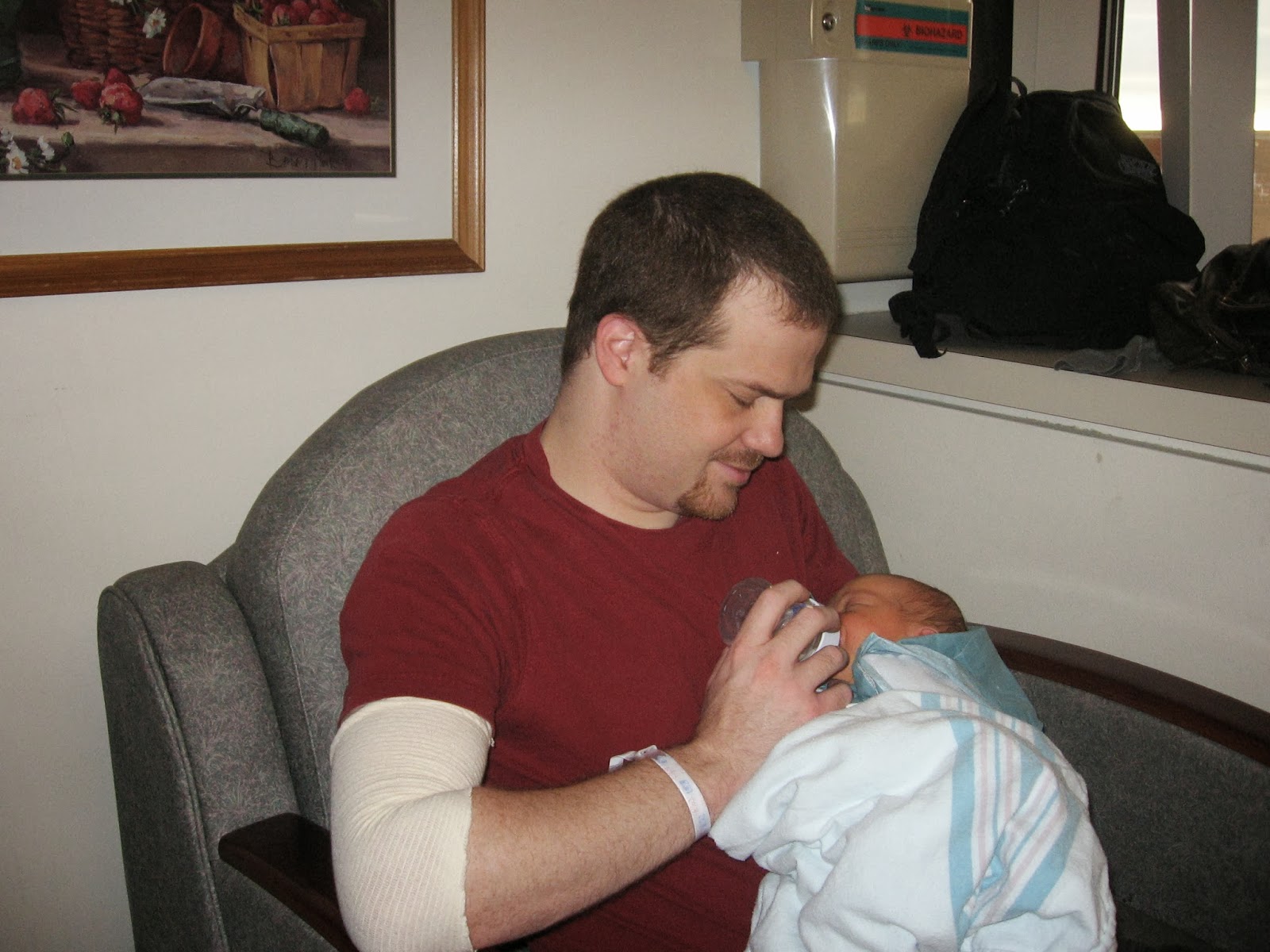
My oldest son is 7. He was mostly formula-fed from birth, and completely formula-fed from about 7 weeks of age.

Given the person I am now, the breastfeeding advocate and educator, who has successfully breastfed three subsequent children, sometimes I look back and can't quite believe he wasn't breastfed. But his birth and my experience with him is what made me so passionate about birth and breastfeeding in the first place.

But why wasn't he breastfed?


Was it awareness, or lack thereof?
I don't think so. I was aware of the benefits of breastfeeding. I intended to breastfeed him. In fact, here's an excerpt from a LiveJournal entry I wrote when I was about eight months pregnant: 
The doctor asked if we'd taken any classes, which we have. She said, "Oh good, so you're prepared." Haha! Yes! I feel so prepared! Ok, I know the basics, and sort of what to expect. But prepared? I don't think you can ever really be prepared for your first childbirth. I mean, ok, the nursery is almost ready, he'll have clothes to wear and a place to sleep and something to eat (boobies!), but seriously. Prepared? I keep trying to remember the signs of labor and thinking how this class we took has a doozy of a final exam!
Then, about a week before the baby was born:
I went ahead and ordered a dual electric breast pump...Still cheaper than formula in the long run, and I hope that I will be able to give him breastmilk for as long as possible. 
So I was definitely "aware" of breastfeeding, of the benefits, that I wanted to breastfeed. I had made that decision and was planning ahead.

Was it education, or lack thereof?
This was part of it. And I think one of the big problems was, I didn't know I needed to be educated. I bought a couple of breastfeeding books, but I didn't read them. I didn't take a class, didn't attend any LLL meetings, didn't talk to other breastfeeding mothers about their experiences. Indeed, as the birth story I wrote just a couple of weeks after he was born shows, I didn't know what I didn't know:
They brought the baby to me and helped me latch him. He knew what to do, but I was still pretty out of it. I also have the timeline here a bit befuddled, because of what ensued. I know they needed to check his blood sugars because of his size, and asked us if it would be ok to give him some formula if he needed it, and if so, what kind. We said it was ok, but we didn't know anything about formulas, so just go ahead and give him whatever they thought was good. They suggested Enfamil with Lipil. Sure, why not.


If I had done any reading or taken a class, I would probably have known that he likely didn't need to be given formula, or we would have at least known to ask more questions. As it turned out, his blood sugars were fine, but I soon went into shock due to blood loss from the delivery. The nurses told me that because I'd lost so much blood, I wouldn't be able to make milk:
I didn't get a chance to try nursing again. I needed to rebuild my blood supply before I could even think about making milk.
I was stuck in bed for all of Sunday and Monday. They came and checked my bleeding periodically, gave me IV pain meds, brought me food. They brought the baby in on Monday for me to try nursing again, but I was pretty weak and sore. They were giving him formula, which was fine. With his size, he needed to eat, and I didn't have food for him. 
What no one told me, apparently, was that in order to make milk, I needed to nurse the baby. Even if my milk supply increase was delayed, I still needed to be nursing him and/or pumping to set up prolactin receptors and to encourage milk production. Even if he had to be supplemented with formula, that didn't mean I shouldn't nurse him. The colostrum would benefit him, too. I do recall that they fed him whatever colostrum I pumped, but it wasn't much.

Was it willpower?
Yes. I'm sure a big part of the problem was willpower. Now, I went through a traumatic birth, and I got off to a bit of a rocky start, but that alone didn't make breastfeeding impossible. The bigger problem in this story is that I didn't know how much hard work it takes in the beginning, especially when there's a rocky start, to breastfeed. I didn't know that if I stuck with it, it would get better and easier and really feel worthwhile, and so I didn't try.

Was it support, or lack thereof?
Yes and no. The support in the hospital was variable, as evidenced by some of the quotes above. Then there was this:
[On Tuesday, the lactation consultant] showed me how to use the pump and said I'd need to pump for 15-20 minutes every 2-3 hours to stimulate milk flow and establish a supply. She also suggested I rent a hospital-grade pump, because the one I'd bought would burn out if I used it that often. I think I pumped twice that day. With all the people in and out and all the activity, and my general weakness, pumping seemed like just that much more hassle, that much more of an energy drain.

Wednesday was better, and I did pretty well with pumping. A different lactation consultant came to see me and helped me breastfeed the baby. I tried the football hold, because of my sore abdomen, and the cross-cradle, which I found more comfortable. They told me I should breastfeed for 10 minutes per side and then pump for 10 more minutes.
This information is only sort of correct, and she didn't say the most basic thing, which is, "You have to nurse the baby to make milk, and here's why." She didn't say, "The best thing you can do to bring in your milk is to nurse the baby." She didn't say, "Spend time skin-to-skin with your baby and nurse on demand." She didn't say, "Watch the baby, not the clock." Etc. And no one, again, told me that it was hard work and perseverance that would matter the most. Everyone said it was fine to supplement with formula, and no one, not even me, fought for me to breastfeed.


On the other hand, my mom wanted me to breastfeed. She wanted me to so badly. But she didn't know how to support me, and I didn't know I needed support or how that support should look. A friend tried to help; she even offered to nurse the baby for me to show me how it works! She offered me the contact information for a local La Leche League leader. She knew I needed support, and she knew how to give it, but I didn't know how to take it, or that I should, and I was convinced that I should do what I was told by the hospital, not knowing, as many women don't, that the nurses at the hospital maybe weren't the be-all and end-all of breastfeeding information.

How did I feel about "failing" to breastfeed?
Well, there's this, from about 3 weeks postpartum:
I know these are questions best put to a lactation consultant, but I really want a more unbiased analysis. I want a totally practically-minded opinion, and I feel like an LC would push me to try breastfeeding, when I find it so discouraging. It's the lactation consultants who first told me to pump 8 times a day, and I didn't manage to do that and it just made me feel bad. I know that's what I'd need to do to boost my supply, but it's really hard. I don't know whom to turn to or whom to ask, and it's very upsetting. Breastfeeding is the one thing only I can do for my son, and I'm not even sure I want to do it. I know I'm not alone. I know there are other mothers out there who tried to breastfeed and just didn't want to. But I never thought I'd be one of them. I never thought I'd find it so difficult or, frankly, unpleasant.

I mean, anyone can mix some formula in a bottle and put it in his mouth. Many people have over the last 3 weeks, although it's his father who does it most often. But only I can produce breastmilk for him.
"I don't know whom to turn to or whom to ask...Breastfeeding is the one thing only I can do for my son..." I was so torn, and confused, and I didn't have the information I needed. I didn't want someone who would "push" me to breastfeed, and I thought all lactation consultants would be like the ones I saw in the hospital, who I didn't find to be helpful and I did find to be pushy. But that was exactly what I needed, someone who would "push" me to breastfeed. I didn't realize, you either breastfeed or you don't, and I certainly could have. (In that same post, I lamented that I "only" pumped 2 to 3 ounces in a sitting, having no idea that's actually quite good!)

And there's this, from one month postpartum:
I've been crying a lot. I think one reason is that I feel bad about having to give up on breastfeeding. I know I had so many extenuating circumstances that it would have taken a rather heroic effort to really get in there and exclusively breastfeed, but knowing the reasons doesn't make me less frustrated that things aren't working out the way I'd hoped they would.
And this:
A couple of women I know have recommended an LC in the neighborhood. Maybe I should talk to her. I don't know. I just want to feel better. I want to feel like I've resolved this for myself, and right now I obviously don't. If I try and fail, will I feel worse, or will I at least be able to say I tried? If I try and succeed, will I find the joy in it that I am hoping to find, or will I just get discouraged again? 
And then at six weeks, I thought I might try to relactate:
[I tried putting him to breast...] And even more exciting, milk came out! I thought my milk was dried up, but he got some out. Not very much, but enough that he was willing to keep sucking. So I let him. (Ow) 10 minutes on each side, he sucked. And milk came out on both sides. I let him keep going until it got too painful and he got too squirmy. I think he got a little frustrated when he wasn't the least bit satisfied after 20 minutes of sucking. I would be too, hehe.

Then we gave him a bottle of formula and he gobbled down 6 ounces, so I know he hardly got anything from me. But I wasn't so much interested in volume as ability. That was pretty exciting. My nipples are still sore this morning from it, but it felt really good emotionally.


I was not successful, but it's clear that I wanted to try, and I gave it a go. I even finally contacted the La Leche League leader that I should have spoken to in that first week! If my birth had gone more smoothly, I probably would have breastfed. I can't change the craziness that was my oldest son's first six weeks of life, but I think the lessons of what I went through can give us all some perspective on what other women might actually need, and how we can provide that.

What can we learn from my experiences?
I think we need to give most women, especially middle class, educated women, enough credit to assume they know about breastfeeding. It's not a lack of awareness that causes women not to meet their breastfeeding goals. After all, something like 90% of women state an intention to breastfeed upon giving birth, yet less than a third of them are still breastfeeding at six months postpartum, and not even half are still exclusively breastfeeding at six weeks. Something goes wrong in those first few days postpartum and in the early weeks.

I think the biggest factor in improving breastfeeding rates and success is education, followed closely by support. Education and support work hand-in-hand. First, we educate women not about why they should breastfeed (or not just about why), but about how breastfeeding works and what they can expect. Second, we educate women about finding and/or building a support network, to have phone numbers on hand they can call, websites to visit, books to read, to let them know that they can and should ask for help, that they don't have to - and shouldn't have to - go it alone, and that there's no shame in having a little trouble at the beginning. Third, we provide that support network, with continuity prenatally, at birth, and in the weeks following the birth. Whether they join a La Leche League meeting, are friends with an experienced breastfeeding mother, or get all their help online from blogs and Facebook, women and their partners need to know (a) they probably will need help; (b) it's okay to ask for help; and (c) where that help can be found.

It's amazing that I documented my experiences with such detail in the moment. It's hard to look back seven years through the lens of who I've become and remember what I was feeling at the time. Because I wrote it all down at the time, it's all out there, raw and visceral, and I can see right there what I knew, what I had, and what was missing. Filling in those missing pieces for other women can make a huge difference in their lives and the lives of their children.

***

To read the full account of my oldest's birth, see the four-part story starting here

For a quick-start guide to breastfeeding that answers many of the most common questions new mothers have, check out my e-book, The Jessica on Babies Breastfeeding FAQ, available for Kindle from Amazon.

Friday, January 3, 2014

Guest Post: How I Feel About Putting My Wife's Breasts on YouTube

Since we had the new baby, Baby Y, we have started making a lot more videos of my wife breastfeeding. I actually went out and bought an HD camera so we can make high quality videos, as I thought it was great she has something she is so passionate about. Many of those videos feature my wife breasts at different levels of exposure. Some are quite vivid, I know. I take the videos, and I edit many of them. And yes, I do like taking them, as she is, to me, the most amazing thing. I find we have gotten closer since we started doing these together. However, when posting it to YouTube, I go back and forth on my feelings regarding this exposure.

There are days that I am very excited about doing this and about the amount of views that she gets for her videos. And then there are days when I am less excited. Like, when I see comments like, “Can u do one with both tits out”, or, “you have verey nice breasts”. Yes, I know, her breasts are very nice, I love them very much (so, I am also somehow proud “yeah, I get to hit that”). But it is a little frustrating. If you want to be a jerk off (pun intended) go ahead, but do you need to post about it? Be a man, be ashamed of yourself a little, you know, like you are supposed to. When I see those, I wonder if we should continue posting those videos.

But then, there is the other side that, for me, wins in the end. I feel that since we started putting these videos up, I have gotten a lot more comfortable with her breastfeeding anywhere. I used to get a little uneasy when she would breastfeed in a restaurant, or on the couch in a friend's house, especially when the baby pops off and exposes her for a second. I used to get a bit annoyed: why can’t she keep him attached? But now, it seems so natural to me, that I do not mind at all. This means that doing these videos had made breastfeeding more natural, as it should be, for me.

The other day we had friends in our house, and the wife was breastfeeding her toddler, feeling very comfortable as well. I would like to think that our way of seeing breastfeeding helped that. (Please feel free not to correct me if I am wrong!).

And then, there is the view count, and that comment here or there, from an actual mother who liked the video or found the information helpful. Another mother said that this had helped to learn a new technique, or that she realized breastfeeding in a restaurant, or a public place is completely normal and natural. And those are just great, and I hope a higher view count will bring more of those types of comments and help more people find them who are genuinely interested in learning more about breastfeeding.

Now, I am not saying that breasts are not sexy, or not part of sexual life. Trust me, they still very much are, especially now when there is so much of them. But, there is also another part, a part that does not detract from that or change it: the actual intended use of them. And that does not bother me anymore. So, no, I am not comfortable with the idea of those guys watching the videos, and I would be lying to myself if I said it was surprising. But, I am happy that this might help someone, maybe even a guy, see breastfeeding as natural. Hey, maybe at least some of those guys are actually trying to help their wives, right? 

***
Thank you to my husband for sharing these very candid thoughts about our YouTube projects. To see Jessica on Babies videos, visit http://www.youtube.com/jessicaonbabies and browse the dozens of videos already available, then subscribe to stay up-to-date as new videos are posted!

Tuesday, December 10, 2013

Living My Life on Camera: I'm Not Making Porn

Okay, maybe that title's a little dramatic, but since my YouTube channel is growing and we've started making a lot more videos, I feel like I spend a lot of time with a camera in my face. The feature called "Life Shots," especially, is very much like having my own little reality show. Every situation becomes a video opportunity. The other day, when I was changing the toddler's diaper while simultaneously nursing the baby in the Moby wrap, all in a public restroom in a medical building because my 5-year-old had to pee, I found myself thinking what a great video that would have made and lamenting that my cameraman - my husband, who also produces and does most of the editing - was not there to record it.

It's not that I think my life is so unique or noteworthy, but enough people comment about how I "must have [my] hands full," or that my boys "keep [me] busy," or wonder "how [I] do it," I figured having four boys 7 and under is interesting to a lot of people. I also like the idea of documenting a normal life. I don't have any special secret. I'm not very organized. I'm certainly no "supermom," whatever that's supposed to mean. But I think I mostly have things under control, and I enjoy life with four boys, and I don't mind sharing that with the world.


Exposing myself (sometimes literally) and our life to the camera is a way of saying, "This is what a normal family looks like." It helps other people in normal families realize that they're normal. It makes people who have it more together than I do feel good, and it gives inspiration to people who aren't sure if they could manage.

I also enjoy using the platform to normalize breastfeeding, cosleeping, and other aspects of baby care that still aren't as mainstream as they could be. It's an opportunity for education about breastfeeding and birth, and a way of showing that I'm just a regular person who does mostly practice what I preach. Babywearing, breastfeeding, these are not out of reach for most people, and they are extremely valuable, especially when you have multiple children.


It's become a little scary, being so exposed (again, sometimes literally). At first, I wasn't sure about making videos that exposed my breasts. Though I'm not squeamish about breastfeeding in public, I'm also not likely to go around flashing people for fun. Because breasts are so sexualized, I knew that I was opening myself up to attention I wasn't looking for by making videos about expressing milk, obtaining a good latch, and so forth, that couldn't help but show quite a lot of skin and nipple. Indeed, I got a penis picture in my message inbox, for the first time yesterday. Lovely. While I know that there are men watching my videos for purposes other than learning about breastfeeding, the fact that those videos have lots of views means that women (and men) who are looking for breastfeeding and pumping help will find my videos. That's the power and magic of social media. More views means more potential viewers. And, I have gotten a few genuine comments from women thanking me for the information, so I know the videos are being watched for their intended purpose as well. And I'm not sorry that I get to generate ad income from men watching for other reasons. That's money that will help me make more videos that can help more people with their breastfeeding and other baby care questions.

I still haven't quite gotten past the idea that men other than my husband are enjoying my breasts. The fact that they are anonymous helps. The fact that some percentage of my video views are from women looking for breastfeeding assistance helps, too. And I can't help what other people do with my image once it's out there. It's the internet, and I'm not naive. My husband is very aware of the potential, of course. He's the one who films the videos, after all. He's in the same frame of mind, that we'll take the views and the ad revenue regardless of the motivation, and we're glad that at least some of the people watching are learning something.

The bottom line, for me, is that the only way to normalize breastfeeding is to show breastfeeding. And since I'm in a position, as a breastfeeding counselor with a new baby of my own, to make instructional videos about breastfeeding using an actual newborn baby, a woman's actual postpartum breasts, and her actual breastmilk, it only made sense to seize the moment and just do it. Showing a real woman breastfeeding a real baby under real circumstances makes breastfeeding attainable, normal, and tangible. My videos let other women see me struggle to latch my baby, fumble with my wrap, and occasionally get confused. They let me expose the learning process of breastfeeding, to show that it's not always easy but that it's doable, to show that it's convenient, to show how it works when you have multiple children. To me, that benefit far outweighs the ickiness that comes with knowing what else my videos might be used for.


Like my videos? Subscribe to my channel and like my Facebook page!

Wednesday, December 4, 2013

Breastfeeding a Newborn: How Often Does My Baby Nurse?

I have a confession to make: I have no idea how often or for how long my baby nurses.

That's right! Gasp! I don't keep track!

When someone asks me, "How often does he eat?" or "How many times do you get up at night to feed him?", I don't have an answer beyond, "I don't know. It's not bad."

Look, this is my fourth kid and my third nursling. I've never been a "charter." I've never kept very careful track of diaper changes or when feedings started and ended. But now, fourth kid, time has no meaning. Sometimes an hour between feedings can seem luxuriously long. Other times, an hour can seem like, "Hey, didn't you just eat?"

I know a given nursing session doesn't take long. For example, today, I fed him for five minutes at one point. I happen to know because I happened to have glanced at my watch when he started, so I figured, hey, let's see how long this actually lasts. It was five minutes. It seemed awfully short, so I tried to offer him more. He didn't want it. When did he next feed? I don't know. Was it long enough to get something done in between? Yes, I think so.


The thing is, I tend to be doing other things while he nurses. For example, he nursed yesterday at my oldest's dentist appointment. He nursed in the Moby wrap while I watched N get his teeth cleaned, shepherded S to the bathroom, and changed G's diaper. (Yes, I nursed and changed a diaper simultaneously...standing in the middle of a single-use public restroom in a medical building. That now qualifies as the weirdest nursing situation I've been in.) So how long did that feeding last? I have no clue. I was busy watching my oldest get his teeth cleaned, taking another one to the bathroom, and changing a diaper!

Usually, my multitasking isn't quite that exciting, though. Typically I've got my phone in one hand while I support the baby with the other, and I play Candy Crush and check Facebook 14 times while I nurse. Sometimes I read a book. A real one. Other times, I read a book on my Kindle app. Lots of times, I'm tending to one or more of my other kids while poor Y hangs on for dear life.


The great thing about breastfeeding is you don't have to meter it. You don't have to measure anything. You don't have to time it or schedule it or worry about whether he'll want just a little more. When the baby is hungry, you feed him. It's that simple. As long as baby is growing, producing plenty of wet and dirty diapers, is alert and interactive, and otherwise seems healthy, then you don't have to know exactly how long every feeding lasts and how often you're nursing. There will be times when he nurses for five minutes several times in an hour and other times where he sleeps three hours and then nurses for 20 (or more!). There's no rule for any given baby, and there's no general rule, either, except, "When the baby is hungry, you feed him." Check for active sucking and swallowing and watch him expand practically before your eyes. (If your baby has any health problems, has slow weight gain, or was premature, your doctor may ask you to track feedings and diapers to ensure that your baby is taking in enough calories. This is important in a situation like that. Also, if feedings seem to last an hour or more, your baby may have problems with his latch that makes it difficult to efficiently extract milk. In that case, it is probably a great idea to make an appointment with a lactation consultant to see if there's anything else going on.)

So how often is my six-week-old eating? I have no idea. How long does it take him to finish? No clue. Doesn't seem long, though. Is he happy? Reasonably. Is he growing? Heck, yeah (he's already in 3-month clothing and filling those out nicely)! Does he eat well? Yep!

Enjoy your baby. Don't be obsessed with the clock or the calendar. Watch your baby. Get to know him. Learn what his cries mean and figure out what he likes to do. Follow his lead. Follow his cues. Time has no meaning for him, and it shouldn't matter so much to you, either. Get a book, or your phone, or your e-reader, or the TV remote, sit back, relax, and nurse that baby!

Check out my YouTube channel for lots of breastfeeding videos!

Tuesday, October 8, 2013

New Edition of Kindle Book is Available!


Check out the new, updated Jessica on Babies Breastfeeding FAQ, available for Kindle from Amazon.com. Makes a great new-mom gift or a quick purchase just before (or just after) you have your own baby. At $1.99, you get Jessica's basic breastfeeding advice in the palm of your hand, accessible any time and anywhere you need it.

Some sample questions and answers from the book:

What is the most important piece of advice you would give a new mother about breastfeeding?

The first thing I would say to any new mother is, “Keep nursing!” The more you nurse, the easier it gets, and the more you nurse, the more milk you make. You’ll often hear “breastfeeding is normal” or “breastfeeding is natural,” which is true, but it’s important to remember that breastfeeding is a skill that must be learned and practiced, by both mother and baby. Just like with any skill, the more you do it, the better at it you get. When my first son was born, I was so convinced that breastfeeding was natural and instinctive that I was very discouraged by how complicated it all seemed. I felt like I needed three or four hands. When my second son was born, despite all the reading I had done, it still took several weeks for me to find comfortable positions and the easiest way to get him latched on and sucking as quickly as possible. As awkward as you may feel in the first few weeks, you’ll find it getting easier by the day if you just keep at it. The third time around, I knew things would get better, but the first three days or so were very hard; he would scream every time I unlatched him from my breast. I had to keep reminding myself that the more he nursed, the better things would get. Sure enough, by the end of the third day, he became a much more content baby, and I was able to settle into a more comfortable nursing routine.


The second basic piece of advice I always offer is, “Give it six weeks.” The first few days and weeks can be challenging, and even painful, as you adjust to having a new baby and all the new demands placed on you by this change in your life. If you persevere through the first six weeks, nursing on demand, getting used to the baby’s cues and needs, it only gets easier. I’ve seen new mothers go from “Why is this so hard? I don’t want to do this anymore!” to “Oh yeah, I think I’ll nurse for at least a year,” in the space of just those few weeks. There’s something about that six-week point after which everything starts to seem easier. Also, as the baby grows, breastfeeding gets easier just because the baby’s mouth gets bigger, his neck is stronger, and he is more able to support himself. If you stick it out for those first six weeks and put in the work at the beginning, you’ll be able to continue your breastfeeding relationship for as long as you and your child desire.


I heard that giving a bottle of formula before bed, or adding rice cereal to the bottle, will help my baby sleep better and longer. Should I try this?

It is not a good idea to offer anything but breastmilk to your baby before six months of age. Remember that your milk supply is governed by the baby’s demand. If you give a bottle or other food instead of nursing the baby from the breast, you are telling your body that your baby doesn’t need milk at that time. This can cause your milk supply to drop, requiring that you continue to give your baby a bottle, which can cause your milk supply to drop further. It’s a vicious cycle that is difficult to get out of. 

There is no evidence that giving a bottle of formula at bedtime will help your baby sleep better at night. There is mounting evidence that doing so may be harmful to your milk supply as well as possibly contributing to postpartum depression or other maternal health issues. Recent studies show that mothers who breastfeed exclusively in the early months feel happier and better rested than those who attempt to supplement with formula in order to get more sleep. My sons woke frequently to nurse, and it was much easier just to pull the baby to my breast and go back to sleep than it would have been to get up and prepare a bottle for him. My husband and I were both much more sleep-deprived with our first son, who was formula-fed, than we were with our breastfed babies.
As for adding rice cereal to a bottle, or giving any other kind of solid (non-breastmilk) food to a young baby, this is highly discouraged by the American Academy of Pediatrics, the World Health Organization, and many other groups. It is recommended that you do not feed any foods or liquids except breastmilk to an infant under six months of age, unless under a doctor’s direction for a medical reason. Putting rice cereal in a bottle is also a choking risk. 

Also, giving a bottle in the early weeks of life may have a negative effect on the baby’s desire to latch properly on your breast (see “Should I give my baby a bottle?” below for more on bottles).


My nipples are bleeding. What do I do?

For short-term care, squeeze a little milk from your breast after a feeding and apply it to the bleeding nipple. Breastmilk has healing properties that will help the nipple heal faster and prevent infection. You may also purchase pure lanolin (usually found under the brand name Lansinoh) to apply to your nipples after a feeding. Lanolin is safe to leave on when your baby is ready to eat again and will soothe your nipples and help them heal. However, bleeding nipples are typically a sign of a bad latch or other feeding problem, and you shouldn't hesitate to contact a lactation consultant if the problem doesn’t resolve within a few days. 

Wednesday, September 4, 2013

Formula "Goody" Bags

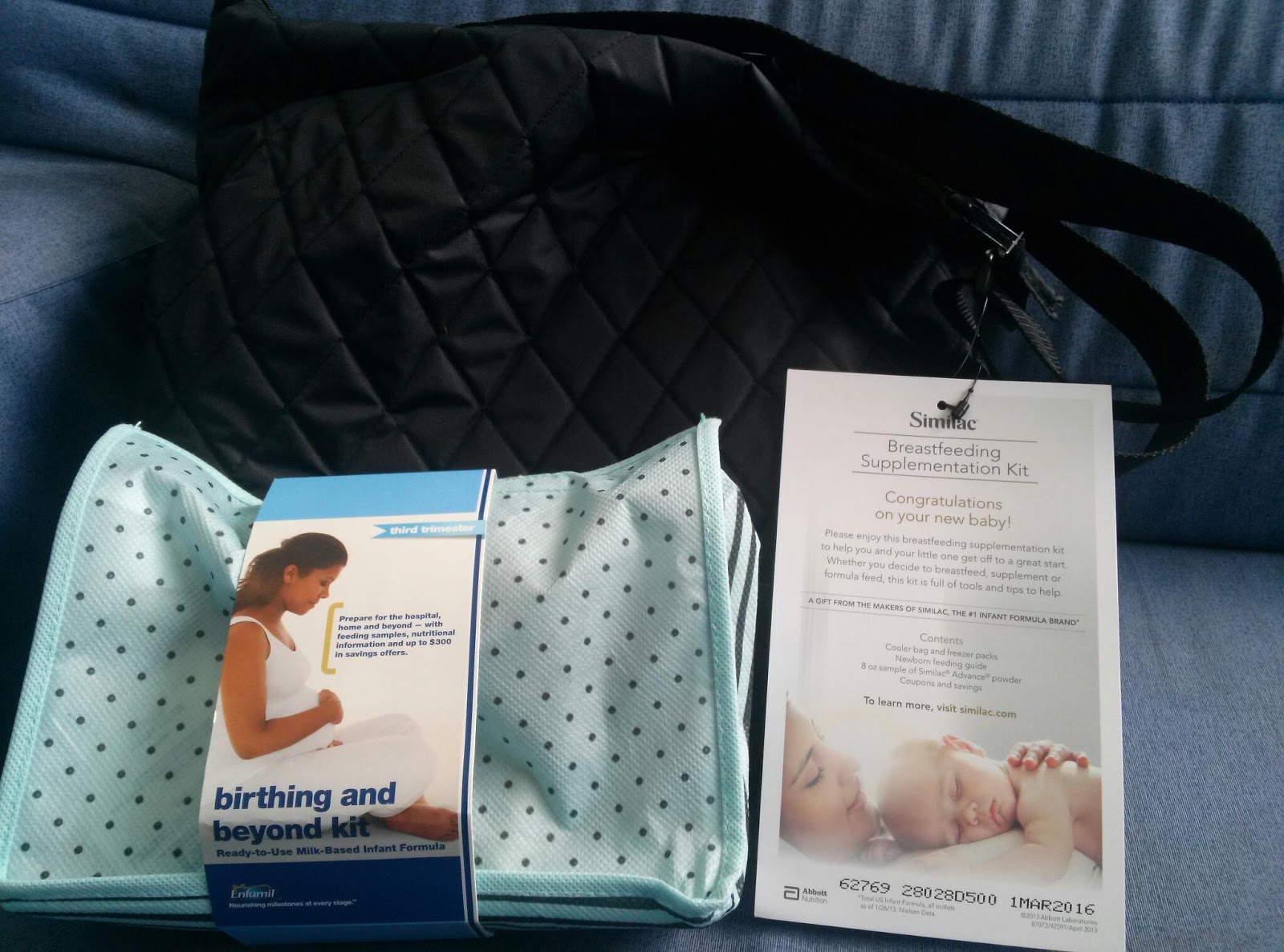
I've written before about doctors and hospitals giving out bags supplied by formula manufacturers, specifically here and here. It is a common marketing technique for formula companies - especially Enfamil, Similac, and Nestle/Gerber - to provide "gift bags," samples, and coupons to OB offices, pediatricians, and hospitals to be given out to expectant and new parents. In exchange for the doctors' and hospitals' assistance with marketing their formula, the company supplies free formula to these providers. Their idea is that if you send a new mom home with some free formula and some nice "gifts," she will be more likely to choose your brand if she decides to use formula, and she will be more likely to try using formula if she has some on hand already.

Samples may be anything from a small can of powdered formula, to a few ready-to-feed bottles, to coupons for free or discounted formula at the store. Often, the company will take things one step further and give out diaper bags, insulated bags, ice packs, and other useful items, along with booklets of information about infant feeding.

Research has shown that new parents who have formula samples at home, especially those that they received from their doctor or hospital, are more likely to supplement unnecessarily and are less likely to be exclusively breastfeeding at six weeks than those who do not have formula readily available. Formula samples directly sabotage breastfeeding. (See the above-linked posts for why and how this happens.)

In all honesty, in all three of my previous pregnancies, I did not receive formula "freebies" from my OB or pediatrician. Since my first baby was receiving formula from day one anyway, I did receive samples from the hospital and pediatrician, and I don't know what I would have gotten had I been breastfeeding. With my second and third, formula samples were not offered, and I was exclusively breastfeeding. I did receive some samples and coupons in the mail from joining mailing lists, but I did not receive any from any of my medical providers.

Today, though, I had my third visit with my new OB. After the appointment, I spoke with the billing office about what our financial obligations would be, based on my insurance coverage. After signing the payment contract, I was handed two gifts, one with Similac branding and one from Enfamil. I was excited, because never having received formula goody bags before, I didn't really know what they might be like. Also, it was entirely possible some of the stuff might be useful (ice packs are ice packs, after all), and I was curious to see what I was given. The Similac bag was a nice shoulder bag, while the Enfamil packaging was not in and of itself useful.


I know I personally won't be swayed by the formula marketing, since I have successfully exclusively breastfed two kids already and am extremely confident about breastfeeding this next little guy. I'm not worried that having some formula samples in my house will cause me any problems. I have a purely academic interest in what these bags contain and how their contents might be perceived by a mother less gung-ho than I am about breastfeeding.

I was not disappointed.


I'll start with the Enfamil package. It was a small, cloth bag fastened with Velcro. The label said it is a "birthing and beyond kit" and informed me that it contained ready-to-use formula. Inside were four "Nursette" bottles - two Newborn and two Gentlease - and one bottle nipple. Also included were a booklet on caring for my newborn, a book of coupons for various Enfamil products, informational cards about each type of included formula, and a postcard telling me that I could download the American Academy of Pediatrics' New Mother's Breastfeeding Essentials ebook from Enfamil's website.


The booklet, called "Your new baby - a detailed guide to your newborn's nutrition and well-being" contains a selection of generic advice regarding newborn care, milestones, and development, including a section on breastfeeding. This section is brief, not detailed, and is not complete enough to truly be helpful. They also find ways to advertise other Enfamil products such as their Vitamin D supplement, with a page on why supplementing with Vitamin D is important. The breastfeeding section is immediately followed by a section entitled "supplementing & formula-feeding," with the headline on the first page, "Going back to work - or just ready for a change." They then briefly discuss reasons why a mother might choose to supplement with formula, none of which are situations in which supplementation with formula is medically necessary: "milk was delayed coming in," "going back to work," "didn't feel like baby was getting enough," "mom or baby got sick," "baby had trouble latching or sucking," "pumping was too uncomfortable or inconvenient." This is followed by tips for bottle-feeding and preparing formula. The booklet also directs you to an 800 number or the Enfamil website for "live help."


I'll discuss all of this after we look at Similac's bag.


First of all, Similac's gifts were much more impressive. It starts with a quilted, messenger-sized shoulder bag which could be used for just about anything. It is simply black, with no Similac branding except for the large, removable label hanging from the strap. The bag is called a "Breastfeeding Supplementation Kit". In the bag were a sample-sized can of Similac powdered formula, a black cooler bag sized just about right for two bottles, with two Similac-branded ice packs inside, a Similac-branded booklet called "The Art of Feeding", a chart for how long breastmilk can be stored and instructions for use of the cooler bag, and a pile of coupons for everything from diapers to Disney movies. Surprisingly, none of the coupons were for Similac itself.


The "Art of Feeding" booklet starts out by recommending that mothers take Similac's prenatal vitamin during their pregnancy to aid their babies' development. It then discusses the nutrients a baby needs in its first few days and weeks of life and gives a quick overview of a sample diet for a breastfeeding mother. Next is a several-page guide to breastfeeding, including rough descriptions of the four most popular breastfeeding positions, tips for latching, an overview of newborn feeding habits, and what to look for when it comes to baby's diapers and weight gain. There is a brief FAQ, and then they recommend contacting their "feeding experts" at a toll-free number if you have further questions. The rest of the booklet contains advice about how to wean to formula, how to choose which type of formula to use (of course, Similac offers a wide range of options), how to choose a bottle and nipple (Similac has those products, too!), how to prepare, store, and use formula, and an overview of all of Similac's products.


The first thing I want to draw your attention to is the absurdity of a formula company - any formula company - offering advice on breastfeeding. Take any of this advice with a grain of salt. While none of what they say in either booklet is precisely "wrong," it's also not the kind of detailed help a struggling new mother might need, and some of it is misleading or incomplete. By including this information, these companies are trying to look like they're being breastfeeding-friendly, while simultaneously giving new parents the "permission" they need to supplement or switch to formula rather than try to solve any breastfeeding problems they encounter. By "allowing" a mother to use formula in addition to (or instead of) breastmilk, they are presenting her with a guilt-free "get out of breastfeeding" card. And they offer no real advice about how to know when you actually need to supplement, how to avoid the need to supplement, or how to realistically combine formula and breastfeeding in a way that will not further harm your breastmilk supply. They also do a fine job of explaining why their products are "almost as good as," or "the next best thing to" mom's own milk, and they show a range of products to meet any baby's needs.

Why does all this matter?

Well, let's look at where I got these bags. Who gave them to me? My doctor. By giving me these bags, my doctor is implicitly endorsing my use of formula. She has not given me any information on breastfeeding, has not discussed my choice of feeding method, and has not asked if I need any help making such a decision. I'm seven weeks from my due date. Maybe I'm still on the fence about how I want to feed my new baby. Maybe I haven't even really given it much thought. Maybe I'm being bombarded from all sides by the internet, my family, and my friends about how I "should" do this or I "can't" do that. Maybe I don't trust my breasts and my body. Maybe I don't really "get" how breastfeeding works. Maybe I think it's "gross." Or maybe I have body issues due to psychological problems or sexual abuse and the thought of anyone touching my breasts, even a baby, is nauseating or panic-inducing. I now have a ready-made solution: my doctor gave me formula samples. If I have any doubts about breastfeeding, I now know that my doctor thinks giving me some formula "in advance," "just in case," is a good idea. And if my doctor thinks it's a good idea, who am I to question?

Now, granted, this is my fourth baby, and I've made it pretty darn clear with my doctor, in the short time we've known each other, that I know exactly what I'm talking about and that I have a very clear idea of what I'm going to be doing. So it may be that she sensed I don't need her advice. I don't know how she might be with a first-time mother, or even a second- or third-time mother who is considering breastfeeding for the first time. I may actually ask her at our next appointment if they do provide any prenatal breastfeeding support or advice. One thing I am comforted by is that I got two different brands' bags, so the office is not endorsing one over the other, and they just sort of threw them at me with a, "Oh, yeah, you can have these if you want" attitude. But I wasn't exactly discouraged from taking them, either. And the way it's presented, "Oh, and we have some goody bags for you, too!" makes it sound so exciting and exclusive! Of course I'd want a goody bag!

I'm very interested to see what, if anything, I get from the hospital, if this is what I got from the OB!

Breastfeeding simply can't compete with the formula marketing scheme. Sure, I could get a bag from Medela or Hygeia or Avent or Lansinoh with various breastfeeding accessories such as breast pads, lanolin, and freezer packs. But these companies simply don't have the market share that the formula companies do, and they don't have as vested an interest in gaining you as a customer. You'll never, ever spend as much money on breastfeeding as you would if you buy formula. You just won't. It's not worth it for their bottom line to give out freebies like it is for the formula companies. That leaves doctors and hospitals and midwives and bloggers and lactation consultants to do the leg work of educating the public about breastfeeding.

What it comes down to for me, with this blog and in my life, is this: I don't have any say in what you choose to do, how you choose to give birth, how you choose to feed your baby, or any other of the myriad choices you'll be making as a parent. But, I do care that you make those decisions based on good, solid, evidenced-based information, which is what I try to provide you with here on my blog and if you ask me advice in person or through my social media outlets. There is no disputing the fact that formula is inferior to breastfeeding. There is a time and a place for the use of formula, and I can even give you advice on how and when to use it in a way that won't sabotage your breastfeeding relationship, if you need such help. I hope - I really, really hope - that you won't turn to Similac or Enfamil or Nestle to tell you how to "successfully" supplement your breastfed baby with formula and think that the information they give you is truly accurate.

I know that these formula samples can be genuinely helpful in certain cases when short-term supplementation is necessary. But I also think there are ways to provide such samples to the mothers that need them, without essentially spamming every pregnant mother with something she probably won't need.

As for me, I'm going to keep my bags to use as an educational tool when I finally start teaching my own breastfeeding classes. Raising awareness of exactly what you're getting when your doctor hands you a "goody bag" is a necessary step toward improving breastfeeding rates and successes.

Did you receive formula goody bags from your OB, hospital, or pediatrician? What types of products did you get? How did you feel about receiving these freebies? Did you use any of the products?

Friday, May 31, 2013

Ask-Me Monday: Breastfeeding Positions

Sorry for the delay in posting this! It's been a hectic week. Here is last Monday's Ask-Me Monday video, all about breastfeeding positions! Enjoy!


To submit a question for Ask-Me Monday, like the Facebook page and comment to one of the Ask-Me Monday posts throughout the week!

Friday, May 3, 2013

Four Kinds of Breastfeeding Support: Emotional, Practical, Improper, and Unhelpful

I can't emphasize enough that when you have a new baby, you need support. Going it alone is unnatural and stressful. They say it takes a village, and while you may not have an entire village to help you, I hope you at least have your partner and a few trusted friends and relatives who are there for you.

When it comes to breastfeeding support, you need to make sure that (a) you have some, and (b) you have the right kind.

I've identified four types of support for new mothers. Each description below contains suggestions for the new mom herself and for the support people around her.

1.  Emotional Support

For Mom: Emotional support is crucial. You might also call this moral support. This kind of support could come from your partner, your mother, your sister, aunt, cousin, best friend, a random person you meet in the park, or even someone on the internet. When someone is offering emotional support, it's those encouraging words when you're at the end of your rope; it's the, "You're doing great!" when you feel like you're doing everything wrong. Emotional support helps you keep going, push through the rough spots, and lets you know that others have been where you are, and it does get better.

To Support Mom: Even if you don't have personal breastfeeding experience, you can be there for her. Let her vent, listen to her concerns, and offer an encouraging word, whatever comes naturally to you. Some of us are more comfortable with being cheerleaders, while others are better at simply listening and being a sympathetic ear. Avoid trying to give advice she isn't asking for, but offer to help in any way you can. For example, "Can I do something around the house for you so you can rest? I'm a great laundry folder! Do you need anything from the store? Diapers? Snacks? Juice? Can I get you a glass of water?" Make specific offers, not a general, "Is there anything I can do to help?" because she may not be able to think of something in particular, or she may feel uncomfortable making a request.

2.  Practical Support

For Mom: Practical support is also crucial. As much as you think you might know going in (and I say this as someone who's nursed a few babies!), it never hurts to have someone you can call upon when you have a practical question about your baby's latch, strange nursing behaviors, or other concerns. Every baby is different, and every nursing relationship is unique, and you'll want to know someone you can contact who has seen lots of  mom-baby pairs and helped solve many types of problems. It's important that whoever you lean on for practical support actually knows what to say or do to help. This may be a La Leche League leader, a breastfeeding peer counselor or other trained breastfeeding support person, an International Board Certified Lactation Consultant, or even just your mom who's nursed four kids. You need to know that the advice you're going to receive is correct advice. If you get advice you're not sure of, feel free to double check it on a reputable site like Kellymom.com, or contact a lactation consultant.

To Support Mom: Unless you're sure you know what you're talking about - i.e., you're a lactation consultant, peer counselor, CLC, La Leche League leader, or you've at least done your breastfeeding research, it's best to leave the advice to someone who is one of those people. If you do know how to help, make the offer. "Hey, I'm a lactation educator. If you want, I can come sit with you and check out your baby's latch." If I'm not absolutely certain what to say or do to help a new mother with her question, I will always recommend that she meet with a local lactation consultant. If you don't know of one, you could help her find one. If you do, give her the number!

3.  Improper Support

For Mom: Many friends and relatives will mean well, and they probably really do want to help you. However, sometimes you get tips and advice from people that is not what would be recommended by a lactation expert. For example, just because your best friend introduced a bottle of formula every night but continued to nurse for a year doesn't mean it's a good idea or that it will work for you. People improvise, get lucky, or make decisions based on unique situations that may or may not apply to you. Make sure you've done your own research and have consulted with someone trained in lactation before you supplement unnecessarily or make a decision that could harm your breastfeeding relationship.

To Support Mom: It's important not to give advice willy-nilly. Every mom will have different circumstances, and unless you are a trained lactation support person or have an educational background to go with your personal experience, you can end up doing more harm than good, even if you're trying to help. Simple suggestions like, "Maybe you want to get his latch checked," or, "My son had a tongue tie and I had the exact problems you're having" can be very helpful and give her a starting point for finding assistance. Thoughts based on your own experience that may make her life easier such as, "My daughter was really fussy, too, and babywearing really helped us on the bad evenings." It's best not to begin supplementation or take drastic measures without being seen by a lactation expert, however.

4.  Unhelpful Support

For Mom: The least helpful kind of support is from people who think they're being supportive but are actually making you feel worse. A great example of this would be, "I'm can see that you're trying really hard to nurse your baby, but if it's this stressful, I would totally understand if you wanted to switch to bottles. A happy mom makes for a happy baby!" This kind of advice, while usually well-meaning, does not help the mother who sincerely wants to exclusively breastfeed but is in the throes of the two-week growth spurt or is battling thrush or mastitis. It's hard, but as a new parent it's important to not allow unhelpful comments like these to affect your mindset.

To Support Mom: Rather than trying to deter her from a path you think may be causing her stress, it is more helpful and more supportive to try to understand what her own goals are. A better comment in the above situation might be, "I can tell you really want to make nursing work, and you're doing an amazing job. I heard of a great lactation consultant in the area. Do you want her number?" If the mom really wants to breastfeed, suggesting that she stop will not make her feel supported. Helping her attain her goals will improve her mood and situation.

Preparation and Education

As new parents, we need to be prepared to avoid the improper and unhelpful advice and to call upon our emotional and practical support people whenever we need to. Gather your support system around you before you give birth, and be ready to discard information and advice that isn't what you want to hear.

As supportive friends and family members of new parents, it's our job to say the right words and be prepared with the right information. It doesn't hurt for others besides the new mom to learn a little about breastfeeding so that we can help in a way that the new parents will appreciate. It's important to know what the parents want and how to help them achieve that. Parents are bombarded by advice, some of which is contradictory, and knowing they have people to lean on who will simply be there to say, "I know it's hard now, but you're doing great, and it gets easier" will be invaluable.

How have you supported friends or relatives as they begin their parenting journeys? How have you been best supported when you've had a new baby? When we came home from the hospital with my third son, it was an incredibly hot and humid day, he screamed whenever he wasn't on the breast, and I was completely emotionally drained. A friend texted me just to say I was doing great, and it felt so good to hear that, even though it was my third baby. What is your favorite thing to tell a new parent, and how do they usually respond?

Monday, January 7, 2013

The Yes, It's Normal! Guide update in the works!

For my next small project, I plan to update the "Yes, It's Normal!" Guide to Breastfeeding to a 3rd edition. Listed below are the questions addressed in the current version of the Guide. Are there any additional questions you'd like to see added to a new edition? What questions would you like to see answered in more detail? Keep in mind that the Guide is geared toward mothers and babies in the first three months postpartum.


What is the number one piece of advice you would give a new mother about breastfeeding?
How often should my baby be eating?
How do I know if baby is getting enough to eat/drink?
What is a “latch?” How do I know if my baby has a good latch?
Should breastfeeding hurt?
My nipples are bleeding. What do I do?
How much/how often should my baby be eating during the night? When will my baby sleep through the night?
I heard that giving a bottle of formula before bed, or adding rice cereal to the bottle, will help my baby sleep better and longer. Should I try this?
Do I need to give my baby water?
Do I have to switch sides during a feeding? How long should the baby stay on each breast?
What do I do if baby needs to eat while we’re out and about?
Should I give my baby a pacifier?
Should I give my baby a bottle? What do I put in the bottle?
My breasts leak constantly. What can I do about this?
My breasts have never leaked. Is something wrong?
My breasts suddenly don’t feel as full as they used to, and I’ve stopped leaking. What happened? Should I be worried?
I think I have a problem with my milk supply. What can I do to make more milk?
My baby’s bowel movements are loose and frequent. What should his poops look like?
My baby hasn’t had a bowel movement in several days. Help!
My baby is suddenly eating nonstop. What’s going on? Do I have enough milk for him?
My baby has been asleep most of the day, which is unusual. Should I be worried?
My baby is very fussy and nurses frequently for a few hours around the same time every day/night. What’s wrong?
Does what I eat get into the breastmilk? How do I know if something I’m eating is bothering the baby?
Can I drink alcohol while breastfeeding?
I have a sore spot on my breast. What could it be? What is a plugged duct? What do I do about a plugged duct?
What is mastitis? How do I know if I have mastitis? What do I do about mastitis?
What is thrush? How do I treat thrush?
Can I take medications while breastfeeding?

If you've read the Guide, I would really appreciate it if you'd leave me a review at the Amazon site (here) and/or as a comment on "The Guide" page of my blog (here). Also, don't forget to recommend it to friends! 

Friday, December 7, 2012

So You've Just Had a Baby. Now What?

The initial postpartum period, the first six to 12 weeks after giving birth, is challenging. Whether it's your first baby or your fourth, you are adjusting to having a new member of your family, of meeting the demands of a helpless, dependent being, and of getting to know and love this new little person. Let's talk a little about what you can do to make this time of transition as healthy as possible for you and your newborn as well as the rest of your family.


Enlist someone to organize offers of help

You know you're going to need some kind of help after the baby is born. This can differ from person to person, but most new parents appreciate having others help them in some way, from caring for older siblings, to sending meals, to washing dishes, to folding laundry, to running errands. Figure out what you think you'll need the most help with before you give birth, and then ask someone to be in charge of organizing all the offers you'll (hopefully) receive. This can be a religious community leader, a good friend, a relative, a neighbor, or anyone else you trust and who you know can handle the responsibility. Often someone steps up to be the point person. Tell this person what you think you'll want the most help with and direct all offers of, "What can I do to help you?" or "Do you need meals?" to this person. There are also websites that can help everyone keep track of what needs doing and when.

A few things I can recommend, from experience, to put on the list:
  • Help with your other kids: Entertain older siblings, assist with school pick-ups and drop-offs, take your toddler for a few hours (playdates, baby-sitting by grandparents/aunts/cousins)
  • Food: Ask people to make meals that can be eaten cold or room temperature or that are easy to rewarm. Specify dietary restrictions, allergies, preferences to the point person.
  • Laundry: Newborns generate a lot of laundry, and the rest of the family still needs clean clothes and sheets and towels. If someone can throw in a load of laundry or fold and put away clean stuff, this can be very helpful.
  • Kitchen: You can use paper goods for a while, or you can take the offer from someone to wash dishes, load/unload the dishwasher, and put clean dishes away.
  • Errands: If someone offers, send them to the store with a specific list of random things you haven't been able to get out of the house to pick up. Maybe you're low on certain staple foods, diapers, or receiving blankets and burp cloths. Be sure to establish how and when you'll be paying them back, or give them cash to take with them to the store.
  • Company: Being home with a new baby can be lonely. Sometimes it's nice just to have someone come over with a cup of coffee and hang out. Keep the visits short and to close friends and family, and don't feel obligated to play hostess.
  • Baby-Holding: The thing you'll probably both most and least want is for others to hold your baby. Make it clear that what you need help with is everything else, not holding the baby. However, sometimes you just want to take a long, hot shower in peace, and then it's nice to have someone around you can trust to hold the baby for 20 minutes while you take some time for yourself. Alternatively, if you know the baby is content and fed and should be fine for an hour, ask someone to keep an eye on him for you while you take a nap.
Keep track of feeds, diapers, and sleep

It's very hard to rely on your short-term memory when you've just had a baby. This means that even if you're used to being able to remember things like the last time you ate, I guarantee, your brain will be too hazy and foggy to remember how many diapers you've changed, which side you last nursed on, and the last time the baby took a nap, all at once. Unfortunately, doctors and nurses LOVE to have this kind of information when assessing your baby's health, and it's important for you to have an idea of how often and for how long the baby is eating and sleeping and how many wet and dirty diapers he is producing in a given day. 

Some parents keep a detailed spreadsheet of every diaper, feeding, and nap. Others jot down the information in a notebook that they carry with them all the time. I tried to just rely on my memory with my three, but I can tell you, I usually had absolutely no idea how often my babies were eating. I usually only knew which side I had last nursed on because that side of my nursing bra was unhooked! Thankfully, in this era of smartphones and iPads, we can make technology do the work for us. There are a number of apps out there for both iOS and Android that can help keep track of all this information for you.

One app I can specifically recommend is smallnest. It's for iPhone, iPod, and iPad, and it has some really interesting features that make baby care a little bit easier to track. First of all, it has a very simple, clean interface that takes no time to learn to use. When you sit down to nurse, tap the "Food" button, select Left Breast or Right Breast, and it will instantly record that feeding. When you're done, stop the feeding. (You can also track bottle feeds and meals of solids.) It will then update the display to show how long since baby's last feeding and will add that information to a running list of the day's activities. You can also track pee and poo diapers and sleep. Secondly, the most exciting feature of this app is its ability to connect all of your baby's caregivers. By linking the app with your Facebook account, you can invite other caregivers, like Daddy or a nanny, to download the app to their device as well, and then they also can track feedings, diapers, and naps. This information is then shared to all devices that are connected to that particular baby, so everyone knows everything at the touch of a button. Plus, you can leave your phone downstairs and put the information into your iPad that you left by the bed, instead of worrying that you've left your device somewhere when it's time for a feeding. (Thanks to smallnest for signing up to be Jessica on Babies' first sponsor!* Click through and check out the app!)

Take care of YOURSELF

It's tempting to try to jump back in to all of your pre-pregnancy or pre-baby activities the minute you get home with your new baby. Often, we're still high on the hormone rush of birth and are raring to go. Take it from me: RELAX. The first six weeks postpartum are one of the only times we have in life to take license to simply rest. Your body needs rest. Your baby needs you to be rested. You have a lot of healing and recovering to do, whether you had a picture perfect, easy birth or a difficult c-section or something in between. The worst thing you can do is try to be up and training for a marathon two weeks after giving birth. Don't worry about weight loss. Don't worry about work. Don't worry about keeping up with your toddler. Take a few weeks to just RELAX.

One thing I won't say is to "sleep when baby sleeps." That was the one piece of advice I hated, because I know how impractical it can be. However, try to nap with baby at least once a day, or at least veg in front of the TV while he naps in your arms. You don't have to be running around all the time.


Surround yourself with SUPPORT

Help with meals and laundry is not enough. You also need to have a support system in place. Having people around who share your parenting philosophy and can offer support in the difficult early days is invaluable. They say it takes a village, and it really does. You need someone to commiserate with over the three-week growth spurt, the every-two-hours waking at night, the poo-splosions, and the boredom. You need someone who can answer your questions about feedings and give good advice (whether this is your mom, a trusted friend, or a professional IBCLC). You need people who will say the words you need to hear when you're feeling your most exhausted and worn out. You need people who will watch you for signs of postpartum depression, anxiety, or psychosis and ensure that you get the help you need. And you need people around who won't be driven away by your crazy hormone surges and moodiness.

Do you have other tips for new mothers that you'd like to share? We'd love to hear your comments!

-------------------
* If you are interested in discussing a possible partnership or sponsorship with Jessica on Babies, please email jessicaonbabies (at) gmail (dot) com. I would be very happy to talk about what options there are to increase your visibility among new parents.

Tuesday, July 31, 2012

About Those Formula Freebies and Mayor Bloomberg...

By now, just about every breastfeeding blog I read has made some kind of commentary or another on New York City Mayor Bloomberg's new program for breastfeeding promotion in NYC hospitals. Part of the Latch-On NYC initiative, this voluntary program requires that participating hospitals lock up formula, not routinely give out formula samples and formula-branded paraphernalia to new parents, prohibit the display of formula promotional materials in the hospital, and conform to the New York State hospital regulation that exclusively breastfed babies not be given formula supplementation unless medically indicated. The program is expected to raise breastfeeding rates in participating hospitals because research shows that women who are given formula samples by their doctors or in the hospital are 3.5 times more likely to be supplementing with formula by two weeks of age. If formula is kept under wraps, and new mothers receive education about breastfeeding before their babies are given any formula, the thinking goes, breastfeeding rates will rise and the overall health of the population will improve. Hand-in-hand with this is news of an AAP resolution that pediatricians should not routinely hand out free formula samples to patients, for the same reasons.

I have been reading every blog post I've been linked to, taking in almost every comment on all the major breastfeeding and parenting blogs I frequent, and I still don't quite know how I feel about this initiative. It sounds like they're basically trying to get NYC hospitals to conform to the Baby Friendly Hospital Initiative standards without going through the BFHI certification process. I gave birth to GI in a Baby-Friendly hospital, and I felt that the breastfeeding support there was excellent. Of course, I went in intending to breastfeed. If I had gone in less certain, uneducated, or sure I wanted to use formula, I'm not sure how I would have felt. I didn't need or want to ask for formula, so I don't know what kind of "lecture" or "education" I would have gotten had I made the request. I didn't have any problem nursing or producing milk, so I don't know how I would have been treated had I genuinely felt my baby was starving and needed formula supplementation. Because I've been lucky enough to be able to nurse with relatively few problems, and because I'm extremely pro-breastfeeding, well educated about breastfeeding (I literally wrote a book on it), and because I wasn't going to let anything or anyone stand in my way of breastfeeding, I didn't need to think about "the other side."

I often wonder whether I would have been able to breastfeed NJ had I given birth to him in a hospital like the one where I had SB and GI. Rather than jumping straight to formula when there was the slightest hint of a problem, if they had been more supportive of breastfeeding and, more importantly, had been more supportive specifically of me in my situation, would I have left the hospital breastfeeding instead of with an extra case of formula? It's very hard to say. My husband and I were discussing this last night (in the context of the above-mentioned controversy). His perspective and memories of those early days are different from mine, but we both remember that the lactation consultants who visited me were quite unhelpful. While it may have been true that many women who experience postpartum hemorrhage have difficulty with their milk supply, and while it may have been true that pumping often would help bring in my milk, what I really needed was to spend lots of time skin-to-skin with NJ, nurse him on demand, and be forced to care for him. Yes, I was weak. Yes, I had lost a lot of blood. Yes, I was in pain. But NJ was healthy and strong, had a great latch, and, with a little help, I probably could have initiated breastfeeding while in the hospital and breastfed him several times a day during that four-day stay rather than allowing the nursery nurses, my husband, my mom, and my visitors to feed him for me. It's probable that he would have needed a few bottles (or to be fed via syringe, perhaps?) on the first day when I was fairly down-and-out from blood loss, but on the second day? The third? Through the night? I do remember some good practices, such as telling me to save whatever I did pump and that they could give him that in a bottle instead of formula. They did provide me with a pump and show me how to use it. They did have lactation consultants come every day. But I constantly feel, looking back, that the advice the LCs gave me was, while not necessarily wrong, unhelpful or misleading. If you straight out tell a woman she won't have enough milk, why should she even bother to try? And if you don't tell her or her husband that formula is not, in fact, equal to breastmilk, then why shouldn't she just go straight to formula to begin with?

What's missing in all of this, to me, is that education prenatally is vitally important. The decision to breastfeed can't necessarily be made in the postpartum haze. The desire to stick with it is lowest when in the throes of newborn nursing, and the temptation to use that free formula is highest at the most critical period in the breastfeeding relationship. I know this. I've lived it. You need to walk into that hospital determined to breastfeed. You need a supportive hospital staff, from the OB or midwife to the delivery nurse to the postpartum nurses. You need lactation consultants on hand 24/7 (not just during business hours!). You need good, solid breastfeeding information. And you need to know that you are going to be respected for whatever choices you make.

The loudest complaints against this program seem to be from two basic viewpoints. One is the women who never wanted to breastfeed and don't liked feeling "shamed" or "guilted" by the hospital for their choice. The other is the women who desperately wanted to breastfeed but, for whatever reason, needed to supplement with formula in the early days and struggled long and hard with the decision. Both feel that formula samples are helpful, especially those that only needed a can or two of supplements before being able to go on to exclusively breastfeed. Both feel that being lectured or educated by hospital staff before someone will go get them a bottle for their starving babies is shaming and unfair.

The thing is, I agree with them, too. If my baby is starving because I can't produce enough colostrum or milk to satisfy him (please note that this is rare), then I need to be able to give him something else. If the hospital staff balk at giving me a bottle of formula to feed him, and I have to sign a form or justify my request every time my baby gets hungry, it's going to make me feel even worse and more inadequate. Support doesn't mean just patting a woman on the back and telling her she's doing a good job breastfeeding. Support means sitting down with a woman and figuring out what she wants, what her goals are, and then helping her get there. A good IBCLC knows this, and a good IBCLC will know when formula supplementation is necessary and how best to introduce, use, and wean off of those supplements, if possible. Having a nurse who's had a little bit of lactation training come in and tell you once again that formula isn't as good as breastmilk, and maybe you should have another go at feeding from the breast before you give a bottle, is only going to make a frustrated mother more flustered and upset. We need a balance.

I'm in favor of locking up the formula, but I'm also in favor of giving it to any mother who asks for it. I'm in favor of banning the gift bags and the formula-branded handouts, but I'm also in favor of giving unbranded formula to mothers who need it (in the hospital). I'm in favor of good breastfeeding support and information, but I'm also in favor of education in the proper preparation and use of formula, if a mother chooses to use it. I'm in favor of pediatricians having formula samples on hand to help out mothers who need it, but I'm also in favor of pediatric offices having lactation consultants on staff to help mothers who are struggling. Balance.

We need a more comprehensive solution. While restricting access to free formula will increase breastfeeding rates among those who are on the fence (that's been proven), it will not help those women who truly need it or who adamantly refuse to breastfeed. We need information and education throughout women's lives, and especially during pregnancy, to help them learn about breastfeeding before there's a squalling baby in their arms. We need postpartum support, especially for those women who are going back to work. We need support for pumping in the workplace. We need better, longer maternity leave. We need a cultural shift.

If there is one thing I know, unquestionably, it's that the more babies who are breastfed, the better. Banning formula freebies in hospitals and pediatric offices is a step in the right direction, but it's not the only step.