Showing posts with label first baby. Show all posts

Friday, February 14, 2014

Why I Didn't Breastfeed My First Baby

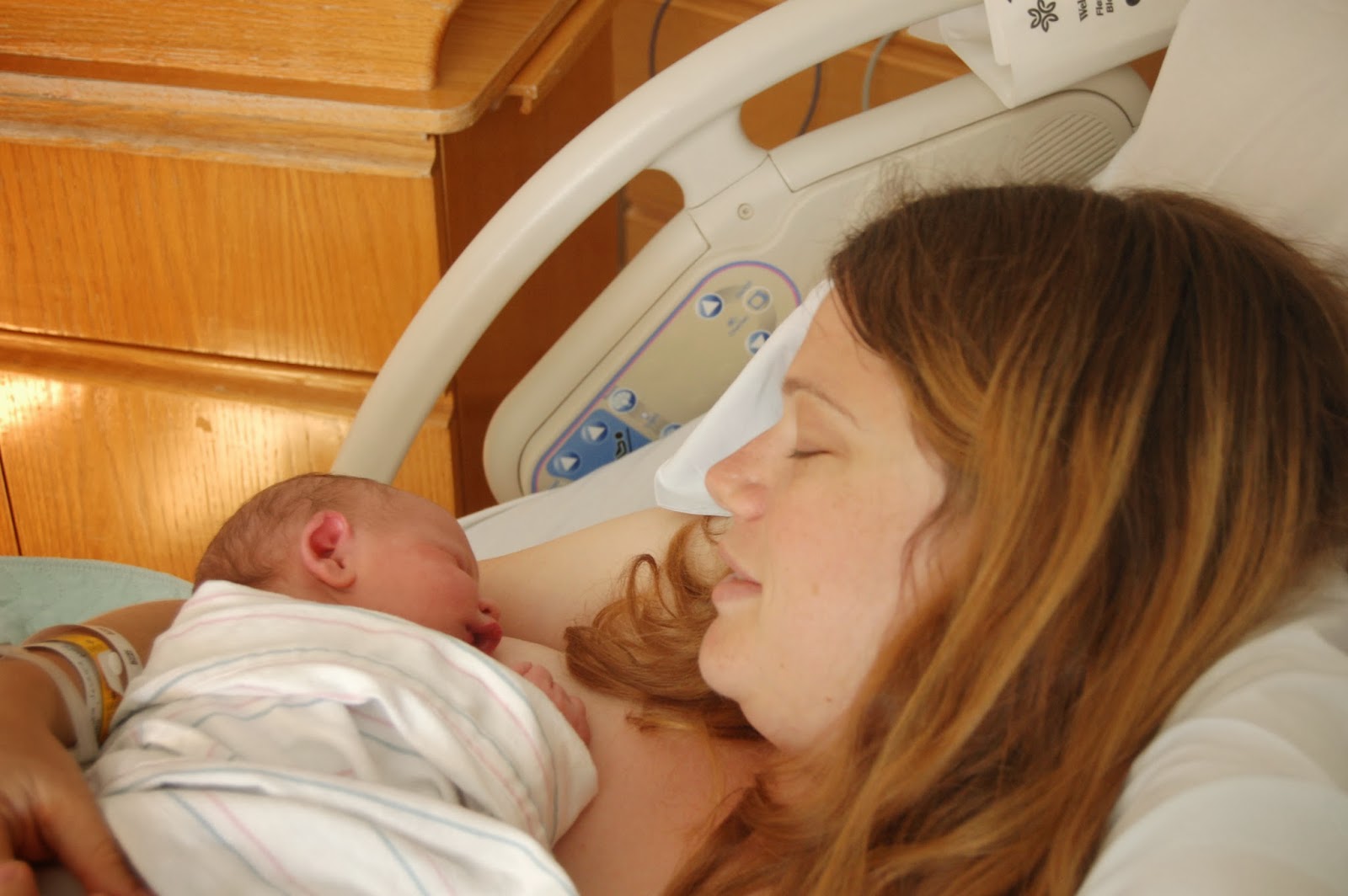
My oldest son is 7. He was mostly formula-fed from birth, and completely formula-fed from about 7 weeks of age.

Given the person I am now, the breastfeeding advocate and educator, who has successfully breastfed three subsequent children, sometimes I look back and can't quite believe he wasn't breastfed. But his birth and my experience with him is what made me so passionate about birth and breastfeeding in the first place.

But why wasn't he breastfed?


Was it awareness, or lack thereof?
I don't think so. I was aware of the benefits of breastfeeding. I intended to breastfeed him. In fact, here's an excerpt from a LiveJournal entry I wrote when I was about eight months pregnant: 
The doctor asked if we'd taken any classes, which we have. She said, "Oh good, so you're prepared." Haha! Yes! I feel so prepared! Ok, I know the basics, and sort of what to expect. But prepared? I don't think you can ever really be prepared for your first childbirth. I mean, ok, the nursery is almost ready, he'll have clothes to wear and a place to sleep and something to eat (boobies!), but seriously. Prepared? I keep trying to remember the signs of labor and thinking how this class we took has a doozy of a final exam!
Then, about a week before the baby was born:
I went ahead and ordered a dual electric breast pump...Still cheaper than formula in the long run, and I hope that I will be able to give him breastmilk for as long as possible. 
So I was definitely "aware" of breastfeeding, of the benefits, that I wanted to breastfeed. I had made that decision and was planning ahead.

Was it education, or lack thereof?
This was part of it. And I think one of the big problems was, I didn't know I needed to be educated. I bought a couple of breastfeeding books, but I didn't read them. I didn't take a class, didn't attend any LLL meetings, didn't talk to other breastfeeding mothers about their experiences. Indeed, as the birth story I wrote just a couple of weeks after he was born shows, I didn't know what I didn't know:
They brought the baby to me and helped me latch him. He knew what to do, but I was still pretty out of it. I also have the timeline here a bit befuddled, because of what ensued. I know they needed to check his blood sugars because of his size, and asked us if it would be ok to give him some formula if he needed it, and if so, what kind. We said it was ok, but we didn't know anything about formulas, so just go ahead and give him whatever they thought was good. They suggested Enfamil with Lipil. Sure, why not.


If I had done any reading or taken a class, I would probably have known that he likely didn't need to be given formula, or we would have at least known to ask more questions. As it turned out, his blood sugars were fine, but I soon went into shock due to blood loss from the delivery. The nurses told me that because I'd lost so much blood, I wouldn't be able to make milk:
I didn't get a chance to try nursing again. I needed to rebuild my blood supply before I could even think about making milk.
I was stuck in bed for all of Sunday and Monday. They came and checked my bleeding periodically, gave me IV pain meds, brought me food. They brought the baby in on Monday for me to try nursing again, but I was pretty weak and sore. They were giving him formula, which was fine. With his size, he needed to eat, and I didn't have food for him. 
What no one told me, apparently, was that in order to make milk, I needed to nurse the baby. Even if my milk supply increase was delayed, I still needed to be nursing him and/or pumping to set up prolactin receptors and to encourage milk production. Even if he had to be supplemented with formula, that didn't mean I shouldn't nurse him. The colostrum would benefit him, too. I do recall that they fed him whatever colostrum I pumped, but it wasn't much.

Was it willpower?
Yes. I'm sure a big part of the problem was willpower. Now, I went through a traumatic birth, and I got off to a bit of a rocky start, but that alone didn't make breastfeeding impossible. The bigger problem in this story is that I didn't know how much hard work it takes in the beginning, especially when there's a rocky start, to breastfeed. I didn't know that if I stuck with it, it would get better and easier and really feel worthwhile, and so I didn't try.

Was it support, or lack thereof?
Yes and no. The support in the hospital was variable, as evidenced by some of the quotes above. Then there was this:
[On Tuesday, the lactation consultant] showed me how to use the pump and said I'd need to pump for 15-20 minutes every 2-3 hours to stimulate milk flow and establish a supply. She also suggested I rent a hospital-grade pump, because the one I'd bought would burn out if I used it that often. I think I pumped twice that day. With all the people in and out and all the activity, and my general weakness, pumping seemed like just that much more hassle, that much more of an energy drain.

Wednesday was better, and I did pretty well with pumping. A different lactation consultant came to see me and helped me breastfeed the baby. I tried the football hold, because of my sore abdomen, and the cross-cradle, which I found more comfortable. They told me I should breastfeed for 10 minutes per side and then pump for 10 more minutes.
This information is only sort of correct, and she didn't say the most basic thing, which is, "You have to nurse the baby to make milk, and here's why." She didn't say, "The best thing you can do to bring in your milk is to nurse the baby." She didn't say, "Spend time skin-to-skin with your baby and nurse on demand." She didn't say, "Watch the baby, not the clock." Etc. And no one, again, told me that it was hard work and perseverance that would matter the most. Everyone said it was fine to supplement with formula, and no one, not even me, fought for me to breastfeed.


On the other hand, my mom wanted me to breastfeed. She wanted me to so badly. But she didn't know how to support me, and I didn't know I needed support or how that support should look. A friend tried to help; she even offered to nurse the baby for me to show me how it works! She offered me the contact information for a local La Leche League leader. She knew I needed support, and she knew how to give it, but I didn't know how to take it, or that I should, and I was convinced that I should do what I was told by the hospital, not knowing, as many women don't, that the nurses at the hospital maybe weren't the be-all and end-all of breastfeeding information.

How did I feel about "failing" to breastfeed?
Well, there's this, from about 3 weeks postpartum:
I know these are questions best put to a lactation consultant, but I really want a more unbiased analysis. I want a totally practically-minded opinion, and I feel like an LC would push me to try breastfeeding, when I find it so discouraging. It's the lactation consultants who first told me to pump 8 times a day, and I didn't manage to do that and it just made me feel bad. I know that's what I'd need to do to boost my supply, but it's really hard. I don't know whom to turn to or whom to ask, and it's very upsetting. Breastfeeding is the one thing only I can do for my son, and I'm not even sure I want to do it. I know I'm not alone. I know there are other mothers out there who tried to breastfeed and just didn't want to. But I never thought I'd be one of them. I never thought I'd find it so difficult or, frankly, unpleasant.

I mean, anyone can mix some formula in a bottle and put it in his mouth. Many people have over the last 3 weeks, although it's his father who does it most often. But only I can produce breastmilk for him.
"I don't know whom to turn to or whom to ask...Breastfeeding is the one thing only I can do for my son..." I was so torn, and confused, and I didn't have the information I needed. I didn't want someone who would "push" me to breastfeed, and I thought all lactation consultants would be like the ones I saw in the hospital, who I didn't find to be helpful and I did find to be pushy. But that was exactly what I needed, someone who would "push" me to breastfeed. I didn't realize, you either breastfeed or you don't, and I certainly could have. (In that same post, I lamented that I "only" pumped 2 to 3 ounces in a sitting, having no idea that's actually quite good!)

And there's this, from one month postpartum:
I've been crying a lot. I think one reason is that I feel bad about having to give up on breastfeeding. I know I had so many extenuating circumstances that it would have taken a rather heroic effort to really get in there and exclusively breastfeed, but knowing the reasons doesn't make me less frustrated that things aren't working out the way I'd hoped they would.
And this:
A couple of women I know have recommended an LC in the neighborhood. Maybe I should talk to her. I don't know. I just want to feel better. I want to feel like I've resolved this for myself, and right now I obviously don't. If I try and fail, will I feel worse, or will I at least be able to say I tried? If I try and succeed, will I find the joy in it that I am hoping to find, or will I just get discouraged again? 
And then at six weeks, I thought I might try to relactate:
[I tried putting him to breast...] And even more exciting, milk came out! I thought my milk was dried up, but he got some out. Not very much, but enough that he was willing to keep sucking. So I let him. (Ow) 10 minutes on each side, he sucked. And milk came out on both sides. I let him keep going until it got too painful and he got too squirmy. I think he got a little frustrated when he wasn't the least bit satisfied after 20 minutes of sucking. I would be too, hehe.

Then we gave him a bottle of formula and he gobbled down 6 ounces, so I know he hardly got anything from me. But I wasn't so much interested in volume as ability. That was pretty exciting. My nipples are still sore this morning from it, but it felt really good emotionally.


I was not successful, but it's clear that I wanted to try, and I gave it a go. I even finally contacted the La Leche League leader that I should have spoken to in that first week! If my birth had gone more smoothly, I probably would have breastfed. I can't change the craziness that was my oldest son's first six weeks of life, but I think the lessons of what I went through can give us all some perspective on what other women might actually need, and how we can provide that.

What can we learn from my experiences?
I think we need to give most women, especially middle class, educated women, enough credit to assume they know about breastfeeding. It's not a lack of awareness that causes women not to meet their breastfeeding goals. After all, something like 90% of women state an intention to breastfeed upon giving birth, yet less than a third of them are still breastfeeding at six months postpartum, and not even half are still exclusively breastfeeding at six weeks. Something goes wrong in those first few days postpartum and in the early weeks.

I think the biggest factor in improving breastfeeding rates and success is education, followed closely by support. Education and support work hand-in-hand. First, we educate women not about why they should breastfeed (or not just about why), but about how breastfeeding works and what they can expect. Second, we educate women about finding and/or building a support network, to have phone numbers on hand they can call, websites to visit, books to read, to let them know that they can and should ask for help, that they don't have to - and shouldn't have to - go it alone, and that there's no shame in having a little trouble at the beginning. Third, we provide that support network, with continuity prenatally, at birth, and in the weeks following the birth. Whether they join a La Leche League meeting, are friends with an experienced breastfeeding mother, or get all their help online from blogs and Facebook, women and their partners need to know (a) they probably will need help; (b) it's okay to ask for help; and (c) where that help can be found.

It's amazing that I documented my experiences with such detail in the moment. It's hard to look back seven years through the lens of who I've become and remember what I was feeling at the time. Because I wrote it all down at the time, it's all out there, raw and visceral, and I can see right there what I knew, what I had, and what was missing. Filling in those missing pieces for other women can make a huge difference in their lives and the lives of their children.

***

To read the full account of my oldest's birth, see the four-part story starting here. 

For a quick-start guide to breastfeeding that answers many of the most common questions new mothers have, check out my e-book, The Jessica on Babies Breastfeeding FAQ, available for Kindle from Amazon.

Monday, December 2, 2013

Guest Post: Baby N's Birth from His Father's Point of View

Today's special guest post is from my husband! He wants to tell our kids' birth stories from his point of view. Often the man's role in and feelings about birth are underplayed or downplayed, and in a series of articles, my husband will explore his own impressions and experiences during the births of our sons. So, to celebrate 100 likes on the Facebook page, here is his perspective on N's birth! 

(Notice his challenge at the end. To continue the series and hear about S's birth, let's keep pushing forward to 200 likes! Share the blog with your friends, and if you haven't done so, please like the Facebook page!)

***

I've been wanting to tell the birth stories of our 4 kids from my perspective, the husband’s. I've had this idea for a while, but it’s hard to find the time to write it. You read many stories from women about their birth experience, but I can’t say I read many from the father’s point of view. So, I’m not expecting many men to read mine. But who knows? Maybe I am the strange one.

Each one of my kids' births was very different, an amazing experience by itself. Some were more exciting for me, others not as much. This is simply meant to put down in writing what I experienced and how I felt during those times. Take it as you will.

Baby N

First child! I was an exemplary husband, or so I thought. I went to all the birthing classes, went to the tour of the hospital. I don’t think I missed a single OB/GYN appointment. I knew a lot about what was going to happen; well, I thought I knew. I mean, reality… well, I think most of us know how that is.

When the day came and we went to the hospital, we figured we would take along my wife’s mother. It would be a great experience and be helpful. I am very thankful for my mother-in-law for all her help, but this made for some awkward moments and made it difficult to talk to my wife in private. I was very nervous, but I thought I knew it all. We were joking about not taking an epidural, about why you would suffer pain when you do not have to. I was very casual about it; hell, at some point we ordered pizza to the delivery room. She pushed for a long time. It was nice for me at that time, I got really involved. The nurse had me help. I felt it was great. I got to hold a leg up, and look at the entrance to see if someone is coming out. I don’t think I thought too much about her pain and how she was feeling in all of this. At the time I thought I was great; today, I realize I was rather inconsiderate.

When the doctors “finally” offered a c-section, I was happy. Great, they will take him out, he won’t have a squishy head, and my wife parts will remain intact. Yes, men think about that. Well, some of them. Got all scrubbed up, the nurse asked me if I had a camera. I thought that was funny. I went in to the OR to find my wife lying in a crucified position (thankfully, my mother-in-law was not invited to this occasion). It was still all cool. I sat by her head, trying to make my usual silly jokes. I was in a huge adrenaline rush. Everything was happening pretty quickly. Pretty soon I got to hold the baby. I got to hold him first. Well, she couldn’t, being that she was crucified to an operating table and half numb. Looking at him, hearing his cry… the newborn cry is great. It hits me in a soft place every time. But the first one, it was amazing.

Then they took him away to the nursery and took us to another room to recover. Apparently she lost a lot of blood. I did not realize it then, not even when they sent a specialized trauma nurse to see her. I think it is a good thing I was high on adrenaline, or I would have freaked out. That one took a long time to settle.


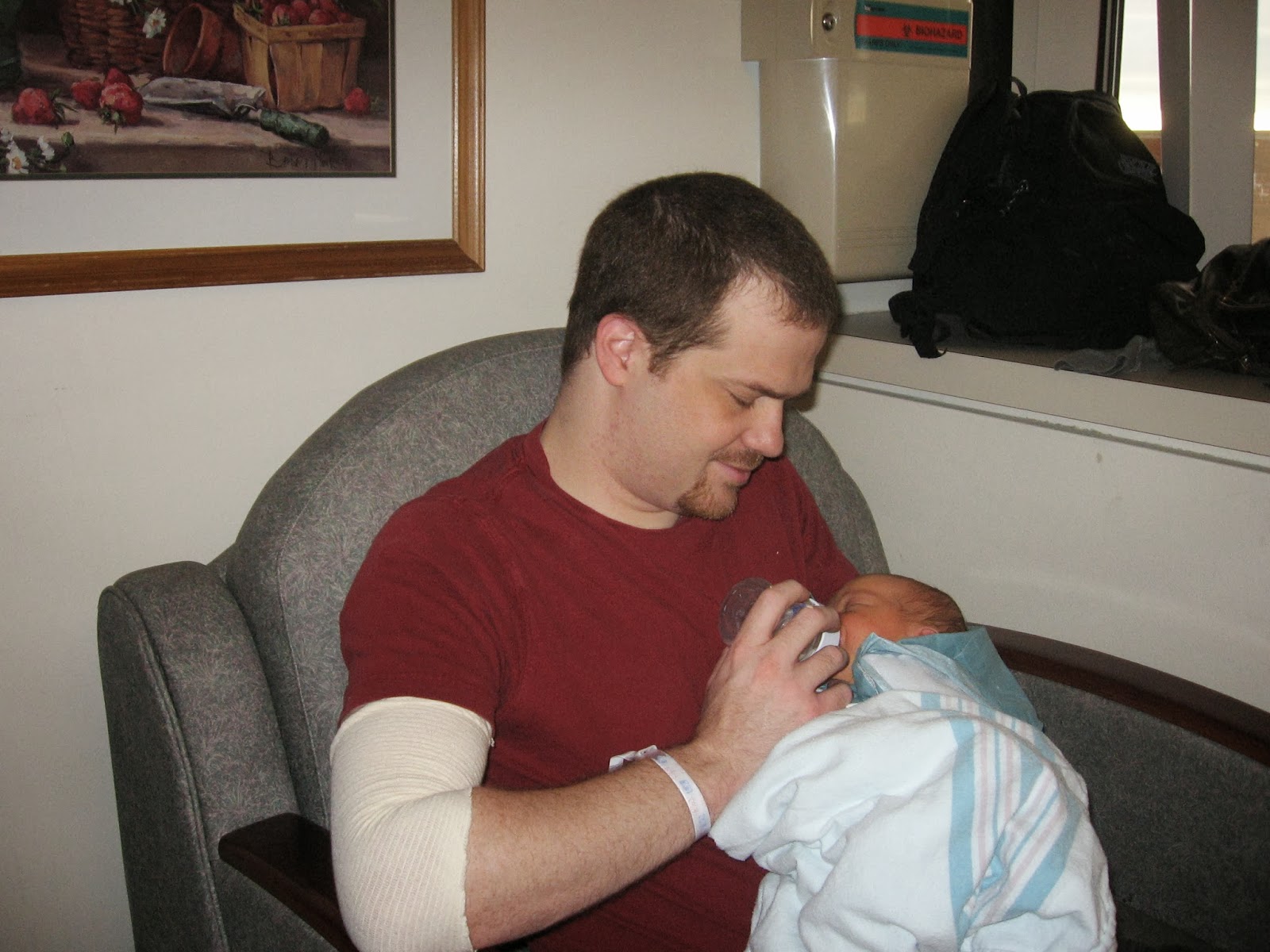
At the stay at the hospital, for the next five days, I was also being great. I came by, fed the baby, and changed him. I was rather happy she did not breast feed. I got to play with my new baby a lot. This continued after she got home. They sent us home with a bili light machine, to treat his jaundice. Still, I was being cool, letting her sleep and rest while I took care of him. Every day I would change him, feed him, and wash him. All she needed to do was rest. I was supportive of her attempt to breast feed, but when she couldn’t, I was not upset. I get to keep playing with him, feeding, feeling so helpful. What a great husband I was being. This continued for about 3 months, until we moved to California, where I suddenly had to work more, and leave her alone with him.

Only much later, as she was getting ready to have Baby S, did I realize how bad I was at the time. I distanced her from her baby. I felt I was being helpful. She felt I was being helpful. But, that was not the right way to do things. I pushed what I wanted, and at the same time thought to myself, “Why is so distant from him?” There are ways to be helpful, but I do not think this was the right one. Now, I know I was being selfish. I did not see how she was unhappy, how this had made her feel.

It took me a while to change my way of thinking, and see how important it is to her. I can’t say I quite understand it yet. But, with Baby S, things were different.

That’s the first story. I think this post has gone long enough, so I challenge you to help the Facebook page get 200 likes to hear so I can tell you what comes next! 

I will say this to any men out there who are about to have a baby: It is indeed a lot about her, and not because she carries all the burden of the pain, pregnancy, delivery, etc. It is because, in the end, I do think the outcome will affect her a lot more. So, get involved, but also remember that the best help you can give is to push her to achieve what she wants. To quote Coupling, “Ask her three times” if she’s sure. But when you do ask her, make sure you mean it.


Monday, November 25, 2013

Coming Home with Baby: What to Expect on Days Three and Four Postpartum

Assuming you had an uncomplicated, vaginal birth in a hospital, you'll be going home on day two or three postpartum. Legally, in the United States, insurance is required to pay for 48 hours postpartum in the hospital, and it's up to you, your family, your doctor, and your baby's doctor whether you want to stay for that long or if you want to go home sooner. This will depend on your health, your baby's health, and how confident you feel about taking full responsibility for your care and your baby's care weighed against how much more comfortable you'll be at home compared to the hospital environment. Many first-time parents prefer to take the full 48 hours in order to have assistance with breastfeeding, diapering, and general baby care, while more veteran parents are often in a hurry to get home to the older kid(s) and back into an already-established routine. (On the other hand, if you have several children, you may enjoy the relative quiet of your hospital room!)


Leaving the Hospital
When you're getting ready to leave the hospital, make sure you collect everything you brought. Don't forget small things like your cell phone charger, eyeglasses or contact lenses, jewelry and watch, and so forth. Go over the room a few times and collect everything that belongs to you.

Then, collect everything that the hospital gave you. Sanitary pads, ice packs, peri bottle, mesh underwear, diapers, alcohol wipes, bottles, pacifiers, thermometer, bulb syringe, breastpump parts, baby wipes, samples of baby shampoo, water bottle - anything they gave you that's consumable, they have to throw away when you leave. You're paying for it, one way or another, so you may as well take it with you. The only things they'll ask you to leave behind are typically the hospital gown, the baby shirts, and the receiving blankets (although we've ended up with more than a few hospital receiving blankets over four kids, so somehow quite a few of those have slipped through...). Often the nurses will offer to bring you more of anything you might need, such as another pack of diapers. Accept it! The less you have to worry about running out to buy the minute you get home, the better. (The only thing I'd recommend leaving behind, if offered, are formula samples if you're breastfeeding. See my "Just One Bottle" post for more on that topic. Or, take them with you but don't make them easily accessible.)

Have your partner or whoever is taking you home bring up the infant car seat (if you're using one) from the car so you can take your time buckling your baby securely. See my videos (here and here) on properly buckling your newborn in the car seat for instructions on keeping your precious new baby safe on his first car ride. (If you're starting out with a rear-facing convertible car seat, obviously you'll have to carry the baby down to the car and buckle her in there. I'm not suggesting that you wouldn't be using a car seat at all!)

Baby Blues
Whether you're still in the hospital or back home, days 3 and 4 postpartum will be very difficult. There's a major hormonal plunge at three days postpartum, which usually coincides with your milk supply increasing dramatically. Your progesterone levels, which were kept high by the placenta, finally plummet, now that the placenta has been delivered. Progesterone inhibits milk production, so when the placenta is delivered and progesterone levels fall, milk production suddenly increases. This is when you'll see the changeover from small amounts of colostrum to a much larger volume of milk.

While a welcome change as far as feeding your baby, this increase in milk production can cause new problems. Even if breastfeeding was going well up to this point, your milk volume increase may result in engorgement, making your breasts bigger, hard, and painful to the touch, which can make it difficult for your baby to latch, even if there were no problems with her latch before. The speed and force with which your milk may emerge from your breasts may confuse or upset your baby, who was used to the slower, thicker flow of colostrum. These combined issues may cause frustration for you, adding to the hormonal and emotional roller-coaster of the first week or so postpartum.

The result of this perfect storm of hormonal and physical changes is often inconsolable, irrational sobbing. Many newly postpartum women find themselves crying over nothing. I remember dissolving into tears because I couldn't figure out what to do about feeding my two older kids lunch when my third was three days old. Sometimes, your crying may be triggered by nothing at all, while other times small stressors can result in big sobs.

It's important to know to expect these "baby blues," because at least if you know it's coming, you can be prepared to ride out the crazies. Make sure your partner and other support people know about this phenomenon so that they'll know that your crying is not something they did wrong and so they can remind you that it will pass. You may feel overwhelmed, incompetent, or confused. Having someone there who can remind you that you're doing great, that this will pass, and to help you with all the little things that suddenly seem monumental will be vital. And if you do need to cry, go cry. Let it out. Crying releases toxins and is very freeing and cleansing, even if it's not much fun. Better to sob it out than try to hold it in.

Ask for Help
Ask for help. Ask for help. Ask for help. If you need assistance with breastfeeding, with housekeeping, with meals, with shopping, with simple baby care, a ride to the doctor, a cup of coffee, or someone to keep you company, ASK FOR HELP. If someone says, "What can I do?", tell them. If they offer, accept the offer. Be kind to yourself. Don't expect to be able to do everything yourself, even if you're used to being in charge and handling it all. You cannot handle everything at three days postpartum, and no one, including yourself, should expect you to. Your postpartum time is just about universally accepted as a time to rest, bond with your baby, and learn about parenthood (even if you're a parent for the second or third or fourth time!). Your body is healing, your brain is changing, and your life will never be the same. Lie down and let someone else take care of the mundane stuff.


Postpartum Depression
Baby blues should not last more than a week or two and should not be accompanied by severe anxiety, thoughts about harming yourself or your baby, hallucinations, or extreme paranoia. If you experience any of these more severe symptoms or if your "blues" last more than two weeks, contact your OB or midwife immediately. These are signs of postpartum depression, postpartum anxiety, or even postpartum psychosis, which are serious but can be treated with therapy and/or medication. Many psychotropic medications are compatible with breastfeeding and can help you feel like yourself again. Don't be afraid or ashamed to reach out for help if you suspect there's something more than hormonal changes going on.

Uterine Cramps and Bleeding
Especially if this is not your first baby, the cramping caused by your uterus shrinking back to its prepregnancy state can be fairly painful. If you were prescribed pain killers, take them! Ibuprofen (Advil/Motrin) and acetaminophen (Tylenol) are both compatible with breastfeeding, and even narcotics such as Percocet and Vicodin used sparingly are relatively safe (although narcotics may make your baby sleepy - if you don't need them, it's probably better to avoid them). If you are in pain as well as having emotional symptoms, you will find it hard to enjoy your baby and your rest. Your postpartum bleeding should have slowed but will still be relatively heavy. Don't overexert yourself. If you soak through a maxipad in less than an hour, see clots larger than the size of a golf ball, or have a fever, contact your provider, as these may be signs of postpartum hemorrhage or infection.

Vaginal Symptoms and Hemorrhoids 
If you had a vaginal delivery and tore at all or had an episiotomy, this will still be healing. Don't squat or try to lift anything heavy, as this may tear your stitches and cause additional damage. If you're still experiencing swelling or any external pain, using ice packs and witch hazel on the area may help. Also, taking a sitz bath may speed healing and relieve pain and swelling. If you were given a cooling or numbing spray or foam, use it as directed. Drink plenty of water and avoid constipating foods to keep your bowel movements soft and help your hemorrhoids heal. Hemorrhoidal creams can be soothing as well. Use your peri bottle to clean your perineum after using the bathroom so that you don't have to wipe too aggressively with toilet paper.

After a C-Section
If you had a c-section, you'll likely still be in the hospital at three days postpartum. After my c-section, on day three, I woke up in the middle of the night crying. My nurses insisted that I was in pain and brought me more pain pills, but I knew that wasn't it. It turned out it was the aforementioned baby blues, which I had no idea existed! I was resentful that the nurses also didn't seem to know what was going on and that no one had warned me to expect them. A c-section will also cause different physical issues as well. Your incision is still very new at three and four days postpartum, and laughing, sneezing, and coughing will be painful. Hold a pillow against your middle if you need to do any of these things to help support and protect your incision. Watch for signs of infection such as smelly discharge from the incision site and fever. Follow your doctor's and nurses' instructions for keeping the incision site clean and dry. Some of the treatment will depend on the type of incision and the type of sutures used. You will still experience postpartum bleeding and cramping, and if you had the c-section after pushing for any length of time, you may also experience some perineal swelling and hemorrhoids.

Breastfeeding Help
As alluded to above, day three and four may present new breastfeeding challenges, as your milk volume increases and you experience engorgement for the first time. If you are so engorged that your breasts are hard and painful, or the engorgement causes your nipples to flatten out such that your baby cannot latch, it may be helpful to express some milk prior to feeding. Use warm compresses or take a warm shower to help start the milk flowing, then use hand expression (NSFW video) or a breast pump to remove some milk. If you are in severe pain, taking pain medication can sometimes relieve some of the pain so that you can express. Pump or express just enough to soften the breast so that the baby can latch and to relieve the rock-hard feeling. Removing more milk than necessary will signal your body to produce more milk, which will perpetuate the cycle of engorgement. You want to train your body to make the amount of milk your baby needs, so feed the baby on demand and let him nurse as long as he desires, and pump only enough for comfort. (Do save whatever you pump, either for later bottle-feedings or to donate.)

If you are having any breastfeeding difficulties, contact a lactation consultant, La Leche League Leader, or an experienced breastfeeding friend for help. Many breastfeeding issues can be solved with a little intervention, but if they are not addressed, they can become big problems. Some techniques that can help in the meantime are making sure your baby is latching well, keeping baby skin-to-skin as much as possible, and trying different breastfeeding positions to see if any of them are more effective or more comfortable for you or your baby.

For a proper latch, make sure baby's lips are flared outward, that his mouth is opened very wide, that his tongue is over his lower gums, and that your nipple is far back in his mouth; some of the areola should be in his mouth as well - he should not be sucking just on the nipple.

Follow these four rules to help with positioning:
1. Tummy to tummy: Keep your baby facing you, with ear, shoulder, and hip in a straight line.
2. Nipple to nose: Align your baby's head so that your nipple points to her nose. Brush your nipple down across her lips to her chin, then drop the nipple in when she opens her mouth wide.
3. Allow the baby to tilt his head back slightly: Don't crunch your baby's chin down toward his chest, and don't put your hand on the back of his head. Instead, support his head at the base of the skull so that he can tilt his head back slightly. This will help get a deep, asymmetrical latch.
4. Bring the baby to your breast, not your breast to the baby: Don't be afraid to pull your baby in close. Support your arms and back with pillows if you need to. You don't want to be hunched over and stretching your breast toward the baby's mouth. Rather, pull the baby close to you and straighten your neck and shoulders.

See my "Breastfeeding a Newborn" (here and here) and "Breastfeeding Positions" (here) videos for more help.

If your nipples are damaged, talk to a lactation consultant about using a nipple shield to protect your nipples and help your baby latch. Also, you can use lanolin to help them heal. Hydrogel pads can assist with pain and healing as well.

What surprises did you encounter in the early days postpartum? What other tips or advice would you add?

Friday, August 30, 2013

This, Too, Shall Pass, and Other Wisdom

I find myself, with about eight weeks left of this pregnancy, suddenly terrified of having a newborn again. This happens with each consecutive child. I cycle from excited, to thinking we must be crazy, to content, to excited, to terrified, to content, to excited, to OMG WHAT WERE WE THINKING?, then back to excited, then content, then terrified.


Part of it is our kids are spaced just-so, that we finally are at a point where sleep is basically working, routines are basically established, everybody's got some level of independence, and I feel like I'm in the groove, and then we throw another newborn into the mix and everything gets thrown out of whack again. And this being my fourth time through the ringer, well, I kind of do know what to expect.

In some ways, knowing what to expect is comforting. I know what to do with a newborn. I know phases start and phases end. I have almost seven years of watching kids grow up under my belt and have been through sleeplessness and teething and illness and firsts and potty training and nightmares and picky eating and tantrums and I know that "this, too, shall pass" is an absolute mantra of parenting. I know I can stick it out for a little longer until one problem ends as suddenly as another begins. I can pass along the sage wisdom of, "Just when you think you have it all figured out, they change it up on you again," and I can remember it for myself. I know that "do what works," "wait it out," and "give it another couple weeks" are absolute truths. I know that every kid is different, that every baby needs love, and that I have the strength and capacity to make it through this hour, this day, this week.


But in other ways, knowing what to expect is terrifying! I know about the sleepless nights, the crying for no reason (both me and the baby!), the stress of feeding issues and poo-splosions. I know about the pain of recovering from childbirth. I've experienced the complexities of balancing the needs of the older kids and the baby, and the sheer exhaustion of new parenthood. (And it's still new, even when it's for the fourth time.) I know about the disruption of routine, the randomness of life with a newborn, and the stress of evening fussiness. I know that sleepless nights and teething woes are once again on the horizon.

I find I do have a longer view than I used to. I'm already thinking about next fall, when my second will start kindergarten, my third will be three, and the new one, who is right know kicking and dancing within me, will be almost one. Because I can envision that, when it used to seem impossible that my kids would ever grow up, grow bigger, start school. It used to feel like toddlerhood was forever, that I'd be always wiping butts and noses (not simultaneously), cutting up food into tiny pieces, and washing sippy cups. Now I see that it is not. That life will change. That one day my days will be my own (except for school breaks and sickness), that my kids will be helpful in stores, that I won't have car seats to buckle or diapers to change, that I won't have to supervise trips to the bathroom, that as suddenly as life changes when you give birth, life gradually evolves again as that baby becomes a little person who walks and talks and has opinions all his own.


So, I'm terrified of the short term, of what I know is coming in the next few months and years. But I'm excited, too, about the long term, of watching another bright soul come into his own, of seeing our once-little family become huge and full of life and noise and warmth and love.


To those of you out there with one little one, or two little ones, who see life at knee-height, whose days are full of poop and whose nights are empty of sleep: give it a few weeks, months, a year. Life will expand. Your kids will grow. You will grow. You have the strength to make it through this hour, this day, this month. And while you may not look back fondly on every tantrum (yours or theirs), you'll look back and know that the weeks are shorter than they seem and that the months go by faster than you could ever have imagined.


Friday, May 3, 2013

Four Kinds of Breastfeeding Support: Emotional, Practical, Improper, and Unhelpful

I can't emphasize enough that when you have a new baby, you need support. Going it alone is unnatural and stressful. They say it takes a village, and while you may not have an entire village to help you, I hope you at least have your partner and a few trusted friends and relatives who are there for you.

When it comes to breastfeeding support, you need to make sure that (a) you have some, and (b) you have the right kind.

I've identified four types of support for new mothers. Each description below contains suggestions for the new mom herself and for the support people around her.

1.  Emotional Support

For Mom: Emotional support is crucial. You might also call this moral support. This kind of support could come from your partner, your mother, your sister, aunt, cousin, best friend, a random person you meet in the park, or even someone on the internet. When someone is offering emotional support, it's those encouraging words when you're at the end of your rope; it's the, "You're doing great!" when you feel like you're doing everything wrong. Emotional support helps you keep going, push through the rough spots, and lets you know that others have been where you are, and it does get better.

To Support Mom: Even if you don't have personal breastfeeding experience, you can be there for her. Let her vent, listen to her concerns, and offer an encouraging word, whatever comes naturally to you. Some of us are more comfortable with being cheerleaders, while others are better at simply listening and being a sympathetic ear. Avoid trying to give advice she isn't asking for, but offer to help in any way you can. For example, "Can I do something around the house for you so you can rest? I'm a great laundry folder! Do you need anything from the store? Diapers? Snacks? Juice? Can I get you a glass of water?" Make specific offers, not a general, "Is there anything I can do to help?" because she may not be able to think of something in particular, or she may feel uncomfortable making a request.

2.  Practical Support

For Mom: Practical support is also crucial. As much as you think you might know going in (and I say this as someone who's nursed a few babies!), it never hurts to have someone you can call upon when you have a practical question about your baby's latch, strange nursing behaviors, or other concerns. Every baby is different, and every nursing relationship is unique, and you'll want to know someone you can contact who has seen lots of  mom-baby pairs and helped solve many types of problems. It's important that whoever you lean on for practical support actually knows what to say or do to help. This may be a La Leche League leader, a breastfeeding peer counselor or other trained breastfeeding support person, an International Board Certified Lactation Consultant, or even just your mom who's nursed four kids. You need to know that the advice you're going to receive is correct advice. If you get advice you're not sure of, feel free to double check it on a reputable site like Kellymom.com, or contact a lactation consultant.

To Support Mom: Unless you're sure you know what you're talking about - i.e., you're a lactation consultant, peer counselor, CLC, La Leche League leader, or you've at least done your breastfeeding research, it's best to leave the advice to someone who is one of those people. If you do know how to help, make the offer. "Hey, I'm a lactation educator. If you want, I can come sit with you and check out your baby's latch." If I'm not absolutely certain what to say or do to help a new mother with her question, I will always recommend that she meet with a local lactation consultant. If you don't know of one, you could help her find one. If you do, give her the number!

3.  Improper Support

For Mom: Many friends and relatives will mean well, and they probably really do want to help you. However, sometimes you get tips and advice from people that is not what would be recommended by a lactation expert. For example, just because your best friend introduced a bottle of formula every night but continued to nurse for a year doesn't mean it's a good idea or that it will work for you. People improvise, get lucky, or make decisions based on unique situations that may or may not apply to you. Make sure you've done your own research and have consulted with someone trained in lactation before you supplement unnecessarily or make a decision that could harm your breastfeeding relationship.

To Support Mom: It's important not to give advice willy-nilly. Every mom will have different circumstances, and unless you are a trained lactation support person or have an educational background to go with your personal experience, you can end up doing more harm than good, even if you're trying to help. Simple suggestions like, "Maybe you want to get his latch checked," or, "My son had a tongue tie and I had the exact problems you're having" can be very helpful and give her a starting point for finding assistance. Thoughts based on your own experience that may make her life easier such as, "My daughter was really fussy, too, and babywearing really helped us on the bad evenings." It's best not to begin supplementation or take drastic measures without being seen by a lactation expert, however.

4.  Unhelpful Support

For Mom: The least helpful kind of support is from people who think they're being supportive but are actually making you feel worse. A great example of this would be, "I'm can see that you're trying really hard to nurse your baby, but if it's this stressful, I would totally understand if you wanted to switch to bottles. A happy mom makes for a happy baby!" This kind of advice, while usually well-meaning, does not help the mother who sincerely wants to exclusively breastfeed but is in the throes of the two-week growth spurt or is battling thrush or mastitis. It's hard, but as a new parent it's important to not allow unhelpful comments like these to affect your mindset.

To Support Mom: Rather than trying to deter her from a path you think may be causing her stress, it is more helpful and more supportive to try to understand what her own goals are. A better comment in the above situation might be, "I can tell you really want to make nursing work, and you're doing an amazing job. I heard of a great lactation consultant in the area. Do you want her number?" If the mom really wants to breastfeed, suggesting that she stop will not make her feel supported. Helping her attain her goals will improve her mood and situation.

Preparation and Education

As new parents, we need to be prepared to avoid the improper and unhelpful advice and to call upon our emotional and practical support people whenever we need to. Gather your support system around you before you give birth, and be ready to discard information and advice that isn't what you want to hear.

As supportive friends and family members of new parents, it's our job to say the right words and be prepared with the right information. It doesn't hurt for others besides the new mom to learn a little about breastfeeding so that we can help in a way that the new parents will appreciate. It's important to know what the parents want and how to help them achieve that. Parents are bombarded by advice, some of which is contradictory, and knowing they have people to lean on who will simply be there to say, "I know it's hard now, but you're doing great, and it gets easier" will be invaluable.

How have you supported friends or relatives as they begin their parenting journeys? How have you been best supported when you've had a new baby? When we came home from the hospital with my third son, it was an incredibly hot and humid day, he screamed whenever he wasn't on the breast, and I was completely emotionally drained. A friend texted me just to say I was doing great, and it felt so good to hear that, even though it was my third baby. What is your favorite thing to tell a new parent, and how do they usually respond?

Friday, December 7, 2012

So You've Just Had a Baby. Now What?

The initial postpartum period, the first six to 12 weeks after giving birth, is challenging. Whether it's your first baby or your fourth, you are adjusting to having a new member of your family, of meeting the demands of a helpless, dependent being, and of getting to know and love this new little person. Let's talk a little about what you can do to make this time of transition as healthy as possible for you and your newborn as well as the rest of your family.


Enlist someone to organize offers of help

You know you're going to need some kind of help after the baby is born. This can differ from person to person, but most new parents appreciate having others help them in some way, from caring for older siblings, to sending meals, to washing dishes, to folding laundry, to running errands. Figure out what you think you'll need the most help with before you give birth, and then ask someone to be in charge of organizing all the offers you'll (hopefully) receive. This can be a religious community leader, a good friend, a relative, a neighbor, or anyone else you trust and who you know can handle the responsibility. Often someone steps up to be the point person. Tell this person what you think you'll want the most help with and direct all offers of, "What can I do to help you?" or "Do you need meals?" to this person. There are also websites that can help everyone keep track of what needs doing and when.

A few things I can recommend, from experience, to put on the list:
  • Help with your other kids: Entertain older siblings, assist with school pick-ups and drop-offs, take your toddler for a few hours (playdates, baby-sitting by grandparents/aunts/cousins)
  • Food: Ask people to make meals that can be eaten cold or room temperature or that are easy to rewarm. Specify dietary restrictions, allergies, preferences to the point person.
  • Laundry: Newborns generate a lot of laundry, and the rest of the family still needs clean clothes and sheets and towels. If someone can throw in a load of laundry or fold and put away clean stuff, this can be very helpful.
  • Kitchen: You can use paper goods for a while, or you can take the offer from someone to wash dishes, load/unload the dishwasher, and put clean dishes away.
  • Errands: If someone offers, send them to the store with a specific list of random things you haven't been able to get out of the house to pick up. Maybe you're low on certain staple foods, diapers, or receiving blankets and burp cloths. Be sure to establish how and when you'll be paying them back, or give them cash to take with them to the store.
  • Company: Being home with a new baby can be lonely. Sometimes it's nice just to have someone come over with a cup of coffee and hang out. Keep the visits short and to close friends and family, and don't feel obligated to play hostess.
  • Baby-Holding: The thing you'll probably both most and least want is for others to hold your baby. Make it clear that what you need help with is everything else, not holding the baby. However, sometimes you just want to take a long, hot shower in peace, and then it's nice to have someone around you can trust to hold the baby for 20 minutes while you take some time for yourself. Alternatively, if you know the baby is content and fed and should be fine for an hour, ask someone to keep an eye on him for you while you take a nap.
Keep track of feeds, diapers, and sleep

It's very hard to rely on your short-term memory when you've just had a baby. This means that even if you're used to being able to remember things like the last time you ate, I guarantee, your brain will be too hazy and foggy to remember how many diapers you've changed, which side you last nursed on, and the last time the baby took a nap, all at once. Unfortunately, doctors and nurses LOVE to have this kind of information when assessing your baby's health, and it's important for you to have an idea of how often and for how long the baby is eating and sleeping and how many wet and dirty diapers he is producing in a given day. 

Some parents keep a detailed spreadsheet of every diaper, feeding, and nap. Others jot down the information in a notebook that they carry with them all the time. I tried to just rely on my memory with my three, but I can tell you, I usually had absolutely no idea how often my babies were eating. I usually only knew which side I had last nursed on because that side of my nursing bra was unhooked! Thankfully, in this era of smartphones and iPads, we can make technology do the work for us. There are a number of apps out there for both iOS and Android that can help keep track of all this information for you.

One app I can specifically recommend is smallnest. It's for iPhone, iPod, and iPad, and it has some really interesting features that make baby care a little bit easier to track. First of all, it has a very simple, clean interface that takes no time to learn to use. When you sit down to nurse, tap the "Food" button, select Left Breast or Right Breast, and it will instantly record that feeding. When you're done, stop the feeding. (You can also track bottle feeds and meals of solids.) It will then update the display to show how long since baby's last feeding and will add that information to a running list of the day's activities. You can also track pee and poo diapers and sleep. Secondly, the most exciting feature of this app is its ability to connect all of your baby's caregivers. By linking the app with your Facebook account, you can invite other caregivers, like Daddy or a nanny, to download the app to their device as well, and then they also can track feedings, diapers, and naps. This information is then shared to all devices that are connected to that particular baby, so everyone knows everything at the touch of a button. Plus, you can leave your phone downstairs and put the information into your iPad that you left by the bed, instead of worrying that you've left your device somewhere when it's time for a feeding. (Thanks to smallnest for signing up to be Jessica on Babies' first sponsor!* Click through and check out the app!)

Take care of YOURSELF

It's tempting to try to jump back in to all of your pre-pregnancy or pre-baby activities the minute you get home with your new baby. Often, we're still high on the hormone rush of birth and are raring to go. Take it from me: RELAX. The first six weeks postpartum are one of the only times we have in life to take license to simply rest. Your body needs rest. Your baby needs you to be rested. You have a lot of healing and recovering to do, whether you had a picture perfect, easy birth or a difficult c-section or something in between. The worst thing you can do is try to be up and training for a marathon two weeks after giving birth. Don't worry about weight loss. Don't worry about work. Don't worry about keeping up with your toddler. Take a few weeks to just RELAX.

One thing I won't say is to "sleep when baby sleeps." That was the one piece of advice I hated, because I know how impractical it can be. However, try to nap with baby at least once a day, or at least veg in front of the TV while he naps in your arms. You don't have to be running around all the time.


Surround yourself with SUPPORT

Help with meals and laundry is not enough. You also need to have a support system in place. Having people around who share your parenting philosophy and can offer support in the difficult early days is invaluable. They say it takes a village, and it really does. You need someone to commiserate with over the three-week growth spurt, the every-two-hours waking at night, the poo-splosions, and the boredom. You need someone who can answer your questions about feedings and give good advice (whether this is your mom, a trusted friend, or a professional IBCLC). You need people who will say the words you need to hear when you're feeling your most exhausted and worn out. You need people who will watch you for signs of postpartum depression, anxiety, or psychosis and ensure that you get the help you need. And you need people around who won't be driven away by your crazy hormone surges and moodiness.

Do you have other tips for new mothers that you'd like to share? We'd love to hear your comments!

-------------------
* If you are interested in discussing a possible partnership or sponsorship with Jessica on Babies, please email jessicaonbabies (at) gmail (dot) com. I would be very happy to talk about what options there are to increase your visibility among new parents.

Monday, August 20, 2012

Lynne's Birth Story - Jessica's Birth!

This is a very, very special blog post, written by my mom, about my birth and her breastfeeding experience with me. I'm struck both by how many similarities there are to giving birth 30+ years later, and also by what was different. Much of this should seem familiar to those of us who have had hospital births. There was far less breastfeeding support back then, but many of the challenges my mom faced are the same challenges faced by working women today. There wasn't much on the books at the time for breastfeeding mothers in the Navy, but my mother made her own rules! I hope you can see where I get some of my passion from in reading my mother's story.
-------------


I really don’t remember why I decided that my baby would be born naturally and I would breastfeed. I’m the type of person who, when confronted with a new situation, will spend hours researching and reading, so it is possible that when I found out I was pregnant nearly thirty-two years ago, I rushed out and purchased as many books (no Internet) as I could find on childbirth and breastfeeding. I was greatly influenced by a book called The Immaculate Deception, by Suzanne Arms, published in 1975, which described the horrors of modern childbirth. I still have a copy of the book.  [Ed. note: This book is now out of print, but apparently the author wrote a second one: Immaculate Deception II: Myth, Magic and Birth, in 1994.]

Natural birth was becoming the “rage” in the early '80s, with hospitals opening up “Alternate Birth Centers” called “ABC rooms,” so I’m sure I was influenced by this trend, but there could have been other women in my life at the time who influenced me. As I said, I don’t remember. I do know that I wanted the very best for my baby, that she (I didn’t know it was a girl until she was born – no regularly-scheduled ultrasounds then) would have every benefit I could give her as she came into this mean, cruel world. I wanted her to be perfect.

I was (and I guess still am, but with less energy) a perfectionist and was not afraid of challenge or hardship, as I tended to push myself over the limit in everything I did. I was also extremely stubborn and tended to believe that if I wanted something, I would get it, so being an officer in the U.S. Navy at the time did not seem an obstacle to fulfilling my goals for my baby.

My pregnancy wasn’t anything interesting except for my high blood pressure, which the doctors passed off as nothing since it didn’t get any higher from my first prenatal visit. I gained more weight than I should have and I tended to eat a lot of chocolate but I exercised and did yoga. I expressed my desire for a natural birth and wrote up a “birth plan” to present to the attending doctor when the time came.

I worked passed my due date without a problem. That weekend, we went to a Triple A baseball game and fireworks at the stadium (the major leagues were on strike that summer). My water broke in the middle of the night and we called the hospital. They said to come right in. I knew that was a mistake; that I needed to stay home as long as I could and walk, walk, walk but I was also scared that something could happen with my water breaking so we trudged to the hospital in the middle of the night. I was only one centimeter dilated. They said that they preferred that I stay, because my blood pressure was high (no kidding), and I had signs of preeclampsia and a chance of infection, and we were too many miles away from home to turn around. I was admitted to a ward but I didn't want to just lie there, so my husband and I walked around the hospital campus for a while. I was hurting and scared and knew that I was starting out on the wrong foot, but I presented my birth plan to the resident. The poor guy; it was early in his rotation to OB, and he wanted to do well but was inexperienced, which is probably why he agreed to my birth plan. It included no drugs and no IVs or monitors so I could move around. I was hooked up to the monitors once an hour but was free to walk around the rest of the time. Ideally, when the contractions started and I was well on my way, I would gather my strength and all that I had learned from the myriads of reading materials and move around. Alas, I didn’t. I lay there for hours on my back, enduring the pain, which I could not believe was so bad, ignoring the breathing techniques we learned in our Bradley classes, but still determined to avoid drugs. I did not have an IV and did not drink anything, so I became dehydrated and the baby also. The doctor would come in periodically and check on me. He felt sorry for me and would induce a semi-trance to help me, which wasn’t helping since it reinforced me lying still for so long. My husband came and went, bored and scared.

The doctor did talk to me about a cesarean as my labor wasn’t progressing as quickly as it should have, but I declined. After twenty-six hours, on Monday morning, I was finally ready to push. I was transferred from the labor room to the delivery room. My husband was prepared with his camera but he had forgotten to put film in (no digitals then) so we don’t have a record of the birth. I pushed and pushed but the baby wasn’t coming out so the doctor took up his scissors (or whatever they were) and did the longest and deepest episiotomy on record (at least it seemed that way to my husband who nearly fainted, equating the sound to tearing a chicken wing in half) without asking. I had also been doing exercises to avoid an episiotomy but I guess they didn’t help. The baby slid right out amid a lot of blood and it was announced that it was a girl. I asked to have her on my chest and see if she would latch on but since her Apgar scores were too low, they let me have her for less than a minute and rushed her off to the neo-natal ICU. Not part of the plan but I was exhausted at that point.

I went to recovery and had to pee 1,000 cc’s before I could go to the ward. I requested that I be discharged as soon as possible, that I didn’t want to stay in the hospital. I had it in my mind to take the baby home right away, as I wasn’t sick and therefore did not need to be in the hospital. When the pediatricians visited, I told them I was going home and taking the baby with me. They said I could go home but the baby was in the NICU and wasn’t going anywhere. They had come to consult with me about her condition. She was extremely dehydrated and had “thick blood”. Her white cell count was elevated, suggesting an infection. They needed to take out half her blood and replace it with plasma because it was too thick to travel her veins and she was headed towards major brain damage if nothing was done, all because I wanted a natural birth, but I was stunned from the pain and the contractions into a trance and my doctor was too ignorant to compensate for the lack of modern intrusions like the IV for hydration.

I went home eleven hours after giving birth; the baby didn’t. I visited daily, tried to pump and tried to breastfeed her when they would let me, but they convinced me to start her on formula so she didn’t lose any weight so I agreed. She developed jaundice and spent five days in the NICU altogether before she was released. Luckily, she recovered completely.

I was still determined to breastfeed and started immediately. No one told me that babies can’t switch from formula to breast milk smoothly. She was up the entire night crying and pooping, crying and pooping. I knew nothing about the proper latch so every time she latched, I’d literally cry out for the pain. We finally settled into a routine and I tried to pump in between feedings (huh, she wanted to nurse all the time) in preparation for going back to work. I had six weeks off and decided to stay home full time for four of those weeks and return part time for four weeks, which was approved by my command.

I needed to pump and store the milk at work. I marched into my commander’s office and announced that I needed a private office so I could pump. It never occurred to me that he’d disagree; I was that sure of myself. He never said a word and I pumped until the baby was four months old and then had to start “supplementing” with formula as I couldn’t keep up with her demand. She nursed at night until nine and a half months and then stopped altogether, probably because I didn’t have enough milk.

In a way, that inexperienced doctor with a heart of gold did me a favor by not performing a cesarean, as there were no such things as VBACs then and I would have probably not breastfed (although I don’t really know), but there was also the real possibility of damage to my little girl because of my shock when labor actually came.

I learned a lot with her and knew a lot more when my son came along three years later. But, of course, my daughter is perfect!

Sunday, August 19, 2012

It's Time to Take Back Birth

The first time I was pregnant, I wish I had done more of my own research regarding childbirth.
The first time I was pregnant, I wish we had known more about labor coaching and support.
The first time I was pregnant, I wish I had known that there's more to baby's position besides "head down" or "head up."
The first time I was pregnant, I wish I had known it was okay to labor at home.
The first time I was pregnant, I wish I had known that being mobile during labor can mean the difference between vaginal birth and c-section.
The first time I was pregnant, I wish I had know more about the risks of c-section.
The first time I was pregnant, I wish I had known what I know now.

The second time I was pregnant, I decided to listen to people other than my care provider. I decided to hear what natural birth advocates were saying. I decided to find out for myself everything I could so that I would have a shot at a vaginal birth instead of a repeat c-section.

And what I've learned since then is shocking to me. Many obstetricians and Labor & Delivery nurses have never seen a birth without interventions. Many women have no idea the risks of an epidural. Many women have no idea the risks related to c-section, especially as they pertain to future pregnancies and births. And many women, and even some doctors, have no idea that inducing labor even a week or two before the due date can have lifelong consequences for baby and/or mother.

I want women to be informed. I want them to know the facts. I want doctors and midwives and other care providers to understand the difference evidence-based care can make. Women should be told all of their options at their prenatal appointments. They should be able to make a decision based on facts, statistics, and information. Their care providers should help them make these decisions based on best outcomes, risks and benefits, and the desires and goals of the parents-to-be.

That's why I'm so excited about the National Rally for Change taking place on Labor Day, September 3, 2012. Organized by ImprovingBirth.org, the Rally will bring together women, men, and children in dozens of cities all over the United States to demand evidenced-based maternity care.

Research shows that labor does not need to be rushed along with drugs, that epidurals can interfere with the natural progress of labor, that c-sections are not necessary 32% of the time (the current national c-section rate), that induction of labor is not medically indicated nearly as often as it happens, and that induction of labor leads to c-sections in well over half of cases. Research also shows that c-sections carry much higher risks than vaginal births, to both mother and baby.

C-sections, inductions, and fetal monitoring certainly have their place. Without them, we would see far more mothers and babies suffering injuries or death in childbirth. When we know the baby is in distress and we can quickly retrieve him from danger, we can give thanks for these life-saving interventions. When we know the mother may be in danger of life-threatening blood loss, stroke from toxemia, or damaging complication, the fact that we can identify risks and bring mother and baby through the birth safely is nothing short of miraculous, especially compared to the much higher mortality rates of the past. However, these types of cases are not the norm, and normal childbirth does not need to be treated like an emergency.

When we demand evidenced-based care from our maternity care providers, we are improving birth outcomes across the board. When we inform women of their choices in childbirth, we are creating a new culture of birth that moves away from fear into a place of empowerment.

When I was pregnant for the first time, I wish there had been a National Rally for Change. Thank you, ImprovingBirth.org!

To find a rally site near you, or to organize one for your city, visit ImprovingBirth.org.

Friday, August 10, 2012

Birth Is Just One Day - or Is It?

I originally wrote this post over at BlogHer.com, where it was recently featured on BlogHerMoms and generated some discussion on the BlogHer Facebook page and on Twitter. I've reproduced it here for my Jessica on Babies readers.
I had an interesting discussion at a recent ICAN meeting. Most of us there had had successful VBAC's and were attending the meeting to support the couple of women who were hoping to have one. As a result, the conversation centered on how we can offer information and support without coming across as overzealous.
We talked about how some people wonder why we're so focused on birth, when birth is just one day out of years and years of parenting. It's true that, for some women, birth is "only one day," and it's the many years of child-rearing that come after that "one day" that matter. They feel that as long as your child is born healthy, it doesn't matter how he came into the world, or when, or what the mother's experience was. You have a healthy child, now move on! But for others, that "one day," that birth-day, is a pivotal moment for a woman. It's not just that now she has a child and has 18+ years of parenting to look forward to. It's not just whether she has a healthy baby that matters. Birth is a huge event. It changes you for life. It changes your brain. It changes your body. It changes your life.
For those women, those in the latter category, birth does matter. It matters a great deal. If she has a traumatic birth, it can leave her with deep psychological scars. If she has a picture-perfect birth, she can carry that bliss for years.
Birth, while it may be only one day (or two, or three), does leave a lasting impression on mother and baby. Studies show that there is a difference between being born vaginally and being born via cesarean section. There are documented risks to both mother and baby of a c-section that do not exist for vaginal birth. In a complicated birth, the consequences can continue for more than just "one day," or even just a few weeks. For some, the consequences of a birth that does not go as anticipated can continue for years.
Before my oldest son was born, I was in the camp that as long as you have a healthy baby, it doesn't matter how he was born. I believed that c-section has its place (which it does), that modern medicine has made giving birth safer than ever, and that the goal of pregnancy and labor is to end up with a healthy baby. When he finally emerged from an incision in my stomach, 29 hours after labor began, I felt like I barely knew who my child was. I didn't hold him for hours. I couldn't breastfeed for a day. I lost a lot of blood, was in a great deal of pain, and had no connection at all to this gorgeous boy they'd taken out of me.
After my oldest son was born, even that very day, I knew that birth is more than just the "one day," more than just "having a healthy baby." There is a whole cascade of biological processes that occur in childbirth that make you emotionally and physically ready to become a mother, and when birth doesn't go the way you expect, you miss out on those processes. Because of the craziness of his birth, I feel that I didn't properly bond with my son in those first few hours, like nature intends. I didn't know I was a mother. My brain didn't know. My body didn't know. And because the c-section also interfered with breastfeeding, I didn't get that second chance to bond right away, with the oxytocin rush of nursing.
It's not to say that I don't love my son. He's a healthy, happy almost-six-year-old now, bright, tall, and handsome. But that "one day" of his birth still haunts me, and I still wander down memory lane, thinking of those first few weeks, when this baby was a complete stranger, and I wasn't even sure he was mine.
I've since had two VBAC's, one drug-free, and I can tell you that the "one day" of those births left a completely different, no less important impression on me. When those babies were born, put right on my chest, nursed immediately, well, my brain clicked on. I had had a baby. This was my son. I gave birth. The birth of my second son taught me what it meant to be a mother. The birth of my thirdshowed me that my body is made for motherhood.
The trouble with birth being "just one day" is that you only get one shot at it. You don't get do-overs for births. No birth is the same, just as no woman, no pregnancy, no child is the same as any other. It's important to be educated and informed before that "one day," so that you can make the most of that once-in-a-lifetime experience. It's also important to know that sometimes things don't go as planned and to be active and proactive in making the best out of a situation that might not be ideal. And it's important to admit to yourself, and to allow others to admit, that when things don't go as planned, you can be affected for days, weeks, even years afterward, and that acknowledging the pain or trauma of a birth gone awry doesn't mean you don't love your child less and aren't grateful to have her. Birth is not "just one day."

Monday, August 6, 2012

Reader Birth Story: A Precipitous Birth

Good Monday to you all. Today we have a special guest post from Snehal Naik, a college classmate of mine. Snehal tells us about the rather unusual circumstances of her daughter's birth. 
------------------- 
At my first childbirth education class the instructor went around the room asking all the women what they were most worried about. Her goal was to make sure she allayed each of our fears during the course. My answer was completely different from everyone else’s: I was afraid I would be in labour and not know it. She assured me that my fear was unfounded. At my 36-week checkup when I repeated the concern to the midwife, she too told me that it was very highly unlikely. Perhaps it was my particular situation that made this fear so acute for me- at the time my husband worked in another state and I would commute a 100 miles daily by car.  My head was full of ideas of having to deliver my baby by myself in my car on the highway or on the bathroom floor, even as my screams went unheard.  But every single person I expressed this concern to told me it was unfounded; since this was my first child, I would surely have plenty of time to get to the hospital and get my husband to rush back too.

On the last day of week 37, I woke up at 4 am to use the bathroom. The instant I climbed back into bed I felt a rush of something and, thinking my water had broken, rapidly waddled back into the bathroom. To my horror, it wasn’t amniotic fluid but blood. I yelled for my husband to call the doctor and get dressed- we were going to the hospital. We were there in 15 mins with nothing but the clothes on our backs, we left two days later with our daughter.  As soon as the midwife finished examining me she exclaimed, “You’re fully dilated, you’re ready to push!” I think my response was something along the lines of, “No, no my baby isn’t due for another 2 weeks, I’m just here to stop this bleeding and then I’m going home.”  They showed me the full-strength contractions on the monitor and kept asking me again and again if I felt anything? No! I had felt nothing at all- the hours of agonizing pain that I had braced for before I would be hearing those exact words the midwife had greeted me with- they never happened. A mere 12 hours before being wheeled into the OR (a precaution due to the bleeding) I was at my baby shower.  I had literally slept through 10 cms of dilation and to everyone’s utter surprise I was, in fact, in labour and did not know it! I watched the monitor with surreal interest as the nurse’s aide told me, “Look here comes another contraction!”  Without the monitor, I would have no idea. I can only imagine how absurd that sounds to anyone who has ever experienced a contraction, and that too one in active labour!

The medical term for what I experienced is precipitous birth- defined as labour lasting less than 3 hours. 5:12 AM I was wheeled into the OR, 7:12 AM I heard that first screeching wail. There was of course no time for medication but I was just glad that I was able to deliver non-surgically.  They had to break my water for me and once that happened I experienced pain that I have no words to describe. Perhaps because I didn’t have the time everyone else spends in labour to prepare my body and mind, perhaps because she turned while coming out and I experienced back labour which is more painful- whatever the reason, I think I delivered in a state of shock. I skipped labour- lucky, unusual, blessed, whatever you want to call it.  I certainly feel blessed that everything turned out fine- it was before office hours and a Sunday so I was not alone, my daughter was healthy despite the bleeding being from a placental infarct, and my doctor and midwife made sure I got every chance to deliver non-surgically even in that unusual circumstance.  I also feel amazed when I think back to my number one concern during the pregnancy- was it instinct or pure coincidence?  My husband wanted a refund on our childbirth education classes. I simply hope that anyone else out there who has an unusual concern about their pregnancy finds a way to prepare for that circumstance no matter how far-fetched it seems. Surely anything’s possible if you can be in labour and not know it!
----
Snehal is the mother of a two-year old, a molecular geneticist by training, and a research scientist by profession. Thankfully she only commutes 15 miles now, but her husband continues to work in a different state. Discussions on part-time single parenting or the effects of a traveling parent on a growing toddler are always of interest to her.

Tuesday, July 17, 2012

Pain (and Pain Relief) in Labor

I love reading birth stories. They're incredibly cathartic, emotional, thrilling, even the "boring" birth stories. In fact, I wish everyone a "boring" birth story, because no excitement means no complications and no scary situations! So whenever a friend has a baby, I wait anxiously to read or hear her birth story, because I want to share the experience with her, to empathize, sympathize, commiserate, and celebrate with her. Reading other birth stories lets me understand my own births in a broader context, gives me insight into how other women perceive and experience birth, and demonstrates the attitudes of other practitioners and other facilities.

In reading a birth story the other day, I was amazed by how often she mentioned the pain, how she couldn't wait to go to the hospital and get the epidural, and how she mentioned the agony and doubling over and how excruciating it was. Now, I've given birth three times, and, yes, it hurts. A lot. No question. But she seemed so focused on the pain, so obsessed with getting the pain over with by getting her epidural.

I totally understand. I really do. Birth is intense, contractions sometimes feel like they're never going to end, and pain trumps reason. And when I had my first baby (as this was her first), I'm pretty sure I was quite focused on getting to the hospital and getting the pain over with.

I don't mean to belittle her experience. Indeed, some women experience pain more acutely. Some women have lower pain tolerance than others. And I'm sure that some women experience contractions as more painful or have more intense contractions than others. And reading her story, it sounds like her water had broken and was slowly leaking over the course of several days, and I well know that contractions without the bag of waters intact are far more powerful and intense than those that are cushioned by the amniotic sac.

All of that said, the reason I bring it up is this: I think that if you fear the pain of labor, or if you are focused on when you can have relief from that pain, the more painful you will perceive those early labor contractions to be. And if those early ones are "that bad," how much worse will the later ones be?

Again, labor is painful for most women. There's no getting around that. But there's a psychological element to pain, and I think that's where childbirth classes and preparing for labor and getting your head in the right place can really make a difference. There are many techniques out there for handling labor without medications. There's the well-known Bradley and Lamaze methods. There's Hypnobirthing. You can take classes or read books or listen to podcasts to learn about these methods. But even if you don't use a specific method (as I didn't), you can still prepare yourself emotionally and psychologically to expect and handle the contractions and associated pain.

Even with my first labor, I felt some obligation to delay the epidural for some time. I don't remember why, except that, even then, the limited knowledge I had was enough to know that getting the epidural too early can cause problems. As it was, I got it far too early, at only 4cm dilation. It probably would have been smart to be mobile longer in that birth, although there's no way to know if I would have been able to give birth vaginally to my large-headed, OP child. I do remember that I opted for the narcotic pain relief first, so that I could delay an epidural, even though I had been in active labor for quite a few hours by then and was very tired of it.

My self-education after that birth led me to consciously delay the epidural even longer with my second birth. I think knowing pain relief wasn't something I could have made me willing to work through the pain rather than resent it. Every contraction, after all, leads you closer to the prize. Every contraction is worth it.

I'm not saying that every woman should or wants to experience a drug-free, natural birth. By the end of my third birth, I didn't really want to, either! It happened that way almost by accident, because I had decided that I wouldn't have an epidural long enough that there wasn't time to get one. My mindset was such that this pain was something I just had to get through, and there would be a baby eventually as a reward. There's nothing wrong with getting an epidural. It doesn't make you weak or less of a woman or mother. It doesn't make your child's birth less meaningful or less enjoyable. Indeed, it might make it more enjoyable, given that you can relax a little and not be in so much pain!

I do want to stress that the longer you are mobile and not lying on your back, the more likely you will successfully give birth vaginally, so if you don't need the epidural, put it off a little longer. The reasons are basically that being upright will help move labor along, the pressure of the baby's head on the cervix will encourage it to open and efface, and being able to change positions can relieve pressure on the umbilical cord, increasing blood flow to the baby and reducing the risk of an emergency situation. To put it succinctly: Lying on your back is about the worst possible position for labor and delivery.

What it comes down to is, don't be afraid of the pain of labor. Don't dread it. Don't go in worried about how much worse it's going to get. Be aware that there will be pain, and learn about ways to relax in between contractions and get through each surge. Know that you have the option of an epidural if you want one, but don't think you have to rush to get it. It will be there when you're ready.

I can compare it to the aftermath of surgery when they give you pain meds and tell you not to take them more than every six hours. You sit there, watching the clock, waiting for the six-hour mark so you can pop another Percocet, because the previous dose wore off an hour ago. If you're sitting there watching the clock, just waiting until you can take another pill, those minutes will be excruciating. But, if you're distracted and doing other things, you might be aware that the pain is returning but not be focused on it until you glance at the clock and realize that it's been six hours. At least, that's how it is for me.

Everyone experiences pain differently, and, as I said, for some it is less tolerable than for others. But if there is a psychological aspect to pain, which there usually is, then you can reduce the pain by reducing the expectation of pain. And the most important thing to remember is, eventually, it will end no matter what you do! You will have your baby, and labor will end.